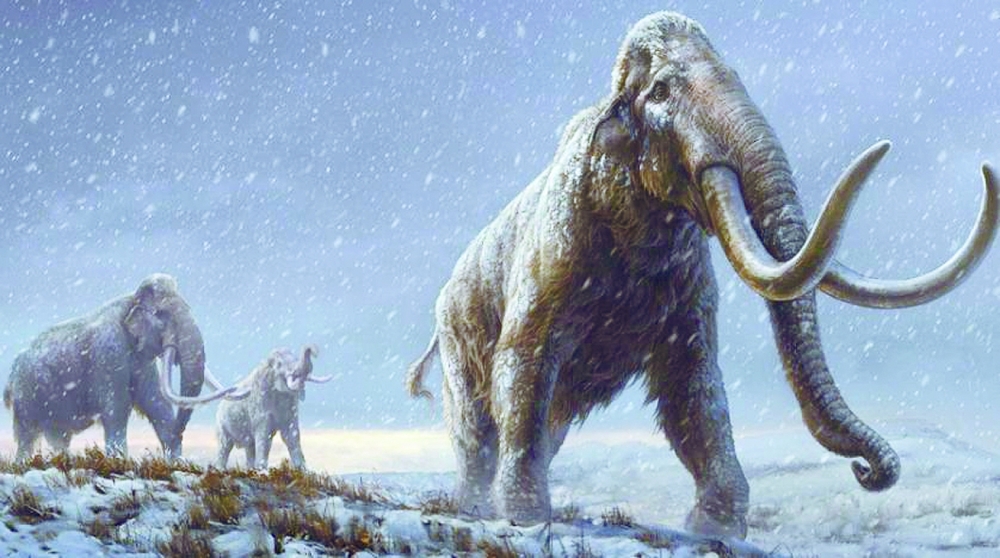





Miners in the Klondike gold fields of Canada's far north have made a rare discovery, digging up the mummified remains of a near complete baby woolly mammoth.
Members of the local Tr'ondek Hwech'in First Nation named the calf Nun cho ga, which means "big baby animal."
Paleontologist Grant Zazula said the little tyke, which retained its skin and hair, "is beautiful and one of the most incredible mummified ice age animals ever discovered in the world."
"I am excited to get to know her more," he said in a statement.
The baby mammoth's remains were discovered during excavation through permafrost south of Dawson City in Canada's Yukon territory, which borders the US state of Alaska.
The animal is believed to be female and would have died during the ice age, more than 30,000 years ago when woolly mammoths roamed this region alongside wild horses, cave lions and giant steppe bison.
The discovery marks the first near complete and best-preserved mummified woolly mammoth found in North America.
A partial mammoth calf, named Effie, was found in 1948 at a gold mine in Alaska's interior.
A 42,000-year old mummified infant woolly mammoth, known as Lyuba, was also discovered in Siberia in 2007. Lyuba and Nun cho ga are roughly the same size, according to the Yukon government.
It noted that the Yukon has "a world-renowned fossil record of Ice Age animals, but mummified remains with skin and hair are rarely unearthed." — AFP
Oman Observer is now on the WhatsApp channel. Click here