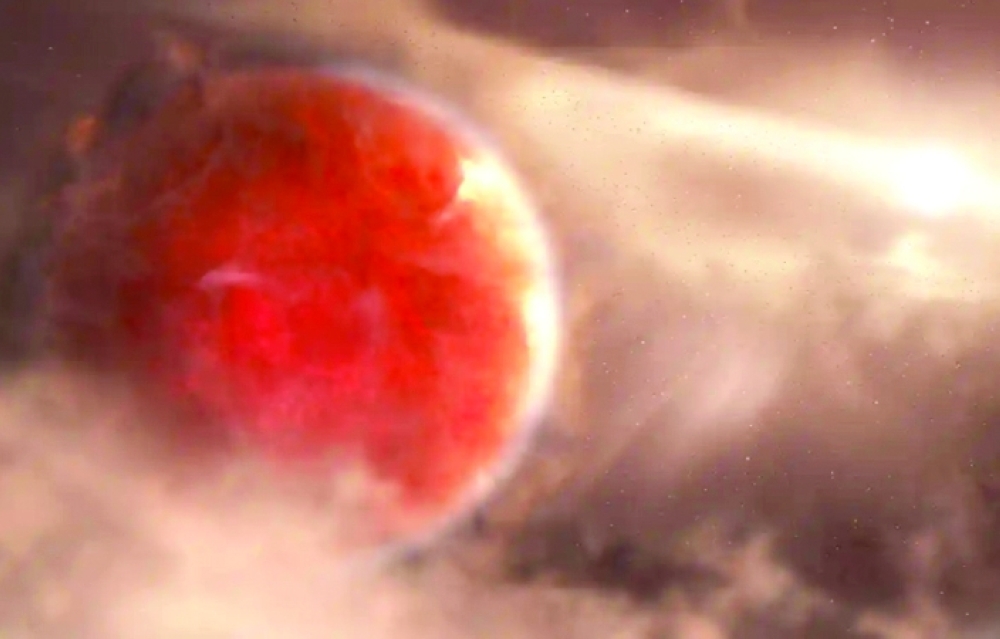





WASHINGTON: Scientists have observed an enormous planet about nine times the mass of Jupiter at a remarkably early stage of formation - describing it as still in the womb - in a discovery that challenges the current understanding of planetary formation.
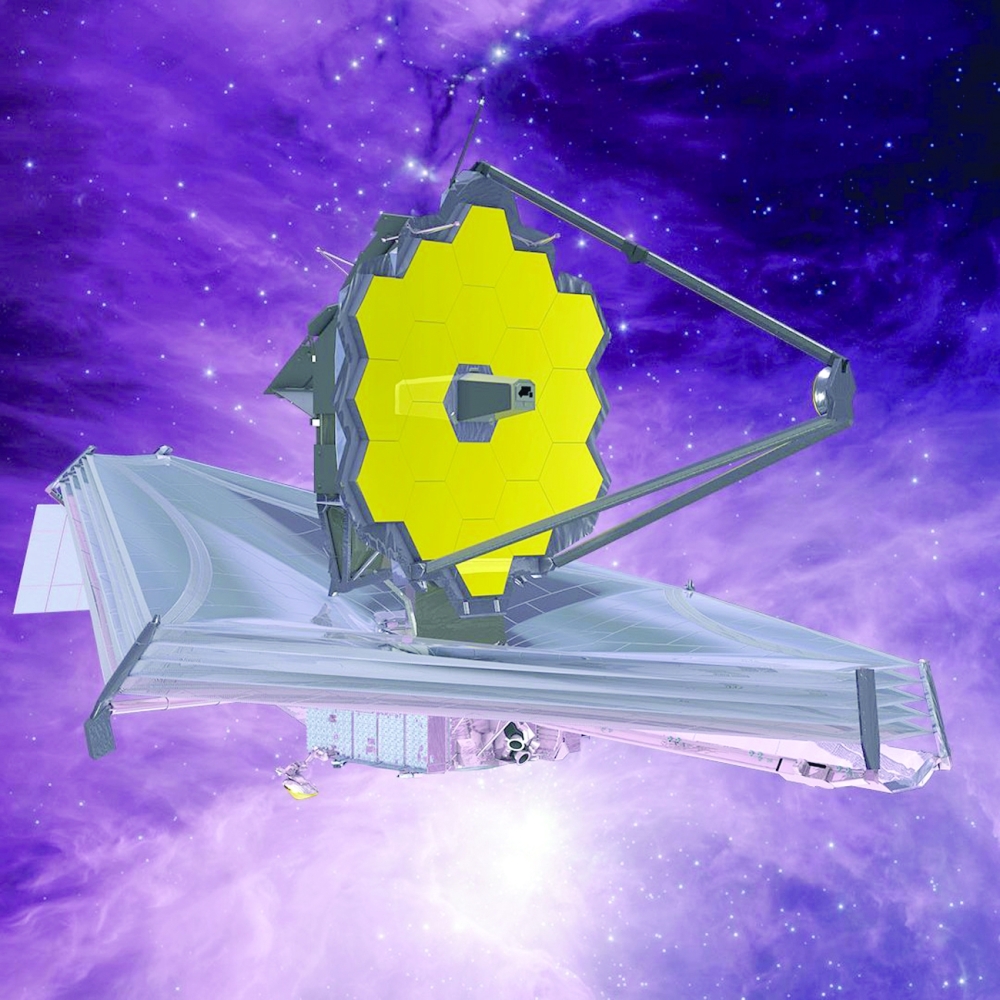
The researchers used the Subaru telescope, near the summit of an inactive Hawaiian volcano, and the orbiting Hubble space telescope to detect and study the planet called AB Aurigae b, a gas giant orbiting unusually far from its young host star.
Gas giants are planets, like our solar system’s largest ones Jupiter and Saturn, composed mostly of hydrogen and helium, with swirling gases surrounding a smaller solid core.
"We think it is still very early on in its birthing’ process," said astrophysicist Thayne Currie of the Subaru Telescope and the Nasa-Ames research centre, lead author of the study published in the journal Nature Astronomy.
"Evidence suggests that this is the earliest stage of formation ever observed for a gas giant.”
It is embedded in an expansive disk of gas and dust that bears the material that forms planets and surrounds a star called AB Aurigae. It lies 508 light years from Earth. This star had a fleeting moment of fame when its image appeared in a scene in the 2021 film 'Don’t Look Up'.
About 5,000 planets beyond our solar system, or exoplanets, have been identified. This one is among the largest. It is approaching the maximum size to be classified as a planet rather than a brown dwarf, a body intermediate between planet and star. It is heated by gas and dust falling into it. Planets in the process of formation - called protoplanets - have been observed around only one other star.
Almost all known exoplanets have orbits around their stars within the distance that separates our sun and its most faraway planet Neptune. But this planet orbits three times as far as Neptune from the sun and 93 times Earth’s distance from the sun. Its birth appears to be following a different process than the standard planetary formation model, the British Guardian newspaper reported. - Agencies
Oman Observer is now on the WhatsApp channel. Click here