




While Oman has a varied topography and climate which allow for the cultivation of different crops, local production remains limited due to small areas dedicated to farming which still result in reliance on imports especially of fruits from countries such as India, Jordan, Egypt, Iran and Yemen.
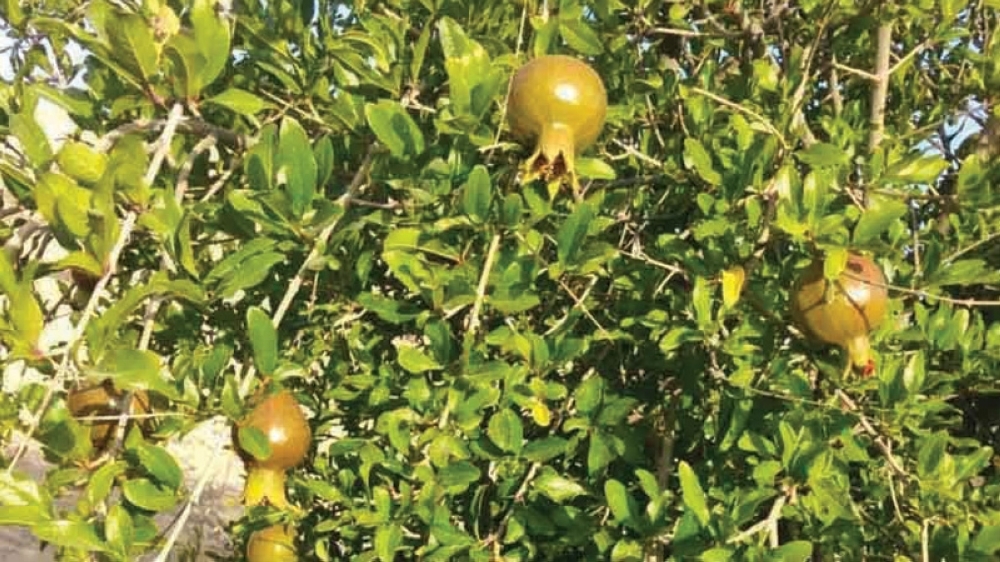
There are some humble attempts by farmers in different parts of Oman to grow pomegranates and increase the land capacity to plant more trees. The Omani Farmers Association in North Al Sharqiyah Governorate succeeded in producing pomegranate after the trial of planting the tree at the top of the al Jabal Al Abyadh in the Wilayat of Dima W’attayeen. The amount of production since the beginning of the pomegranate harvest in mid-August has reached more than four tons.
Salem al Siyabi, a member of the Omani Farmers Association said that the beginning of the cultivation of the pomegranate tree in Al Jabal Al Abyadh was an experiment conducted by the Department of Agriculture in the Wilayat of Dima W’attayeen, but the scarcity of water caused poor production. However, the association provided water through modern irrigation, which improved production, and it sprayed them with some pesticides to avoid harmful insects.
Families are usually responsible for all aspects of pomegranate cultivation. Prior to fruit harvesting, a person per village is assigned to monitor and guard the trees against illegal harvesting. The guard, locally known as al sawar, is then rewarded by offering him the best fruit per tree or its equivalent monetary value.
Salem indicated that there were about 200 fruitful trees, while this year they reached more than 350 trees on a total area of approximately 3 acres.
Organic fertilisers, made of animal and green manures, are the main source of fertiliser in pomegranate terraces. Fertilisers are usually applied directly to the soil in autumn after harvest, and in spring, after bud break. Because mountain inhabitants raise livestock, there is generally no shortage of manure supplies for fertilising pomegranate trees and other cultivated crops.
Pomegranate, fresh or stored, is mainly a table fruit due to its high water content and nutritional value. The health benefits of pomegranates grown in Oman have only been recently explored. Pomegranates have been found to reduce blood pressure and cholesterol levels. Furthermore, local cultivars are rich in carbohydrates, organic acids, vitamin C and antioxidants, and also possess various nutritional and health benefits that are currently being investigated.
Oman Observer is now on the WhatsApp channel. Click here