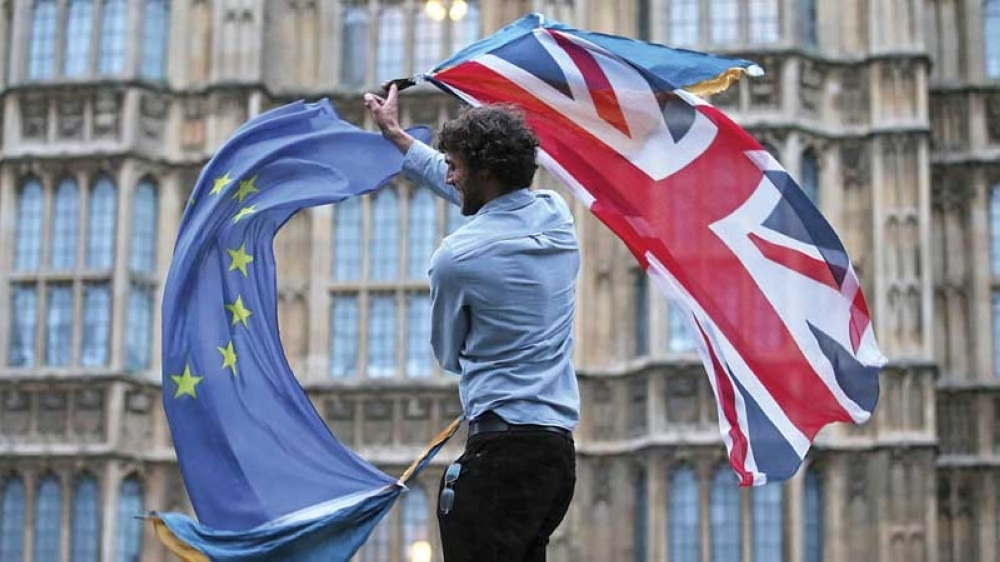





London: Prime Minister Boris Johnson on Wednesday extolled Britain's decision to "take back control of our destiny", five years after a divisive Brexit referendum whose political and economic aftershocks are still reverberating.
The coronavirus pandemic has masked the trade dislocation caused by the referendum of June 23, 2016, in which a slim majority voted to end five decades of integration with the European mainland.
The benefits promised by Johnson for a newly invigorated "Global Britain" remain a work in progress, while the UK's own cohesion is at risk from an emboldened nationalist movement in pro-EU Scotland.
But the Conservative prime minister, who rode to power after years of post-referendum political paralysis, remains upbeat.
"Five years ago the British people made the momentous decision to leave the European Union and take back control of our destiny," Johnson said.
"Now as we recover from this pandemic, we will seize the true potential of our regained sovereignty to unite and level up our whole United Kingdom.
"This government got Brexit done and we've already reclaimed our money, laws, borders and waters."
In reality, Britain remains bound by reams of EU-era legislation, its fishermen are in uproar, and its farmers are crying betrayal over new trade deals.
Britons voted by a narrow margin of 52-48 to leave the EU. A new poll by Savanta ComRes found that if the referendum were repeated today, the result would be 51-49 in favour of staying in.
But when asked if the UK should now rejoin the EU, 51 per cent disagreed.
"I think that whatever happens, whether it's going to be good or it's bad, I think it's better to have our future in our own destiny," 60-year-old musician Stephen Clark said in Boston, eastern England, which recorded Britain's highest pro-Brexit vote in 2016.
But for the majority of Scots who voted to stay in the EU, the question of national destiny rings equally true.
The Scottish National Party is vowing to hold a new referendum on independence by the end of 2023, against Johnson's objections.
"The impact of Brexit hasn't come because we've been too preoccupied, as the rest of the world has, with Covid," pro-independence university lecturer Diane Willis said in Edinburgh.
"But I think things are now seeping in," she said, giving Northern Ireland as one example where the scale of post-Brexit complications is becoming clear.
"I think the devil is always in the detail, and I don't think the detail yet has come out."
Northern Ireland remains in tumult after Brexit necessitated a set of intricate compromises to preserve its fragile peace.
Some British people living in the European Union are having difficulties accessing benefits, services and jobs, Home Secretary Priti Patel complained on Wednesday on the fifth anniversary of the historic Brexit vote.
In an article in The Daily Telegraph, Patel accused EU countries of treating British people unfairly, five years after more than 51 per cent of Britons voted to leave the bloc following a campaign led by Prime Minister Boris Johnson.
The home secretary said that "there have been a number of reported instances of UK nationals in the EU being asked for residence documents they do not need to hold, being prevented from accessing benefits and services, and having trouble with their right to work."
She also cited problems with travel to the EU, saying that some British nationals have "faced disruption on boarding and entry".
She stressed it was "only right that the EU uphold their obligations on citizens' rights, just as the UK has done for EU citizens in the UK." — Agencies
Oman Observer is now on the WhatsApp channel. Click here