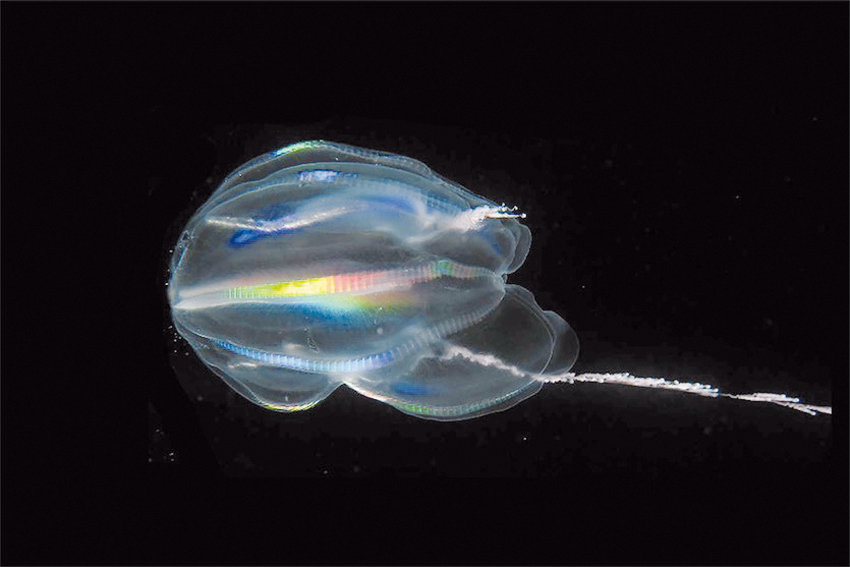





The delicate marine predators called comb jellies were the earliest animals -- not sponges as had long been thought, claims a new genetic analysis.
One of the longest-running controversies in evolutionary biology has been: ‘What was the oldest branch of the animal family tree? Was it the sponges or was it the comb jellies?’
The new study, published in the journal Nature Ecology & Evolution, suggests that comb jellies were the first branch of the animal family tree.
With their analysis involving hundreds to thousands of genes, the researchers determined that comb jellies have considerably more genes which support their “first to diverge” status in the animal lineage than do sponges.
The researchers believe that the findings could have a major impact on scientists’ thinking about how the nervous system, digestive tract and other basic organs in modern animals evolved.
For nearly a century, scientists organised the animal family tree based in large part on their judgement of the relative complexity of various organisms.
Because of their comparative simplicity, sponges were considered to be the earliest members of the animal lineage.
The researchers analysis showed that comb jellies have considerably more genes which support their “first to diverge” status in the animal lineage than do sponges. — IANS
Oman Observer is now on the WhatsApp channel. Click here