


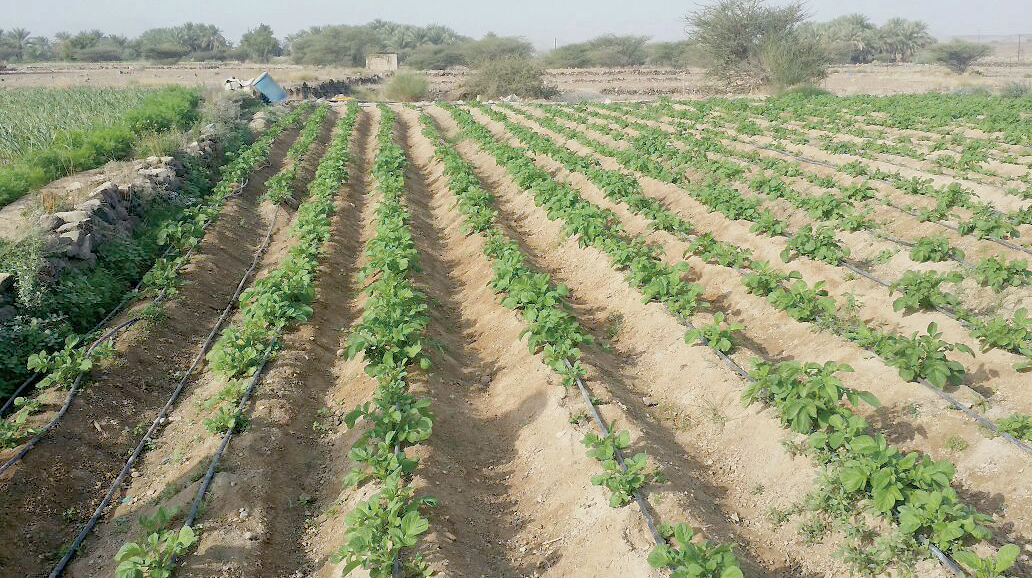





The contribution of the agriculture sector to Oman’s Gross Domestic Product (GDP) is 1.6 per cent, which has increased from RO 377 million in 2016 to RO 443 million in 2018. While agriculture has been a traditional occupation and is expected to have even bigger potential, there are challenges such as water scarcity and salinity. The Ministry of Agriculture and Fisheries is making efforts to increase domestic food production, but scarcity of water and arable land are the two hurdles that hamper progress. The other concerns have been the abruptly changing climate and global warming while trying for sustainable farming and enhanced productivity.
This is where the Agriculture Research Strategy devised by the government has been playing a crucial role. The solution-oriented research programmes have been focusing on sustainable growth in agriculture and livestock to ensure national food security and to stem the impact of climate change and water scarcity. Active to attain these objectives is the Directorate General of Agriculture and Livestock Research (DGALR) research under the theme mega programmes of the Agriculture Research Strategy. There are internal and external collaborations in research under the supervision of DGALR, with seven research centres of agriculture and two research centres of livestock. The research activities in Date Plam Research programme in 2018 focused on date-palm pest and diseases management, pre-and post-harvest treatments, valorization of industrial date fruits value and molecular genetic diversity of date palms. There has also been research on efficient water utility and irrigation management programme. Research was carried out for plant and animal genetic resource improvement and management. The indigenous and exogenous plant and animal genetic resources are tested and evaluated at different research centres.
While many workshops with the internal and external experts have been attended by farmers from Oman and abroad, the Sultanate also hosted the annual regional meeting of the Arabian Peninsula Research Programme and the Date Palm Sustainability Project in the GCC countries, in addition to workshops by Food and Agriculture Organization of UN and International Centre for Agricultural Research in the Dry Areas (CARDA).
According to Dr Hamoud al Hasani, Director General of Agriculture and Livestock Research, the ministry also signed an agreement of cooperation with Oman Agricultural Society for the implementation of applied research programmes and transfer of modern research technologies devised for increasing productivity of agricultural crops, enriching research work and direct communication with farmers for dissemination of research outcomes. An agreement was also signed between the Ministry of Agriculture and Fisheries and the students group — Nawa to provide technical and logistical support. Nawa Company won the best Student Company Award (Enjaz) and the best Arab Student Company (Enjab Arab) in Kuwait.
Salinity and Nitrogen are the two most common limitations to crop production in the salt-affected areas of North and South Al Batinah. Little is known about saline and water irrigation N use efficiency by Barley in this region. The Research Centre explains that a study was conducted to determine how saline irrigation water and N fertility levels affect growth and N use efficiency by Barley crop for two consecutive winter seasons in the Biosaline Research Farm to study the interactive effects of salinity nitrogen levels on the local crop Cultivar, Jimah - 98.
According to the experts, at high salinity levels the salinity stress was dominant with respect to yield and response was similar for both N levels. Based on the results, it can be concluded that under saline conditions there is a lesser need for N fertilisation relative to the optimal levels established in the absence of other significant stresses. Another research that has been conducted and is being fruitful in the cultivation of cactus as fodder. The project has been successful in the Dhofar governorate and is now in the next stage of being introduced to the farmers.
Oman Observer is now on the WhatsApp channel. Click here


