


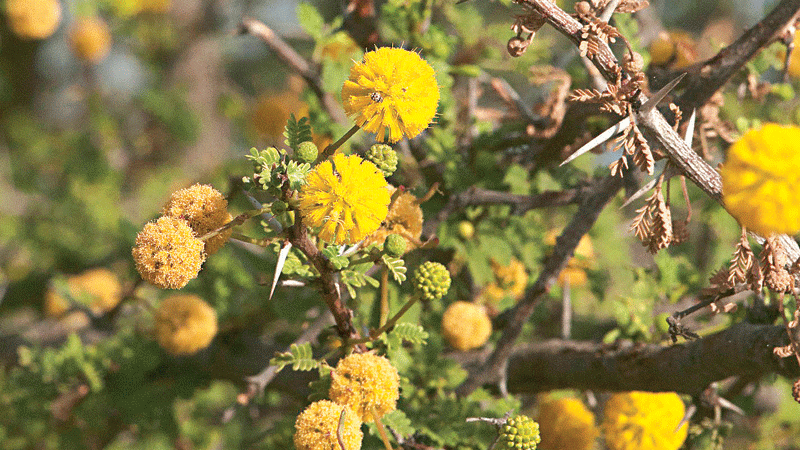





The tree has great importance in the life of a large number of Omanis as they are known for resisting pests, insects, high temperatures and for enduring long periods of drought
Ahmed bin Abdullah al Nahdi
Specialist in biodiversity
Al Salam, the scientific name of which is Acacia ehrenbergiana, is a tree mainly found in the northern and middle parts of the Sultanate. It grows in the most arid areas from Musandam (north) to Haima (middle of Oman). It extracts water from ambient humidity.
It grows around 6 metres tall and its thorns are straight and sharp. Distinguished by its bright yellow flowers, the tree’s fruits are long and lean in semi-arched pods.
Despite the freshness of its flowers, ants are not attracted to them. But it is an essential source of grazing for many animals such as camels, sheep and wild deer.
The tree has great importance in the life of a large number of Omanis as they are known for resisting pests, insects, high temperatures and for enduring long periods of drought. The trunks of this tree are used in the preparation of coals. This is due to the strength of its roots and branches which have exceptional fragrance.
Due to these benefits, the tree is felled by people violating regulations. “There are some people who use the wood of this tree without obtaining official permits especially during festival occasions like Eid. This is inconsistent with the environmental legislation approved by the competent authorities”, Ahmed bin Abdullah al Nahdi, a specialist in biodiversity, told the Observer.
“Preserving these trees is a shared responsibility, and everyone should contribute to protecting them from any kind of abuse. Destruction of these trees will affect, directly or indirectly, the wildlife in the Sultanate in the long- term”, he added.
“There is a special team to monitor violations that affect the wildlife, but public awareness is very important in reducing the impact on the animal species”, Al Nahdi added.
Although this tree can withstand heat and drought, its extent of growth to more areas is less than other wild trees in the Sultanate. The tree grows individually, not collectively. And it can be seen in the valleys and on the slopes of hills. The tree is also a safe nesting place for many birds and butterflies.
Oman Observer is now on the WhatsApp channel. Click here


