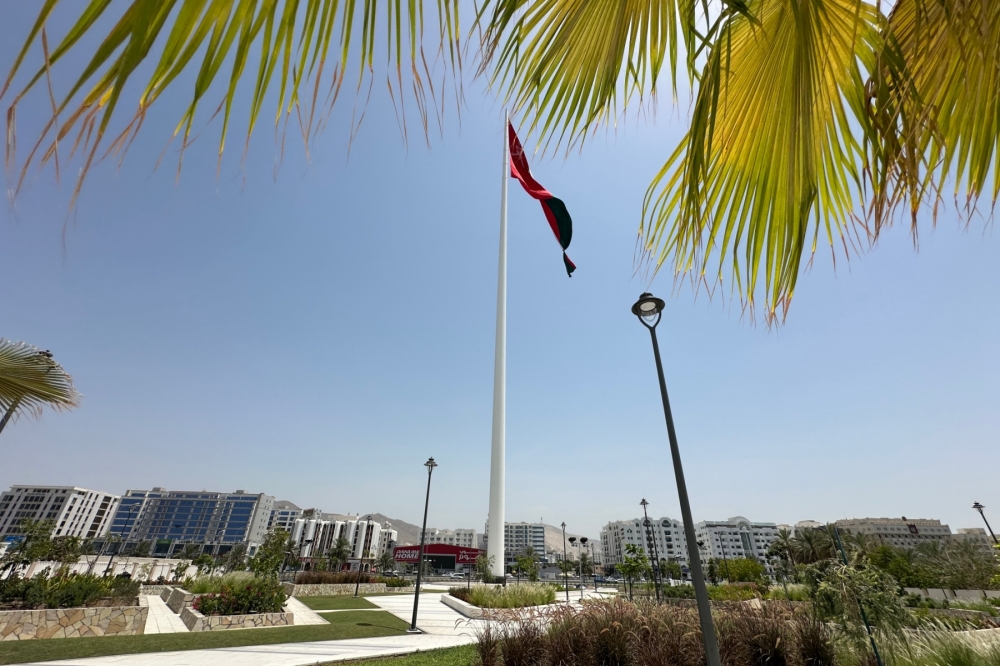
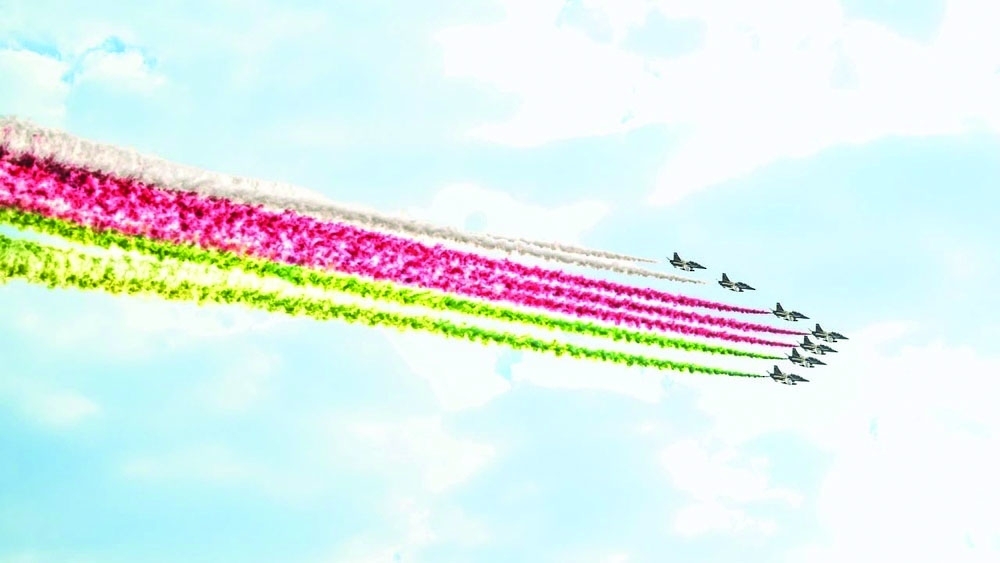
The Sultanate of Oman’s National Day is a poignant opportunity for reflection upon the continued re-emergence of a proud nation.
Recently celebrating its anniversary, the Oman Daily Observer’s Editor-in-Chief, Abdullah bin Salim al Shueili, commented on the recent Royal commendation of the media as a reflection on the continued professionalism of the media, saying, “It lifted morale across the sector, and renewed our commitment to quality, innovation, and service.” That Royal stamp of approval is just one of the several endorsements and processes within state mechanisms that will promote future quality and resilience in government and governance.
There is no doubt that informing the population, celebrating its successes and failures, its wins and losses, drives not only an appreciation for those positives, but a resilience with which to manage unmet expectations. In this, they will discover the immense strength and purpose necessary for national resilience. Particularly, given the recent Internet technology failures around the world in retail, air travel, banking and finance, there are many more testing times ahead.
The impressive news is that recent trade relationships in the form of the Oman-India Comprehensive Economic Partnership Agreement (CEPA) 2026, covering goods, services and investment; the GCC-UK Free Trade Agreement, ratified in May of this year; the newly agreed RO 500 million trade deal with Uzbekistan, on the back of a 70 per cent increase in trade during 2025; a probable free trade agreement with South Korea; and unilateral trade with China reaching nearly RO 25 billion during 2025... these and so many more deals are looking truly positive in the world of trade.
Energy will always be a two-edged sword for Oman, with the global fashion for EVs and alternative energies; however, it’s equally obvious that oil and gas, petrol and diesel, are far from spent forces, empty, or poisoned chalices. There is, metaphorically speaking, life after Greta Thunberg and her ilk, though the global demand for oil and gas is undeniable, according to the respected Standard and Poor's Global, who predict similar international demand until at least 2050.
From a genuinely positive vein, Dr Mohammed al Saqri, of the State Council Education and Research Committee, proposes the establishment of a National Framework for measuring the impact and returns to the nation, in terms of state-funded research and development, a process that will follow the journey of research from investment, through development, to implementation, tracking ultimately, their successes and failures, so as to ensure the nation is getting ‘value for money’ within the research spectrum.
There is no doubt that, within this template, informing the population, celebrating its successes and failures, wins and losses, will encourage not only an appreciation for those positives, but a resilience with which to manage unmet expectations. In this, they will discover the immense strength and purpose necessary for national resilience, perpetuating the renaissance and Oman Vision 2040. November 20 is a special date, yes, because of its origins, but more so because of its galvanising effect on a nation. Oman today continues to go from strength to strength, morphing from a nation with a developing presence, only ‘good’ associations and connotations, to having a role in shaping, first its region, then the world
National Day in Oman will always be close to my heart; the beautiful ‘Jewel in the Gulf’ is also the best place in the world, on this best of days.
However, even more, it is a date upon which the Sultanate of Oman can evaluate its current objectives, to ensure that progress is still, and always, its ‘middle name.’ While also ensuring that Omanis will always remain the most prominent beneficiaries of the government’s astute management of its natural resources, its appropriate decisions within manpower and employment, and its persistence in developing its profile as a world leader.
Oman Observer is now on the WhatsApp channel. Click here