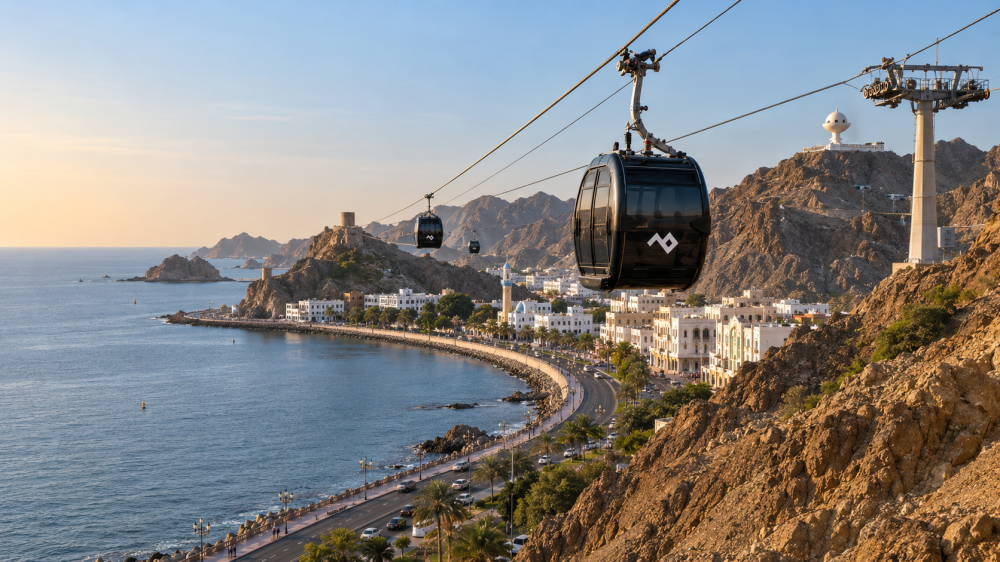
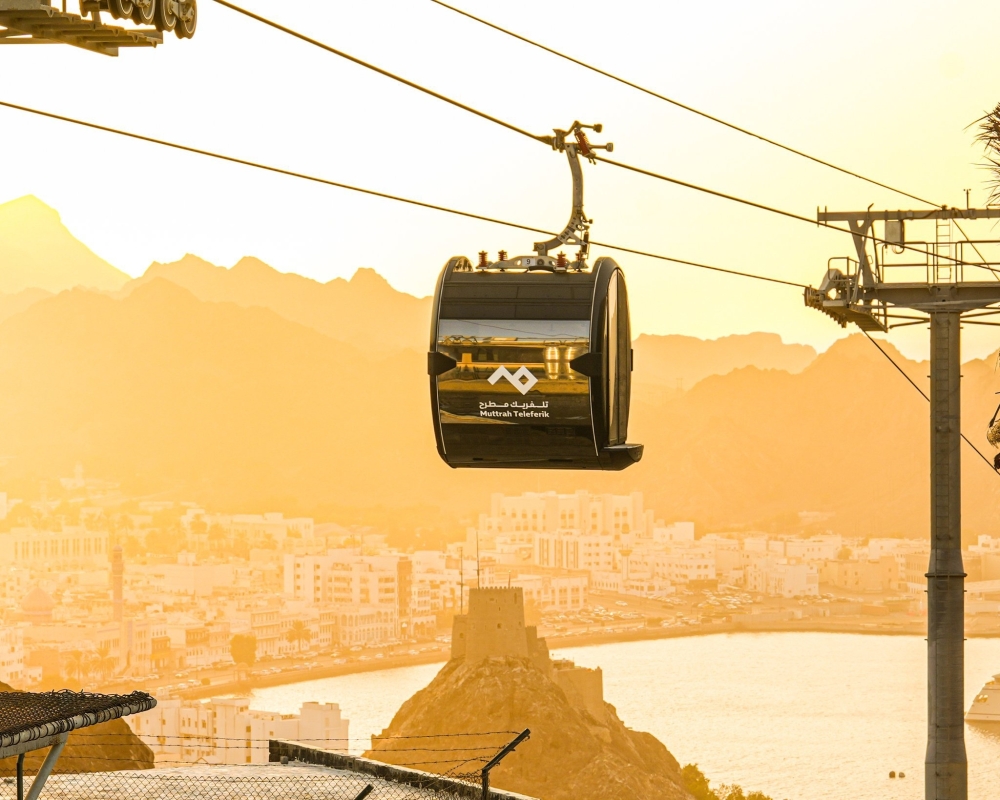
Muttrah is once again attracting public attention, particularly with the newly unveiled Muttrah Cable Car project. The initiative offers an opportunity to combine economic development with preserving the wilayat’s Omani identity and heritage.
The project comes as Muttrah witnesses another major development, “Al Yazan”, an integrated residential and tourism complex comprising 1,500 housing units across 18.5 hectares along the waterfront of Port Sultan Qaboos. Inaugurated under the auspices of HH Sayyid Bilarab bin Haitham al Said, Minister of State and Governor of Muscat, the project and cable car are expected to restore Muttrah’s prominence and vitality.
Over the past three decades, however, Muttrah has experienced a notable decline in visitors and commercial activity. This has partly followed the reduction of commercial operations at Port Sultan Qaboos and the transfer of much port-related business to Sohar Port.
The movement of many Omani families from traditional neighbourhoods and commercial districts to newer parts of Muscat has also contributed to this change.
Muttrah is one of Oman’s oldest cities, long associated with maritime trade, traditional markets and a rich social and economic life. The challenge now is to restore its position not only as a heritage and tourism destination, but also as a lively commercial centre that attracts residents, investors and small and medium-sized enterprises (SMEs).
The success of new projects should not be judged simply by investment figures, buildings or recreational facilities.
Their real value will lie in the employment and business opportunities they create for Omanis, and in their contribution to reviving traditional markets and surrounding neighbourhoods.
Achieving this requires a comprehensive programme involving government authorities, the private sector, residents and business owners. Priorities should include affordable commercial premises for young Omani entrepreneurs, accessible financing for SMEs, simpler licensing procedures and incentives for businesses willing to establish or expand their activities in Muttrah.
Family-oriented attractions and improved public facilities are equally important. Yet these developments must be accompanied by practical solutions to traffic congestion, limited parking and difficult access to commercial areas.
Multi-story car parks and convenient shuttle services linking the Corniche, traditional market, port and other attractions would make visits easier and encourage people to spend more time in the city. Muttrah’s coastal setting and maritime history also offer opportunities to expand marine tourism.
Traditional boat trips, alongside exhibitions highlighting Oman’s seafaring heritage and historic trading links with international markets, could enrich the visitor experience and create additional income for local businesses.
At the same time, the interests of existing residents and merchants must be protected. Urban renewal should not push up operating costs or displace traditional businesses. Established shopkeepers and small enterprises should instead benefit directly from development and have a fair opportunity to participate in new investment.
Ultimately, Muttrah needs a long-term national development plan with clear priorities: restoring commercial activity, increasing the number of Omani-owned businesses, encouraging citizens to return, and upgrading essential services, transport and parking. Such a plan would strengthen the local economy and make the city more attractive to domestic and foreign investors.
It would also give young Omanis opportunities to establish businesses and invest in Muttrah, following the example of earlier generations.
Muttrah needs more than new buildings and modern facilities. It needs a renewed economic and social identity that meets present and future needs while safeguarding its Omani character and rich heritage.
HAIDER AL LAWATI
haiderdawood@hotmail.com
The writer is a Muscat-based economic analyst who previously
worked for CBO and OCCI
Oman Observer is now on the WhatsApp channel. Click here