

“Innovation is not just about advancing surgical techniques; it is about improving the quality of care and the lives of the women we treat” — Dr Fatma bint Mohammed al Wahaibi -
Non-communicable diseases (NCDs) account for 80 per cent of deaths in Oman and impose an economic burden of approximately RO 1 billion annually, according to Dr Ahmed bin Salim al Mandhari, Under-Secretary of the Ministry of Health for Planning and Health Regulation.
Speaking at the release of the first phase of the National Survey for Non-Communicable Diseases, Dr Al Mandhari highlighted the urgent need for data-driven public health strategies. “Oman records more than 6,500 new cases of diabetes each year, over 2,000 new cancer cases, and one in three individuals suffers from hypertension”, he said, adding that 66 per cent of the population is classified as overweight or obese — underlining the need for stronger prevention, early detection and treatment.
Health has been designated a primary national priority in Oman Vision 2040, with the objective of delivering a resilient, international-standard healthcare system — “A Leading Healthcare System with International Standards” — and the goal of bringing innovation to every aspect of the sector. Through developing qualified national healthcare professionals, improving preventive healthcare, promoting the principle that “health is everyone's responsibility” and strengthening institutional preparedness for communicable diseases and public health risks, the Ministry of Health continues to advance its commitment to protecting individual and community health.
In the operating theatre
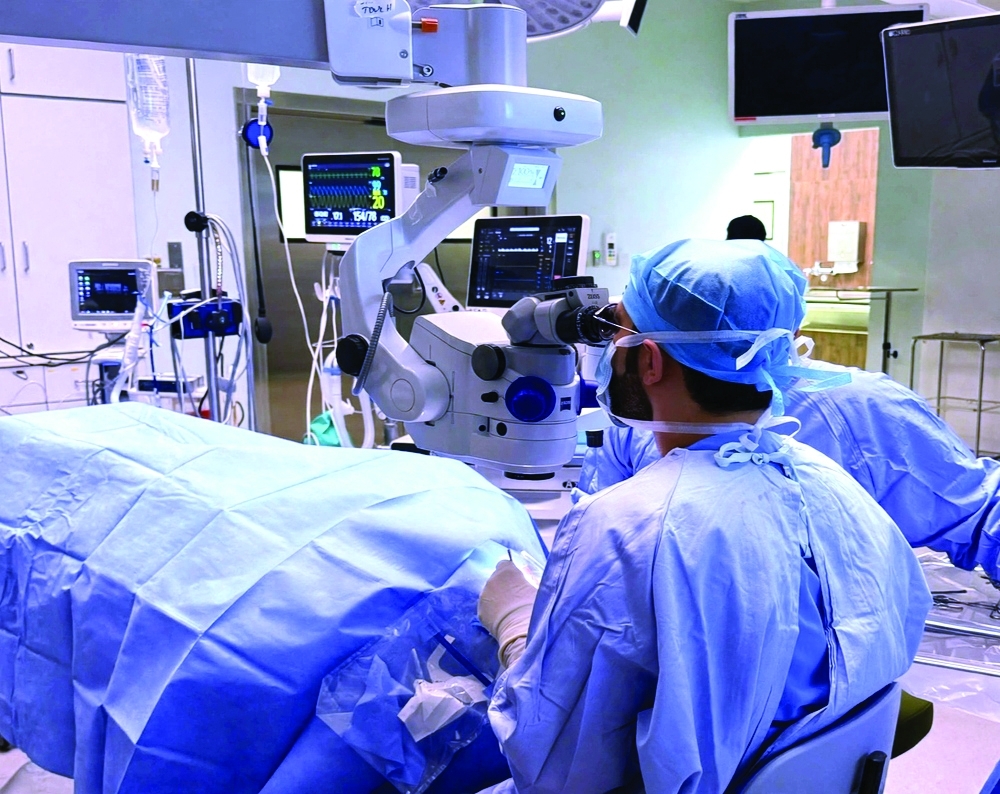
Dr Fatma bint Mohammed al Wahaibi, a European-certified gynaecological oncologist and UK-trained clinical fellow, works at the Sultan Qaboos Comprehensive Cancer Care and Research Centre at University Medical City, as well as in the private sector. She is widely respected for her expertise in advanced laparoscopic and minimally invasive surgery.
Asked about the best innovation she has seen in her field, she says: “I believe minimally invasive surgery, particularly laparoscopic and robotic surgery, is one of the greatest innovations in our field. It has transformed the way we approach complex gynaecological and cancer surgeries, allowing us to perform challenging procedures with greater precision and improved surgical access, even in patients with complex medical conditions or morbid obesity.”
Most importantly, she says, these advances benefit patients through less surgical trauma, fewer complications, shorter hospital stays and faster recovery, while maintaining excellent oncological outcomes in appropriately selected patients. “Ultimately, innovation is not just about advancing surgical techniques; it is about improving the quality of care and the lives of the women we treat.”

One of her greatest ambitions is to help reduce the burden of cervical cancer in Oman. “It is concerning that we continue to see women, often at a young age, diagnosed with advanced disease, with devastating consequences for them and their families. I would like to focus on research that helps us better understand cervical cancer in our local population, alongside strengthening awareness, prevention, and early detection”, she reflects.
Cervical cancer, she emphasises, is largely preventable through HPV vaccination and effective screening programmes. “My ultimate vision is to see a future with fewer women diagnosed with cervical cancer and fewer lives lost to this disease. We should not only aim to treat cervical cancer successfully but also to prevent it from happening in the first place. I hope to contribute to making cervical cancer elimination a reality in Oman and globally.”
Decoding cancer
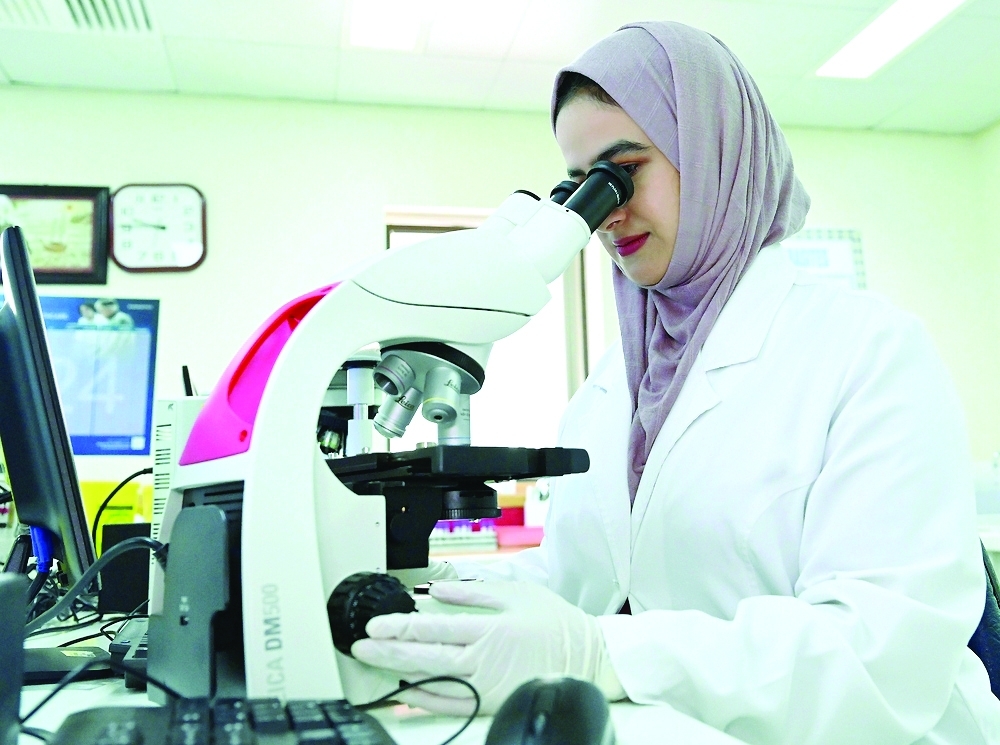
Dr Buthaina al Shueili, an assistant professor in the College of Science at Sultan Qaboos University, holds a PhD in Biochemistry and Molecular Biology from the University of Calgary and a master's in Biomedical Science from the University of Glasgow. Her research focuses on the role of epigenetics in cancer regulation and therapy, with a particular emphasis on breast cancer chemoresistance.
“We talk a lot about cancer mutations and genetic mutations that can cause cancer. Plenty of effort has been taken into the DNA genetic mutations, which is very important. But sometimes we forget that DNA is not the 2D structure”, she says. Epigenetics examines the molecules that shape the 3D structure of DNA and its environment — important in both causing and preventing cancer. “Right now I am studying it in the essence of chemo resistance, specifically in breast cancer cells that are resistant to chemotherapy.”
Her next step is to move from cells to patient samples, studying methylation and acetylation patterns in patients resistant to chemotherapy and radiotherapy. “I would like to try to understand how the 3D structure of DNA is different in patients that have no resistance to chemotherapy. This will help us a lot in terms of helping the patients who have resistance to the therapies that are available right now”, she explains.
Dr Al Shueili points to several areas of innovation in the sector. The first is personalised medicine: “The Genome Centre of Oman plans to sequence more than 20,000 Omani genomes in the first phase. The idea is to support personalised treatment in Oman and have our own biosecurity and data — also to use our own genetic material to help diagnose diseases early.” The second is artificial intelligence: “I remember reading that Oman was the third country in the world to achieve this milestone in using an AI programme to detect diabetic retinopathy by using an AI system and imaging for patients. Hopefully, the AI can find the patterns to detect the diseases early.”
The third is pharmaceuticals: “Oman has been keen on manufacturing our own pharmaceuticals and medicines. For example, Izz in Nizwa has said they would like to produce IV fluid. In addition, we have Taiba Menagene Pharmaceutical Industries, whose manufacturing and distribution divisions focus heavily on high-end therapeutic segments”, including oncology, endocrinology, haematology and specialised medications for rare metabolic disorders.
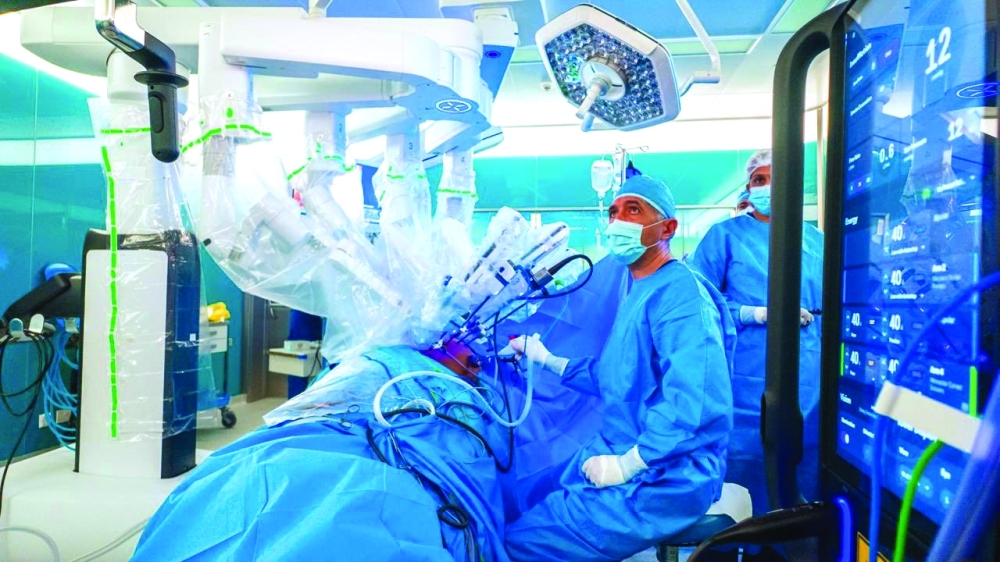
Robotic surgeries are on the rise, she notes, with both the Sultan Armed Forces Hospital and the Royal Hospital performing them, and Oman is now performing gene and cell therapy, including CAR T-cell therapy. “This is where they use the individual's own cell and immune system to fight cancer, specifically blood cancer. Even in stem cell therapy, I believe stem cell banking will help in the treatment of future diseases”, she reflects. “By 2040, the National Human Genome Centre will be targeting 100,000 genomes. This will help us a lot in using the genetic data for AI assistance and bioinformatics that will help us for drug discovery and personalised medicine.”
Mapping the Omani genome
In October 2026, the Ministry of Health laid the foundation stone for the National Genome and Human Data Centre (Genome Oman) at the Central Public Health Laboratory premises in Muscat.
Professor Dr Khalid bin Hamid al Rasadi, a professor at the College of Medicine and Health Sciences at Sultan Qaboos University and supervisor of the Genome Oman Programme, underscored that the project embodies the objectives of Oman Vision 2040 — mapping the genomic composition of the Omani population and establishing a reference database that will enhance Oman's position as a scientific hub for genomic research, support the knowledge economy and advance strategic therapies.
He outlined three pillars underpinning the programme: developing national capabilities in bioinformatics, statistical genetics, clinical genetics, biobanking and artificial intelligence; translating genomic mapping into clinical applications through precision medicine, the discovery of new drugs for genetic disorders and clinical trials based on the genetic makeup of the Omani population; and maximising the programme's research and economic impact as a platform for international scientific partnerships and a foundation for emerging biotechnology industries.
Dr Ali bin Abdulhussein al Lawati, Adviser to the Minister of Health for Engineering Affairs, said the centre will be equipped with state-of-the-art high-throughput whole-genome sequencing technologies and an automated national biobank capable of storing more than one million samples at temperatures down to minus 80 degrees Celsius and in liquid nitrogen, with round-the-clock monitoring and backup power to ensure the integrity of samples for decades. The project, with a construction cost of more than RO 4.2 million, is being built in the Wilayat of Al Seeb on a 10,625-square-metre site shared with the Central Public Health Laboratory.
Guarding against infection
Infection control is another major emphasis. Dr Zainab bint Abdul Razzaq al Balushi, Head of the Infection Control Section at the Directorate General of Health Services in Muscat Governorate, affirmed that the Ministry of Health places infection prevention and control among its key priorities in developing a safe and sustainable healthcare system.
The Department of Disease Surveillance and Prevention in Muscat Governorate organised the Fourth National Training Course on Infection Prevention and Control 2026, aimed at standardising practices in primary healthcare institutions, enhancing the competencies of healthcare personnel and strengthening epidemiological surveillance, early reporting and outbreak management. The year also saw the launch of the Sterilisation Services Training Programme and the Unified Infection Prevention and Control Guidelines for Primary Healthcare.
Digital health
The Al Shifa system and Shifa app saw the expansion of the integrated national electronic health record platform, enabling unified patient histories, streamlined appointments and remote monitoring. In November 2026, the Ministry of Health launched Sijl, a national health systems accreditation platform, to enhance health information governance, raise the quality of electronic systems and strengthen data security.
Eng Badr bin Sulaiman Awlad Thani, the Ministry's Director-General of Information Technology and Digital Health, says Sijl brings government and private health institutions together under a single national standard for digital health information systems and data exchange. It enables an integrated health file for each patient through the national health record, provides reliable data to support decision-making and paves the way for artificial intelligence applications, while enhancing compliance with health information governance requirements and enabling secure, systematic data exchange.
Healthy cities
A significant achievement has been involving the community itself. The WHO Healthy Cities Programme in Oman is a cornerstone of the strategy under Oman Vision 2040: rather than viewing health as a purely medical responsibility, it treats urban planning, public safety, economic sustainability, environmental protection and community participation as direct drivers of wellbeing. Projects are directed by local executive committees drawing in municipal authorities, the Ministry of Health, businesses and community leaders, with residents volunteering and co-designing health campaigns. Urban upgrades prioritise walkable green spaces, cycling tracks, safe public infrastructure and smoke-free zones to combat NCDs such as diabetes and hypertension.
Eight Omani cities are internationally recognised in the network: Sur, an early pilot focused on coastal heritage, walkability and volunteer networks; Nizwa, emphasising heritage preservation and public spaces for physical activity; Suhar, balancing industrial and port expansion with urban greening and air quality management; Barka, handling coastal ecosystem safety and food security monitoring; Yanqul, focused on rural-urban health integration and agricultural safety; Al Seeb, addressing high-density urban health, public parks and smoke-free community zones; and Qalhat and others, with specialised regional projects promoting health equality and community wellness.
Medicine, made in Oman
Strategic investments and partnerships led by the Ministry of Health are expanding domestic pharmaceutical production and medical device manufacturing. Following the gracious approval of His Majesty Sultan Haitham bin Tarik, the Public Authority for Special Economic Zones and Free Zones (OPAZ) announced specialised industrial clusters for the pharmaceutical and medical device industries, with more than one million square metres allocated across the Salalah Free Zone and Raysut Industrial City.
Dr Hilal bin Ali al Sabti, Minister of Health, said developing the clusters represents an important step towards strengthening health security by enhancing national production capabilities, diversifying sources of supply and localising specialised technologies and expertise — helping ensure the sustainable availability and quality of pharmaceutical and medical products, building industrial and technological partnerships, and directing investment towards priority health needs.
The numbers point the same way. Omani exports of pharmaceutical and medical products reached approximately RO 26.5 million in 2025, while imports of healthcare products reached about RO 345.2 million in 2024, up nearly 20 per cent from 2020, according to the National Centre for Statistics and Information — a measure of the domestic market awaiting local producers. Oman's medical manufacturing base currently comprises 20 factories, with 18 further projects under construction, and current investments in the pharmaceutical sector across OPAZ-supervised zones stand at approximately RO 238.91 million across 12 projects in Salalah Free Zone, Sohar Free Zone and Khazaen Economic City.
Oman's participation in the Pharmaceutical Industries Exhibition in Milan in October 2026 brought four agreements and memoranda of understanding, including an agreement to establish a specialised oncology medicines manufacturing plant in Raysut Industrial City.
Taken together, the Sultanate's health strategy balances modern digital technologies, localised medical manufacturing, strategic partnerships and decentralised community care — innovation applied, from the operating theatre to the neighbourhood.
Oman Observer is now on the WhatsApp channel. Click here