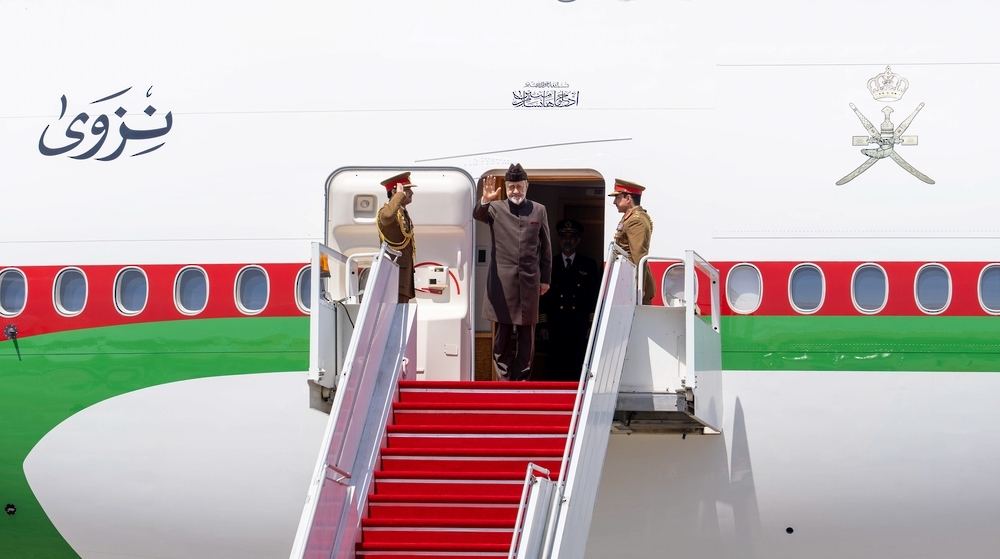
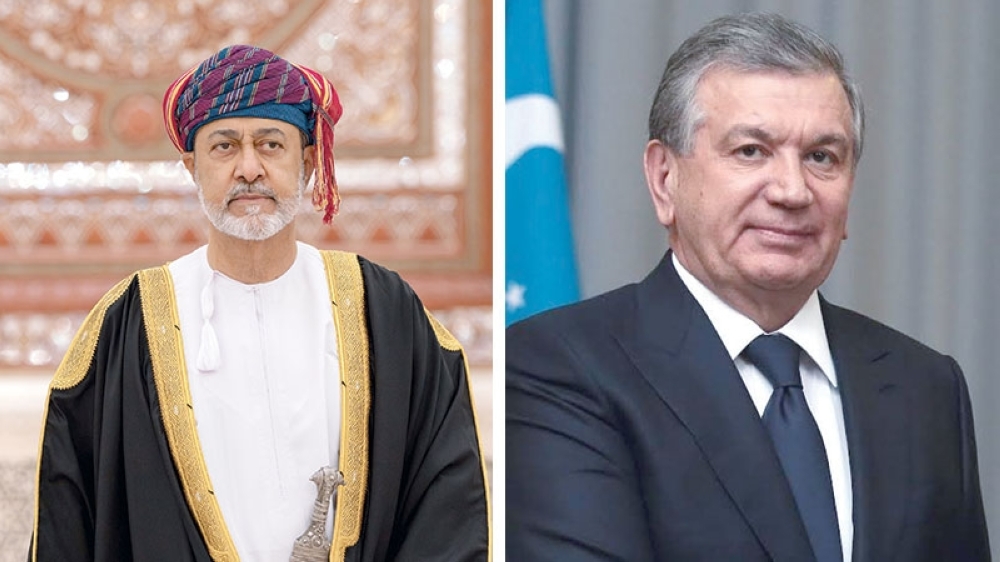
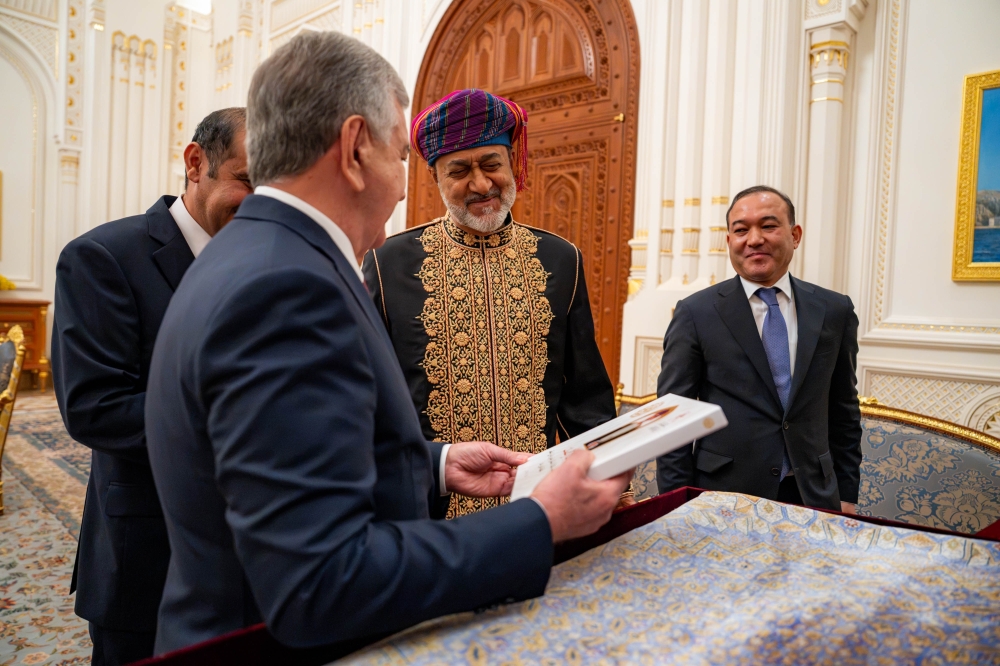
When President Shavkat Mirziyoyev landed in Muscat on Monday for a two-day state visit, greeted at the foot of the ramp by His Majesty Sultan Haitham bin Tarik, the ceremony was more than protocol.
It was a signal that a relationship long defined by history and courtesy is now being deliberately rebuilt as a modern economic and strategic partnership.
Oman and Uzbekistan are not new friends. Diplomatic relations were established in 1992, after Uzbekistan's independence, but the connection is far older.
It runs through the Silk Road, through merchants, scholars, and faith, through the movement of goods and ideas between Central Asia and the ports of the Arabian Sea.
As the world is fragmenting into competing blocs, supply chains are being rewired, and middle powers are learning that they cannot rely on a single market, a single route, or a single partner.
Both Oman and Uzbekistan understand this instinctively. Oman, under Vision 2040, is diversifying beyond hydrocarbons, building logistics, green energy, tourism, manufacturing, and a knowledge economy.
Uzbekistan, under President Mirziyoyev, is opening its economy, modernising its industry and agriculture, and positioning itself as the connective heart of Central Asia. They are different countries, with different resources, but they share the same logic: openness, balance, and partnership without dependence.
The economic agenda is equally concrete. The Omani-Uzbek Investment Company already provides a practical vehicle for that ambition, backing ventures in industry, logistics, infrastructure, financial services, and real estate.
Direct flights between Muscat and Tashkent, launched in July 2026, have shortened the distance still further, allowing business leaders, officials, students, and tourists to build relationships face to face rather than through intermediaries.
If these foundations are used well, the partnership can become a bridge between the Gulf and Central Asia, linking ports to landlocked markets and ideas to opportunity for both peoples and generations.
The visit of President Shavkat Mirziyoyev reveals a deeper, less visible form of cooperation: the sharing of governance experience.
For both countries, the question is not only how to spend public money, but how to make public spending build national capacity, support small businesses, create skilled jobs, and keep value at home.
Oman has built considerable experience in this field. Uzbekistan wants to learn from it, adapt it, and build its own system. That exchange, from one reforming state to another, is partnership in its most useful form.
There is also a cultural dimension that should not be underestimated. Uzbekistan is home to some of Islam's greatest centres of learning and architecture.
Oman is home to a tradition of tolerance, dialogue, and maritime openness. Both societies value moderation, hospitality, and respect for heritage. Expanded cultural, humanitarian, and tourism exchanges, which are explicitly on the summit agenda, can give the economic relationship a soul.
President Mirziyoyev's visit, at the invitation of His Majesty Sultan Haitham bin Tarik, is not an isolated event. It is the culmination of months of ministerial visits, business forums, and institutional preparation, and the beginning of a more ambitious phase.
Centuries ago, caravans carried silk, spices, and ideas between two regions. Today, the caravans are investment funds, digital procurement platforms, direct flights, and joint ventures.
The cargo is different. The spirit is the same: that prosperity grows when peoples connect.
Oman Observer is now on the WhatsApp channel. Click here