

Personalised recommendations may help readers discover subjects they enjoy, but relying on them too heavily can narrow the range of ideas they encounter, speakers at the 45th Sharjah International Book Fair cautioned.
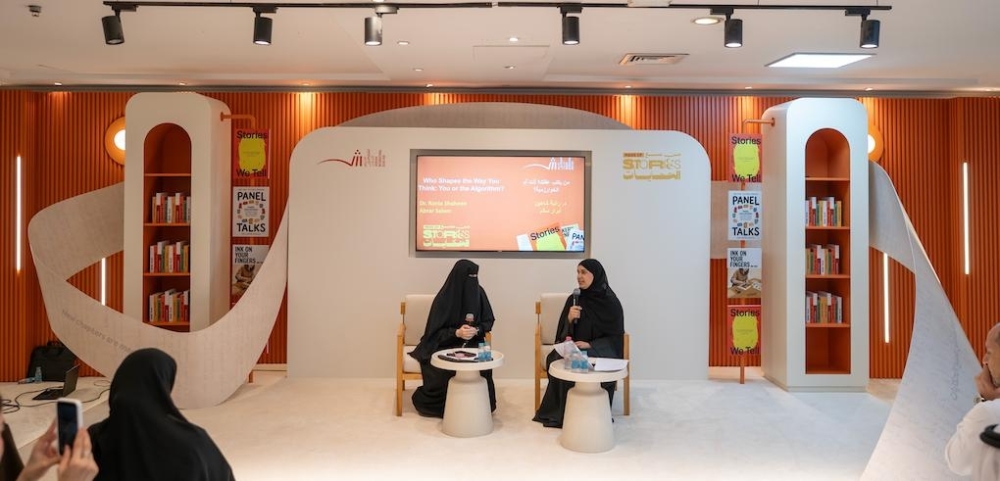
Dr Rania Shaheen and Abrar Salem explored this tension during a conversation titled “Who Shapes the Way You Think? You or the Algorithm?”, examining how digital platforms influence reading choices, research interests and the questions people ask.
Dr Shaheen said repeated exposure to content that matches a user’s preferences can create a bubble in which familiar views are reinforced and alternative perspectives become less visible.
“Algorithms risk trapping people in a bubble of opinions and thoughts that conform to their beliefs,” she said.
The concern, she explained, is not that recommendations are without value. Suggestions related to a reader’s interests can introduce useful material and encourage further exploration. The problem arises when these suggestions become the principal route to information, repeatedly leading users towards similar content.
“What algorithms suggest and what the reader watches or reads constantly is likely to shape the way people think,” Dr Shaheen said.
The influence can extend beyond the choice of a book, article or video to the direction of a person’s curiosity, Salem noted.
“Even when we believe we are choosing what to read or research independently, the recommendations we receive can shape our curiosity, the questions we ask, and the sources we explore,” Salem said. “This can limit our exposure to different ideas and perspectives if we rely too heavily on what platforms suggest.”
The discussion considered how this dependence can affect intellectual independence. When familiar opinions dominate a person’s reading and viewing, opportunities to encounter ideas that challenge existing assumptions may diminish.
Dr Shaheen urged readers to question personalised recommendations rather than regard them as neutral guides to knowledge.
“In this sense, failing to escape the bubble means delegating thinking and biases to algorithms,” she said.
She recommended returning to traditional sources of knowledge, particularly printed books, as one way to encounter unfamiliar subjects and perspectives beyond platform recommendations.
The conversation placed responsibility with readers to seek out different viewpoints and make deliberate choices about the information they consume. Its central concern was how to retain that independence while benefiting from the convenience of personalised content.
Organised by the Sharjah Book Authority, the fair runs until November 15 at Expo Centre Sharjah under the theme “Made of Stories”, with the Sultanate of Oman as Guest of Honour.
Oman Observer is now on the WhatsApp channel. Click here