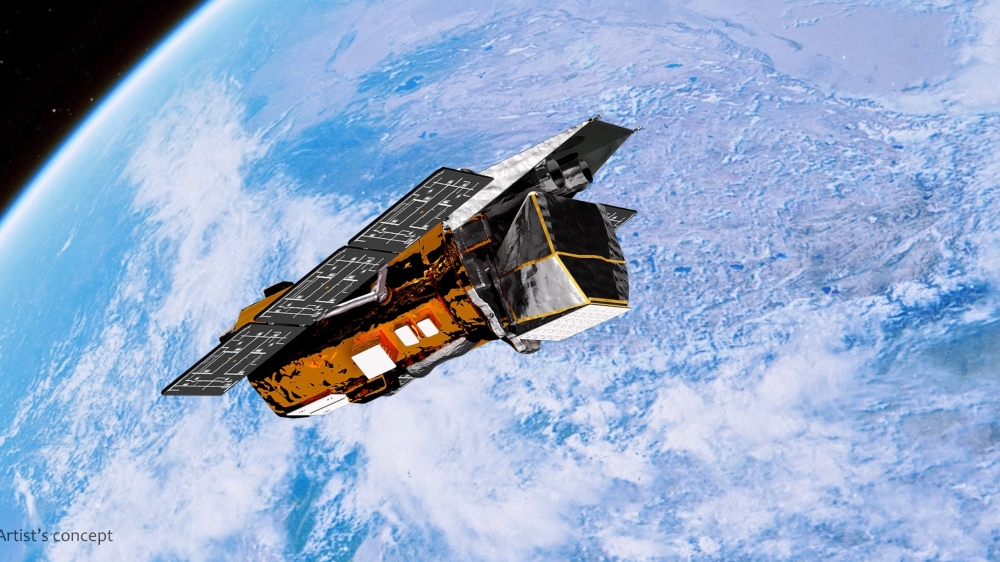


A research satellite has fallen back to Earth after a rescue mission by the US space agency NASA ended in failure.
The space observatory re-entered the Earth's atmosphere over Indonesia on Wednesday, NASA said. Most of the satellite is believed to have burnt up, although "some components may have survived re-entry," the agency said.
There were no immediate reports of damage.
The satellite was the unmanned Swift space observatory, which was equipped with three telescopes. It was launched into space from Cape Canaveral in 2004 and has since been used primarily to study the universe's most powerful explosions known as gamma-ray bursts.
Although the satellite was in good condition, it fell out of orbit partly because of powerful geomagnetic storms triggered by solar eruptions.
Given the importance of the scientific data provided by Swift, NASA decided at short notice to launch an unprecedented rescue mission.
In early July, an unmanned towing spacecraft called Link was launched from an atoll in the Marshall Islands in the South Pacific, using a Stargazer aircraft and a Pegasus rocket.
Link was developed and built for NASA by US space company Katalyst Space at a cost of around $30 million.
The spacecraft, weighing around 400 kilograms and equipped with three robotic arms, three main engines and numerous other instruments, was supposed to approach the research satellite and return it to its original orbit over a period of several months. However, a problem with Link's control system forced the rescue attempt to be abandoned.
Oman Observer is now on the WhatsApp channel. Click here