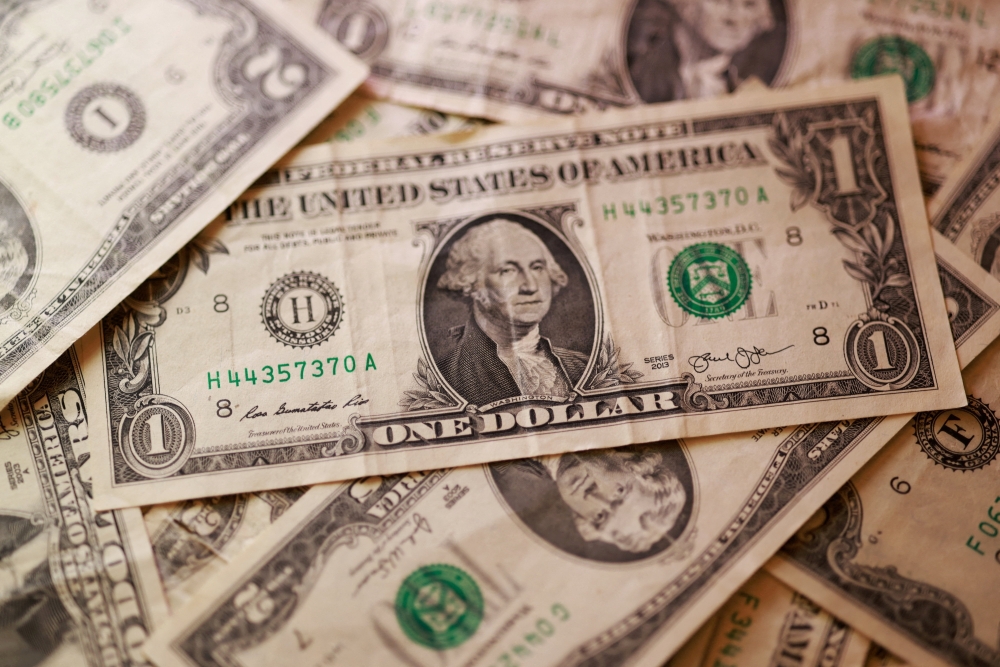


The Democratic congressional sweep is unfolding more decisively than expected. The USD has weakened modestly, reflecting limited immediate policy implications of the surprise. Some softness is plausible due to rising regulatory risks, but balanced by more institutional credibility. In the near term, monetary policy tightening and artificial intelligence investment remain drivers of a robust USD.
According to David A. Meier, economist, Julius Baer, "The Democratic congressional sweep that markets had largely priced in is unfolding even more decisively than expected. In response to the stronger-than-expected Democratic victory, the US dollar has weakened modestly. The DXY Dollar Index is down around 0.4%, suggesting that markets broadly recognise the limited immediate policy implications of the result. The Senate majority remains well short of the two-thirds threshold required to override presidential vetoes or convict a president following impeachment. Some US dollar softness is nevertheless plausible. Markets anticipate greater regulatory scrutiny of the artificial intelligence (AI) sector, potentially weighing on AI capex and associated capital inflows, an important source of US dollar support this year. Beyond these sector-specific considerations, the election outcome may also reinforce a modest ‘gridlock premium’."
He added, "A Democratic Senate would have greater scope to block appointments from the administration, while marginally stronger institutional checks and balances could reduce expectations of further aggressive executive policy actions, supporting the US dollar through the institutional credibility channel. Going forward, monetary policy and the AI investment cycle remain dominant drivers of the US dollar in the near term and should continue to provide support. Over the longer horizon, however, we continue to expect US dollar weakness, reflecting the persistent US current account deficit and continuously strained fiscal position."
According to Carsten Menke, head next generation research, "Mirroring a softer US dollar and lower US bond yields after the midterm elections, gold and silver prices moved up around 2% to 3%. Typically, the markets are not very sensitive to politics, and we do not think that the Democratic sweep will lastingly change the fundamental outlook. Lower bond yields could be a positive factor, while easing fears of fiscal irresponsibility could be a negative one. While the short-term outlook does not seem to be very clear at the moment, concerns about US indebtedness and the associated interest-rate burden should provide support to gold and silver in the longer term."
"We do not think that the outcome of the election will lastingly change the fundamental outlook for gold and silver. With Democrats controlling Congress and a Republican President, legislative gridlock becomes likely, reducing the scope for party aligned policymaking and potentially encouraging greater fiscal discipline. Yet, it is not entirely clear what this would mean for the gold and silver markets. While lower US bond yields could be a positive factor, easing fears of fiscal irresponsibility could be a negative one. The short-term outlook thus remains unclear, not least because flows appear to be dominating fundamentals once again."
He added, "While the fundamental backdrop in the gold and silver markets has changed markedly over the course of the last years, this fails to fully explain why prices have been selling off so steeply as of late. From a flow perspective, we still see the level of USD 4,000 per ounce of gold and USD 50 per ounce of silver as key. Should prices break decidedly below those levels, this could trigger more selling, in particular from physically backed products, which remained very resilient as of late. Taking a longer-term perspective, the outlook remains compelling. Both gold and silver should be supported by concerns about US indebtedness and the associated interest-rate burden. While gold also benefits from central bank buying as a strong structural source of demand, this is not the case for silver. We stick to our views: Constructive on gold and Neutral on silver."
Oman Observer is now on the WhatsApp channel. Click here