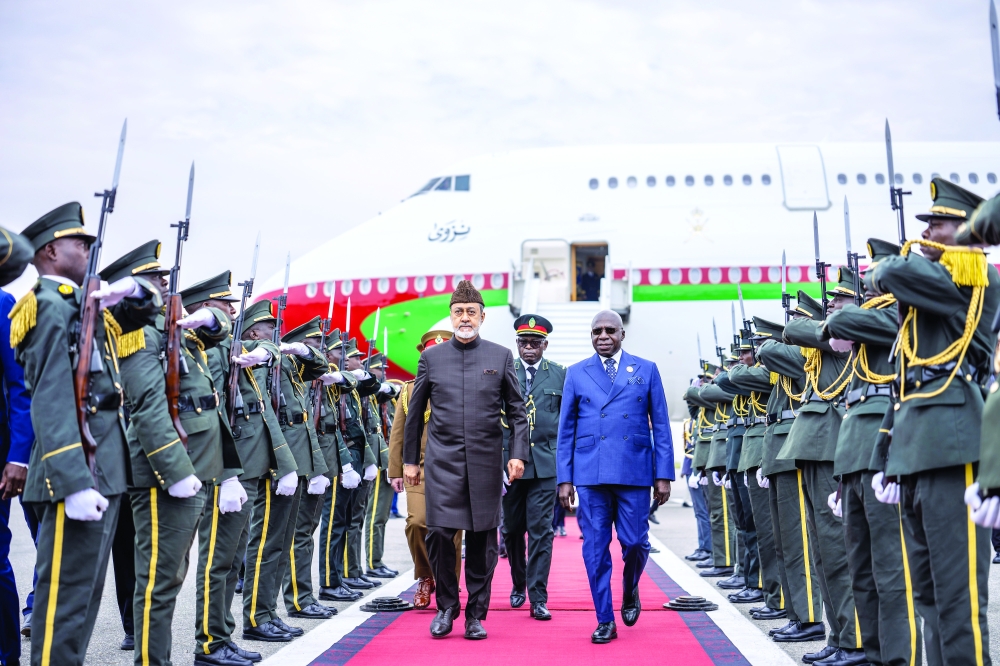


MUSCAT: China’s growing investment in renewable hydrogen and its latest efforts to stimulate industrial demand could open new opportunities for Oman to deepen energy and manufacturing cooperation with Beijing, as His Majesty Sultan Haitham bin Tarik begins a two-day state visit to China.
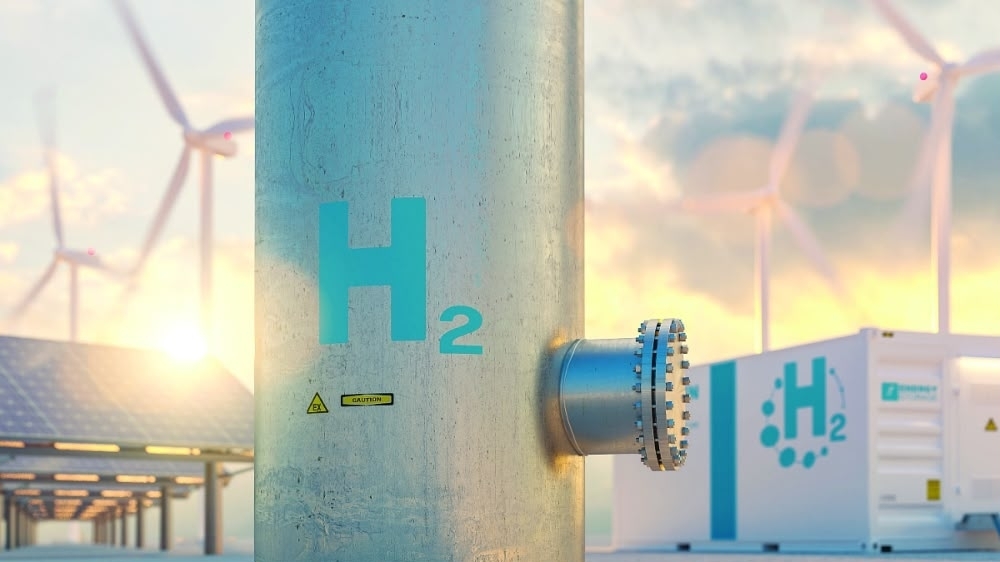
The visit comes at a time when China is strengthening its position in the global hydrogen industry, not only through large-scale production and technology development but also by encouraging factories, transport operators and other businesses to use hydrogen.
For Oman, which is developing a green hydrogen industry with a strong export focus, China’s approach offers a potential model for building domestic industrial demand alongside overseas sales.
Beijing recently approved four-year hydrogen development programmes covering five regional city clusters, with central government incentives of up to 8 billion yuan, equivalent to approximately $1.1 billion.
The programme, announced by Chinese authorities in October, links government support to the expansion of hydrogen applications, including industrial processes, fuel-cell vehicles and related infrastructure.
Each participating cluster can receive up to 1.6 billion yuan over four years, with funding intended to reduce the cost of hydrogen use and encourage commercial adoption.
The initiative addresses one of the industry’s biggest obstacles: hydrogen production capacity is expanding faster than the development of customers willing to purchase the fuel at commercially viable prices.
China’s position is already substantial. The Hydrogen Council’s Global Hydrogen Compass 2026 report identifies the country as the world’s largest market for committed renewable hydrogen capacity, accounting for more than half the global total.
Globally, committed investment in clean hydrogen has reached $130 billion across more than 570 projects, representing 6.9 million tonnes of annual production capacity.
However, only around 1.7 million tonnes of that capacity is operational, while binding purchase agreements cover approximately 4.2 million tonnes annually.
The difference between committed production capacity and contracted demand illustrates the commercial uncertainty facing developers, particularly those planning projects dependent on future export markets.
For Oman, the challenge is especially relevant.
The Sultanate has allocated substantial land resources for green hydrogen development, seeking to use its renewable energy potential, industrial infrastructure and access to international shipping routes to establish a competitive export industry.
Yet producing hydrogen at scale is only part of the equation. Developers must also secure financing, build infrastructure and negotiate long-term agreements with buyers prepared to pay the cost of cleaner fuels.
China’s strategy suggests another potential direction for cooperation.
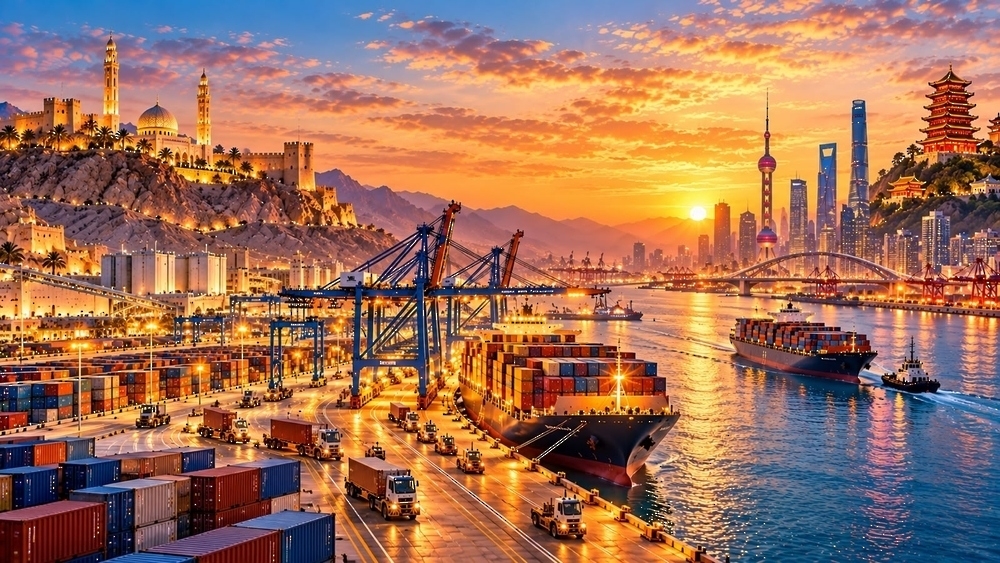
Rather than viewing Beijing solely as a future destination for Omani hydrogen exports, Oman could explore opportunities to attract Chinese investment into industries that use hydrogen as an input, including low-emission steel, chemicals and other manufactured products.
Such investments could help create demand within Oman while generating higher-value industrial exports.
Chinese companies could also contribute technology, equipment and manufacturing expertise to Oman’s hydrogen supply chain, including electrolysers and related infrastructure.
These possibilities are particularly relevant as China expands its domestic hydrogen manufacturing base and develops larger projects supported by industrial demand.
However, China’s growing production capacity also presents a competitive consideration for Oman.
A country increasingly capable of meeting its own hydrogen requirements may offer fewer opportunities for imported hydrogen than its industrial growth alone would suggest.
Meanwhile, Europe’s hydrogen industry faces a different set of challenges, including project delays, high costs and uncertainty over the implementation of demand-support policies.
Europe remains a potential destination for hydrogen and its derivatives produced in Oman, but the pace at which buyers enter binding contracts will influence the commercial outlook for export-oriented projects.
These contrasting developments highlight why future investment decisions cannot rely solely on projected international demand.
China is using public incentives to encourage consumption, while European policymakers are seeking to translate regulatory requirements into commercially viable demand.
For Oman, a balanced approach could involve securing overseas customers while encouraging industries at home to use hydrogen and its derivatives where economically justified.
The timing of His Majesty’s visit provides an opportunity to examine how the longstanding energy relationship between Oman and China could develop beyond conventional hydrocarbons.
The two countries established a comprehensive strategic partnership in 2018, and the current visit is expected to explore wider economic and investment cooperation.
Although no specific hydrogen agreement arising from the visit has been confirmed, China’s changing energy strategy creates potential areas for collaboration in technology, manufacturing, industrial investment and future trade.
For Oman, the longer-term opportunity may lie not simply in exporting hydrogen to China, but in attracting the industries and technologies needed to turn hydrogen production into broader economic value.
Oman Observer is now on the WhatsApp channel. Click here