

MUSCAT, NOV 1
Chinese-linked industrial projects in Oman are extending into solar technology, battery materials, steel processing and vehicle assembly, offering the Sultanate an opportunity to build a manufacturing relationship with China that goes beyond its longstanding role as an energy supplier.
Ten major projects across Suhar, Duqm and Khazaen were identified by Eng Jasim Saif Al Jadeedi, Director of the Technical Office of the Under-Secretary of Commerce and Industry, in information provided to the Observer.
The projects include manufacturing facilities already entering production, developments under construction and investments whose commercial operations have yet to begin. They reflect a wider effort to attract industries capable of producing goods for international markets rather than relying primarily on exports of raw materials.
The changing relationship comes against the backdrop of substantial trade between the two countries. Bilateral trade reached RO 9.6 billion in 2025, including approximately RO 7.7 billion in Omani exports, according to figures from the National Centre for Statistics and Information.
China remains Oman’s largest trading partner, with crude oil, liquefied natural gas and related products accounting for much of the Sultanate of Oman’s exports to the Chinese market.
Chinese direct investment in Oman stood at RO 903.8 million at the end of June 2026, compared with RO 866.2 million at the end of 2025. The figures measure recorded investment rather than the total value of industrial projects announced by companies.
Suhar accounts for six of the ten projects identified by Al Jadeedi, including several linked to the global transition towards renewable energy and electric mobility.
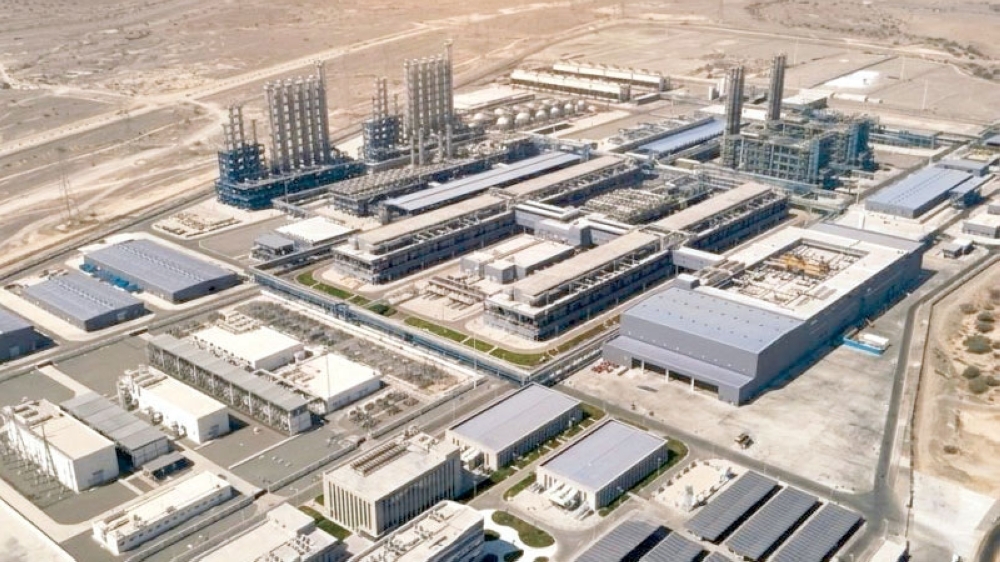
Among them is United Solar Polysilicon’s $1.6 billion manufacturing facility, which began initial operations in February 2026. The plant is designed to produce 100,000 tonnes of high-purity polysilicon annually at full capacity, supplying a material essential to solar panel manufacturing.
Although the project has international ownership and financing, its Chinese technology connections illustrate the wider industrial links developing between Oman and global manufacturing supply chains.
Another major investment is Zhongke Electric’s $1 billion facility for producing anode materials used in lithium-ion batteries. Construction began in May 2026, with production capacity planned to reach 200,000 tonnes annually across three phases.
The project is intended to supply international markets where demand for battery materials is being driven by electric vehicles and energy storage technologies.
Al Jadeedi also identified JA Solar’s $564 million solar cell and module project and Jietai Solar’s $700 million solar cell manufacturing development. The two projects add to Suhar’s growing concentration of solar-related industries.
JA Solar’s project has previously been reported as having an annual planned capacity of six gigawatts of solar cells and three gigawatts of modules, while Jietai’s development targets five gigawatts of solar cells.
Beyond renewable energy, Al Jadeedi listed a $624 million iron ore concentration and processing project involving Jinnan Iron & Steel and Vale.
Another Suhar development, associated with United Projects Achievement, covers cloud computing and data centres, although its investment value was not disclosed.
In Duqm, the largest figure in the information supplied by Al Jadeedi relates to the Oman Wanfang–China-Oman Industrial City, listed at $10.7 billion. The figure represents the stated value associated with the industrial development and should not be interpreted as investment already spent. The information provided does not establish the amount committed or realised.
Duqm is also associated with Tsingshan Holding Group’s green steel and downstream industrial activities, alongside the Duqm Hongtong Piping Factory, which focuses on composite pipes for the oil and gas industry. No investment values were supplied for either project.
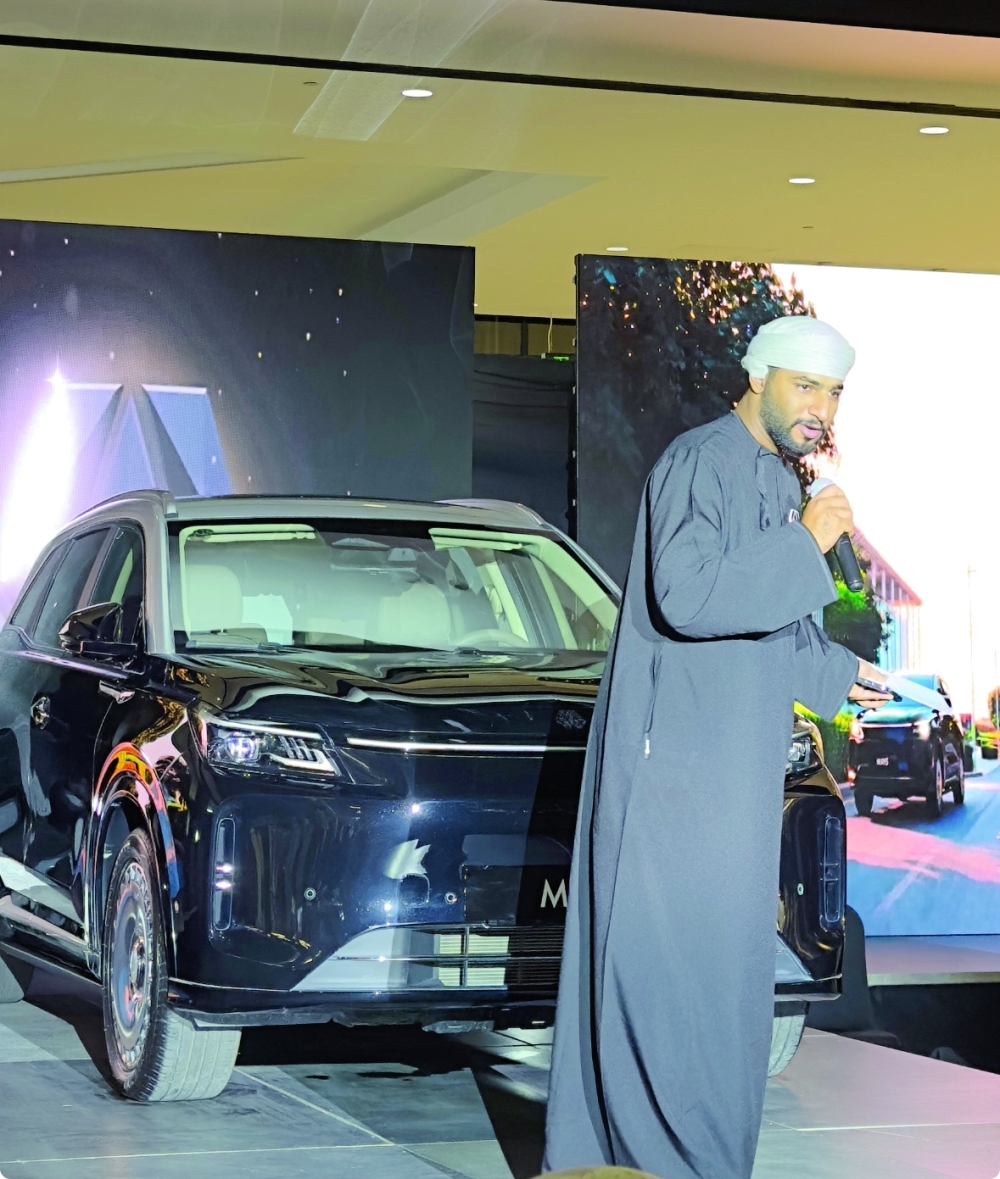
The tenth project is in Khazaen Economic City, where China’s Spruce Group has entered an agreement to develop an electric and hybrid vehicle assembly facility.
Its proposed production activities could extend Oman’s manufacturing base into the automotive sector, although commercial output has yet to be established.
Al Jadeedi linked the investments to Oman Manufacturing Strategy 2040, particularly its objectives of diversifying industrial production, attracting advanced technologies and connecting Omani manufacturers with global value chains.
He identified technology transfer, local supplier development, skilled employment and export growth as opportunities arising from the projects.
The six developments with disclosed values in his submission total approximately $15.19 billion. However, they are at different stages of development, and their combined stated value is not directly comparable with official foreign direct investment statistics.
The distinction matters because the economic contribution of an announced investment cannot be measured solely by its proposed cost. Production, exports, local purchasing and employment provide a clearer picture of what a project ultimately contributes.
Omani academic Dr Mohammed bin Awadh al Mashikhi, who spoke exclusively to the Observer about the wider relationship, considers China’s industrial development and technological capabilities important reasons for Oman to strengthen its economic engagement with Beijing.
Having visited China several times, Al Mashikhi said its development had impressed him, particularly the combination of central economic planning and market activity that he sees as contributing to the country’s industrial expansion.
He views closer cooperation as strategically important at a time when global economic influence is changing. For Oman, that relationship offers opportunities to attract investment and expertise into sectors beyond hydrocarbons.
The industrial cooperation also has a government-to-government dimension. At the Oman-China Joint Committee meeting in Beijing in December 2025, officials discussed a proposed integrated industrial complex for renewable energy supply chains and agreed to establish a working group covering trade, investment and digital commerce.
The discussions included smart warehouses and distribution centres in Oman’s economic and free zones, reflecting the potential to use the Sultanate of Oman’s ports and industrial infrastructure to serve regional and international markets.
The emerging projects offer a picture of how Oman’s relationship with China could develop over the coming years. Some are already progressing towards commercial production, while others remain at earlier stages.
For Oman, the next challenge is to turn those investments into lasting industrial activity. That means building relationships between manufacturers and local suppliers, developing technical skills and securing markets for products made in the Sultanate.
China is already one of Oman’s most important export destinations. The longer-term significance of the industrial relationship will depend on whether Oman can also become a competitive manufacturing base serving customers beyond its borders.
Oman Observer is now on the WhatsApp channel. Click here