

MUSCAT, OCT 24
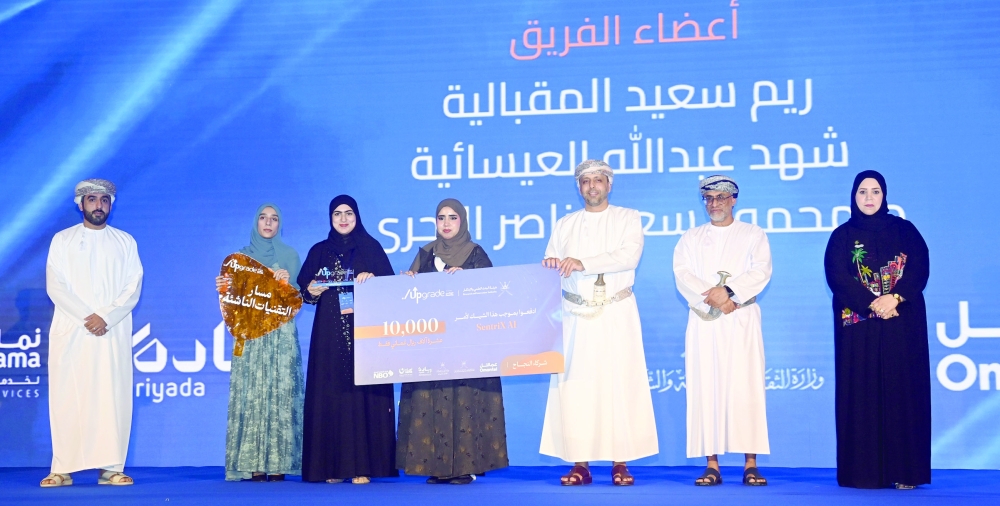
Ten student projects, chosen from 232 entries, will each receive up to RO 10,000 and a year of incubation to grow into startups after winning the ninth edition of the Upgrade programme.
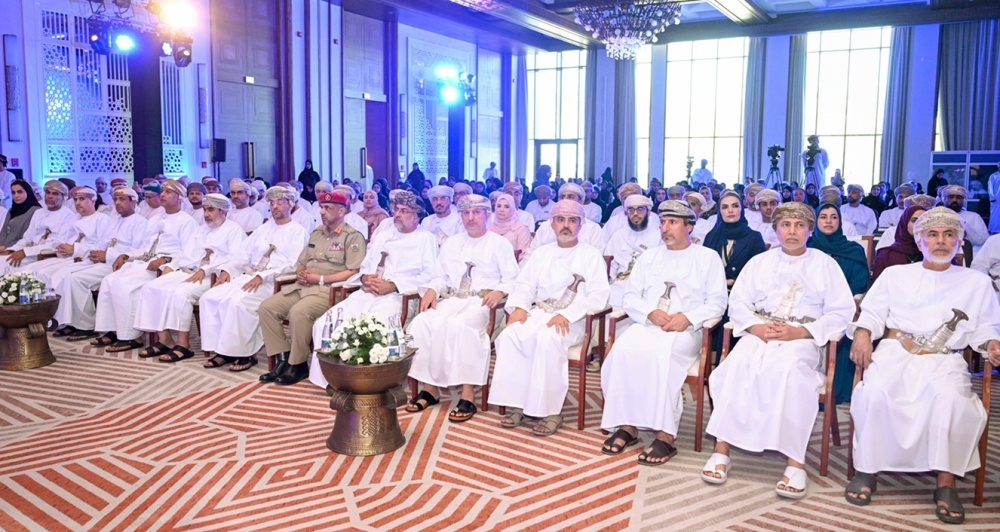
The Research and Innovation Authority announced the winners on Wednesday at a closing ceremony at Tivoli La Vie Hotel & Resort, Muscat Hills, under the auspices of Munir bin Ali al Muniri, Deputy President for Operations at the Oman Investment Authority.
Fifty-three projects from higher education institutions across Oman reached the final round, with the winners selected across three tracks: emerging technologies, water and financial technology.
"What we celebrate today is not the end of a journey, but the beginning of a responsibility," Balqees al Hinai, Acting Director of the Research and Innovation Programmes Department at the authority, told the winners. She also announced that the Agricultural and Fisheries Development Fund will join the programme's tracks as a main partner from the coming editions.
Six projects won in the emerging technologies track: an AI-based water quality monitoring system for fish farms from Gulf College; KHOOS and SentriX AI from Sohar University; AI-Controlled Power Management Systems from the National University of Science and Technology; Cardiognose from Middle East College; and RAFID by Ali al Sulaimani of the Modern College of Business and Science.
Al Sulaimani said the idea came from the gap between national awareness of risks and the actual response at household level, citing studies showing that 87.9 per cent of residents in Oman are willing to help their neighbours during crises, yet only 14.1 per cent have a written emergency plan.
"We are not replacing government systems, we are supporting them," he said.
Three projects won in the water track: a hybrid microbial desalination cell and reverse osmosis technology from International Maritime College Oman; GreenFlow from the University of Technology and Applied Sciences in Muscat; and an IoT-based smart water quality monitoring system by Hind al Nasseri of the university's Nizwa branch.
Al Nasseri said the idea grew out of the filters they have, and questions about whether they purify water properly, how effective they are and how long they last before they need changing.
One project won in the financial technology field: ChequeScanner, by Jasim al Rubaie of Gulf College.
Al Rubaie said the idea stemmed from the gap between receiving a cheque and the bank's final outcome, when beneficiaries remain exposed to financial and operational uncertainty. In 2024, Oman recorded 311,764 unpaid cheques, or 8.9 per cent of those presented for clearing, according to the Central Bank of Oman's Financial Stability Report.
Oman Observer is now on the WhatsApp channel. Click here