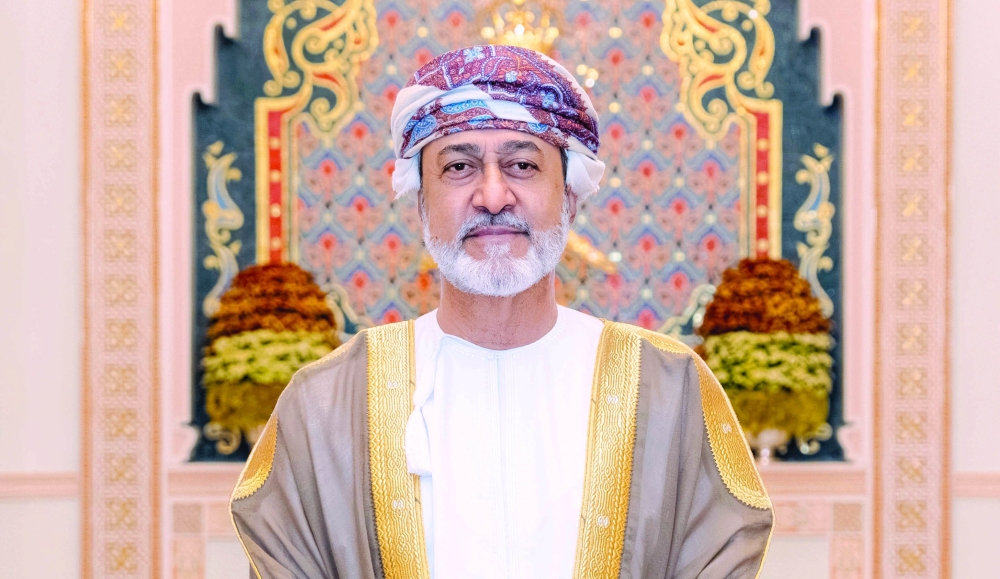
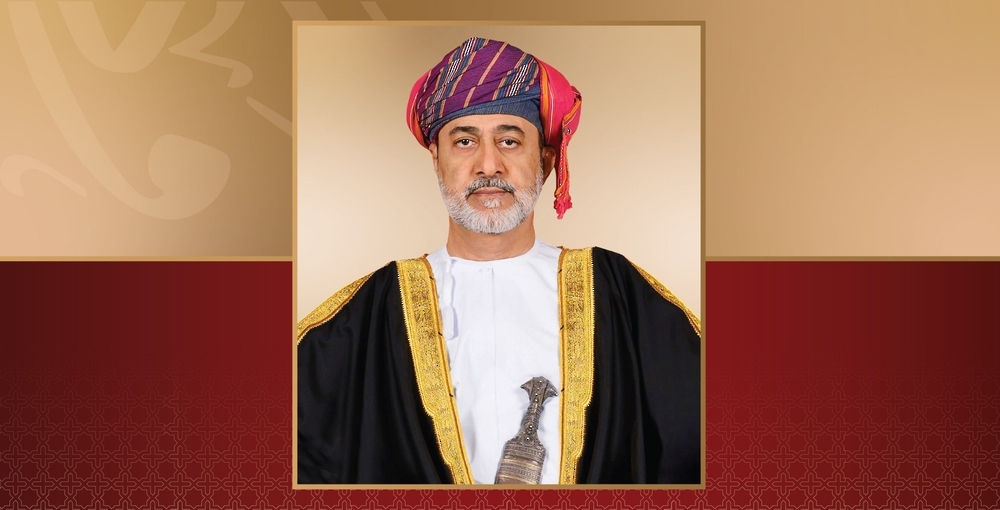
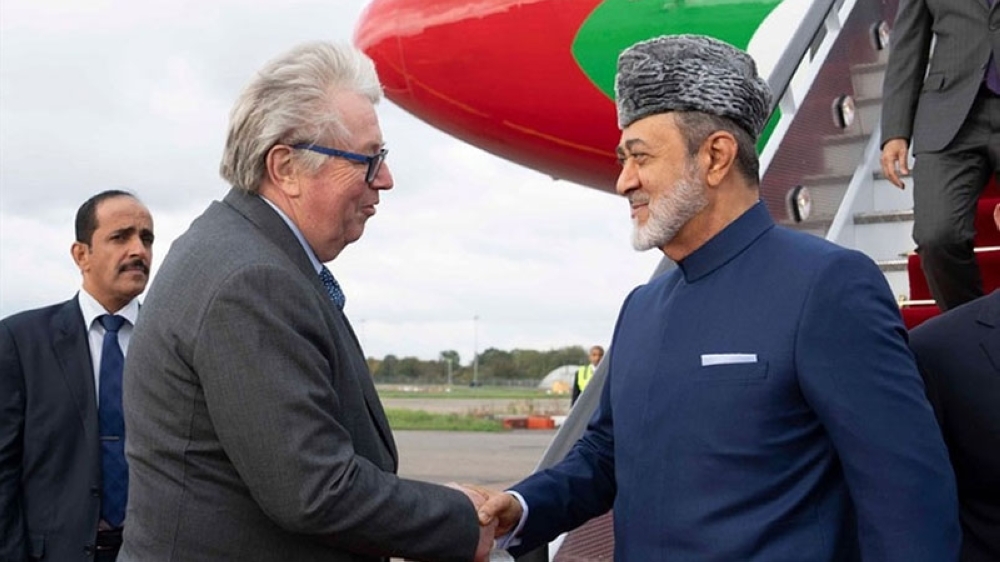
At the invitation of King Charles III, His Majesty Sultan Haitham bin Tarik is making an official State Visit to the United Kingdom. The occasion celebrates a relationship more than two centuries old and one whose strength comes from what each country brings to the other.
Both His Majesty and King Charles have a shared interest in ecological conservation and the preservation of their country’s heritage.
Oman’s strategic location and regional diplomatic influence are valuable to Britain. Britain, in turn, offers Oman a longstanding defence partnership, investment, expertise and economic connections that support Oman’s development.
The relationship’s foundations reach back to 1798, when Sultan bin Ahmad al Busaidi concluded an agreement with the British East India Company. A further agreement in 1800, known as the 'Unshook Treaty', established a British representative in Muscat. Oman was then a maritime power, linking the Arabian Peninsula with India and the wider Indian Ocean. Its ports and trading networks made Oman strategically important, while Britain sought commercial access and security for routes across the region.
The relationship was shaped by the unequal power of the era, but Omani rulers continued to pursue their own interests and preserve the country’s distinct identity. Trade and the sea established enduring connections.
Omani merchants linked ports across the Indian Ocean, and the two countries developed practical interests in commerce, navigation and maritime security.
As Oman moved towards modern statehood, the relationship changed too. The Treaty of Friendship, Commerce and Navigation was signed between the United Kingdom and the Sultanate of Muscat and Oman on December 20, 1951.
In 1970, Oman entered a period of national development and wider international engagement. Britain became a close partner in defence, training and professional exchange.
The personal dimension of these ties is reflected at the Royal Military Academy Sandhurst. HH Sayyid Theyazin bin Haitham al Said, Deputy Prime Minister for Economic Affairs, graduated from Sandhurst in 2022. Two generations of Oman’s leadership have thus shared and gained a formative connection with this esteemed British military institution while 3,000 Omani students now attend colleges and universities in Britain.
The Joint Defence Agreement signed in 2019, alongside the Comprehensive Agreement on Enduring Friendship, provides a further framework for cooperation. Joint exercises, including Saif Sareea 3 in 2018, have strengthened military coordination. Collaboration around Duqm also reflects shared interests in logistics and the security of maritime routes.
For Britain, Oman’s position near the Strait of Hormuz and along key Indian Ocean routes makes it a valuable partner in a region central to global commerce and energy security.
The mutual benefits are not confined to defence. Oman’s independent foreign policy and diplomatic expertise offer Britain a trusted channel of communication in a region where relationships can be complex and tensions acute.
Muscat has maintained dialogue with parties across political divides and has helped facilitate contacts and negotiations. That role gives Oman influence beyond its size and geography. It also offers Britain a partner with regional knowledge and credibility, particularly when conflict threatens stability.
Oman’s neutrality is not disengagement. It is an active policy that allows the Sultanate to engage with different sides. The economic relationship is similarly reciprocal. British investment brings capital, expertise and business connections to Oman, supporting development and economic diversification under Oman Vision 2040.
British companies and institutions contribute experience in areas including clean energy, logistics, education and professional services.
Oman, meanwhile, offers British businesses access to a strategically located, stable market and a gateway to wider regional opportunities.
British direct investment in Oman rose from RO 14.9 billion in 2024 to RO 16.1 billion in the last quarter of 2026. The UK accounts for more than half of Oman’s cumulative foreign direct investment.
However, this is not a one-sided partnership, nor one sustained by history alone. Britain benefits from Oman’s strategic location, diplomatic access and role in regional stability while Oman benefits from British investment, economic expertise and a close defence relationship.
Both countries gain from trade, education, professional exchange and the confidence built through regular cooperation. His Majesty’s state visit honours that inheritance while looking to the future. Oman and Britain have remained friends because the relationship has continually delivered practical value to both and because each recognises the contribution the other can make to security, prosperity and peace.
Across two centuries, Oman and Britain have shown that a lasting friendship is not simply inherited. It is renewed through trust, mutual benefit and a shared commitment to peace and prosperity. His Majesty’s state visit today is important in cementing this mutually beneficial friendship.
Oman Observer is now on the WhatsApp channel. Click here