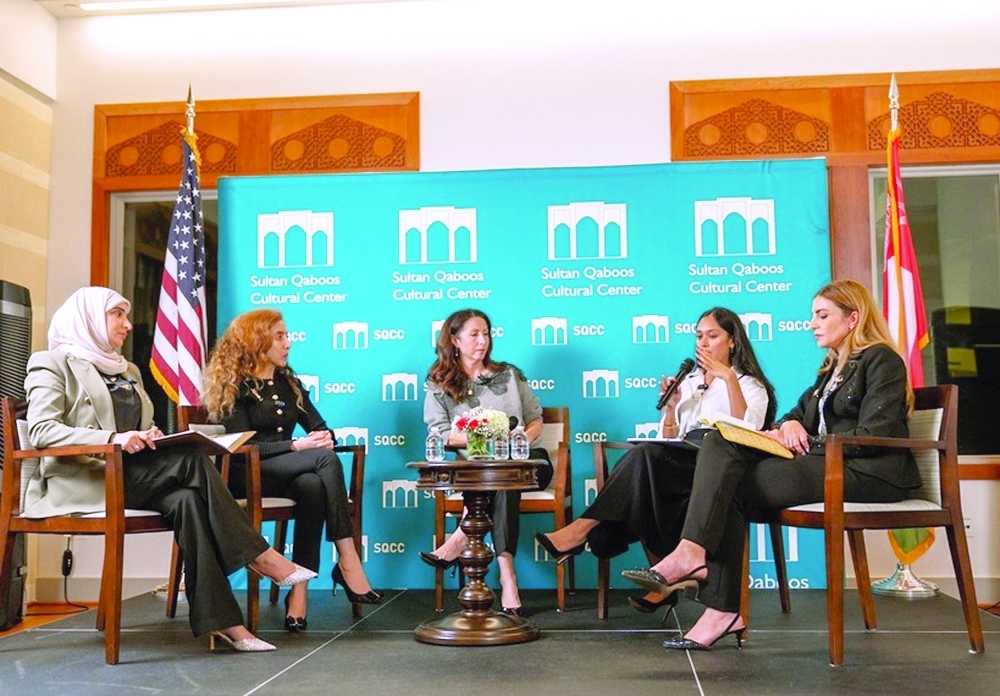
A common saying shared by much of the world holds that there might not be so many wars if women made those choices. Of course, this is a generalisation and history offers many examples that counter this.
But the sentiment is real. As Oman observes Omani Women’s Day this week, there is much to celebrate and much to look forward to.
We often hear introductions which begin with ‘the first woman CEO’ or ‘the first woman adventurer’. This sounds like a compliment, but it hides a larger truth. Women leaders are still the anomaly, not the norm. It bears attention when the fact that a woman is leading an organisation is viewed as a unique event.
Research on women in leadership roles suggests that the expectations on them are still not normative. Respondents in studies across the world have suggested that women feel that they may have been appointed to fill the gender gap in top administration. Also, once they are heading an organisation, expectations change.
A University of Georgia study found that women were often stifled by their own internalised expectations of their role as leaders: “Some of these societal expectations included presenting a nurturing attitude, prioritising employee well-being over productivity and not giving boss-like directives."
The rise in opportunities across the board is undeniable.
The way to the top is more accessible today than ever before. Women now make up the majority of university graduates in many countries, including in the Gulf and South Asia. They run companies, manage budgets and teach the next generation of leaders.
But what is still lacking is an ease of getting to the top for the majority of women. The ones who do are few, in comparison to general trends. This is unfortunate because data shows women outperforming in every school leaving exam and in tertiary education. Potential is no longer the issue.
The reasons for this are not hard to find. Somewhere along the line, women’s lives take a detour. The gap is usually to be a parent and raise a family. This happens in the crucial years when others are making long-term plans for their careers. Upon returning to the workforce, women find that they have missed out on years of experience and others have jumped the queue to seniority.
There are further examples of women putting their careers on hold. Most demands on the family come at a time when women are climbing the ladder and they are having to halt. These demands often put an abrupt stop to any potential leadership role. The common notion that ‘women can have it all’ is swiftly put to the test.
The issue is not just that women are underrepresented in leadership roles, but that such a reality has consequences for our future. A child watching women chair meetings and make policy will regard this as a norm, not a reality to challenge. Others will also accept that competence is not judged by gender but by outcomes.
The solutions are well known: organisations must offer seamless opportunities to grow, offer better support services to employees, and make mentoring and recruiting transparent. Creating an even playing field will mean that everybody can grow without treading on others’ shoes.
The aim is not to make women’s leadership less celebrated but less surprising. It should become the norm and be celebrated just as every other achievement of an institution or an organisation, and even of a family.
Oman Observer is now on the WhatsApp channel. Click here