




MUSCAT, OCT 3
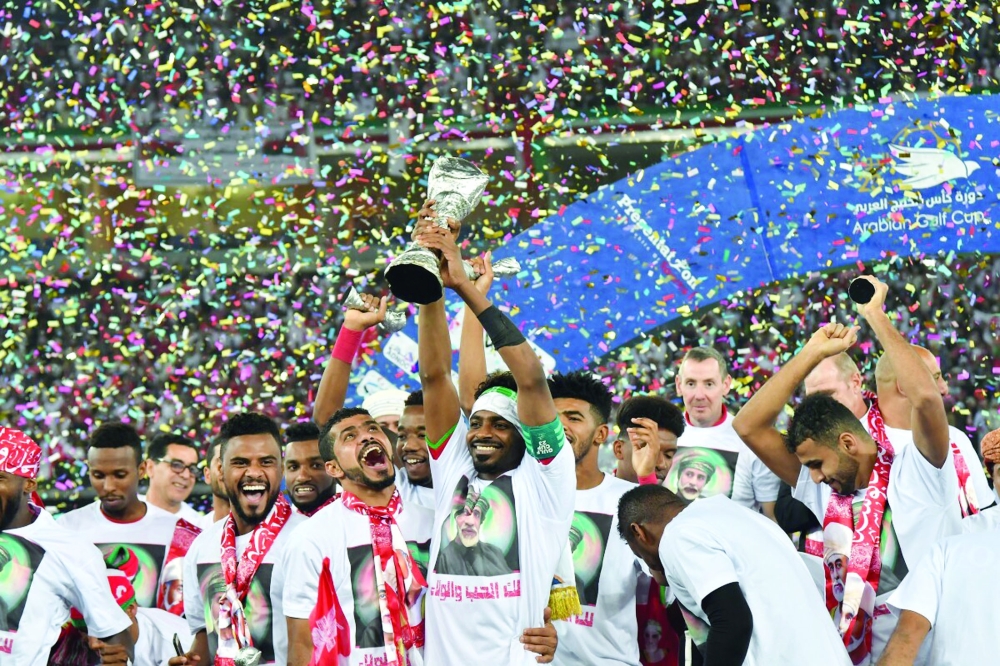
The Arabian Gulf Cup is considered as one of the Gulf region’s most significant sporting events as it carries considerable sporting, commercial and financial value. The major Gulf football event goes beyond the green field as it has developed a lot in five decades. For instance, the latest edition, the 27th Gulf Cup which is underway in Jeddah, underlines that evolution. The tournament offers $1.5 million in official cash prizes to the champions and runners-up alone as the winners are set to receive $1 million and the second-placed team will get $500,000. The best player will also receive an apartment as an additional prize through the sponsor company of the tournament.
The financial value of the Gulf Cup cannot be measured by the champion’s cheque alone. The tournament managed to bring together eight national teams whose combined estimated player market value is now around €131.77 million, according to Transfermarkt-based figures published ahead of Gulf Cup 27. Saudi Arabia leads the list by €40.68 million, followed by the United Arab Emirates with €29.05 million, Iraq at €21.20 million and Qatar at €19.93 million. Oman is valued at €8.33 million, followed by Bahrain at €6.15 million, Kuwait at €4.23 million and Yemen at €2.20 million. These figures place the Gulf Cup in a different economic category zone from a tournament whose value is determined simply by its trophy and prize money.
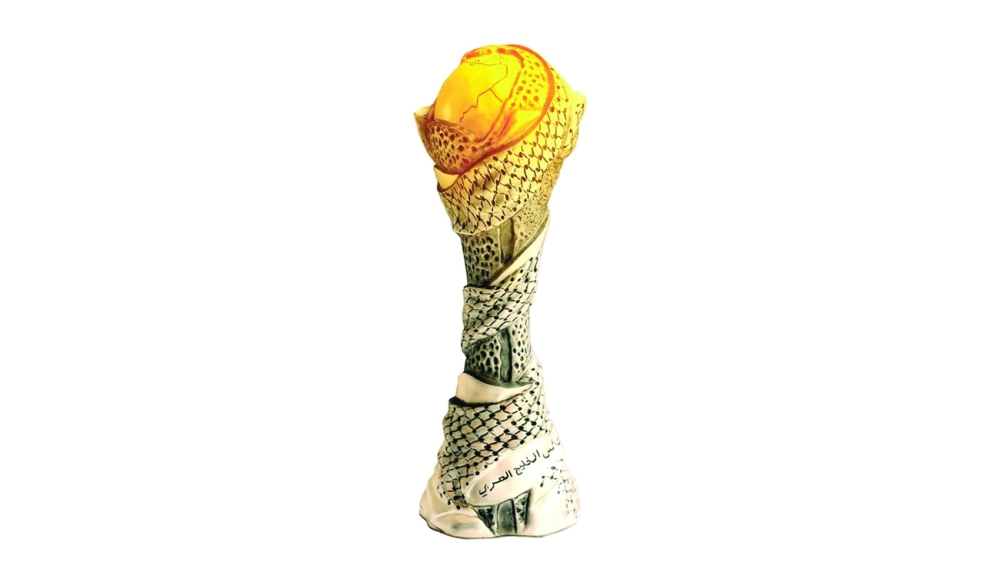
$1 MILLION PRIZE BENCHMARK
The $1 million prize for the Gulf Cup champions in Jeddah is not a new record for the competition. Instead, it has become the standard headline prize in several recent editions, reflecting the financial status the tournament has developed. The progression can be traced through the editions from Gulf Cup 20 onwards. At the 20th Gulf Cup in Yemen in 2010, the champions' prize was raised to SAR 2 million, compared with SAR 1 million previously. The runners-up received SAR 1.5 million, while an allocation of SAR 1 million was also approved for each participating team.
Three years later, Gulf Cup 21 in Bahrain increased the champions' reward to SAR 2.5 million, while the runners-up received SAR 1.5 million. Third place was awarded SAR 500,000 and fourth place SAR 250,000. The same top-four structure was maintained at Gulf Cup 22 in Saudi Arabia in 2014, with the champions again receiving SAR 2.5 million and the runners-up SAR 1.5 million. The tournament also allocated SAR 100,000 each to the top scorer, best player and best goalkeeper, alongside a SAR 200,000 fair-play award.
Gulf Cup 23, staged in Kuwait in 2017 and 2018 sporting season, marked another change in the financial structure, with the headline prizes shifting to US dollars. The champions received $1 million, while the runners-up was awarded $500,000. Individual awards included QAR 40,000 for the top scorer and QAR 30,000 each for the best player and best goalkeeper.
FINANCIAL PEAK
The most striking financial package came at Gulf Cup 24 in Qatar in 2019 as the champions had received a reported $2 million title prize, in addition to a $1 million participation allocation, taking the champions' total package to $3 million. The runners-up got $1 million. This made Gulf Cup 24 an exceptional edition from a financial perspective. It should not, however, be interpreted as a permanent rise in the champions' prize. Subsequent editions returned to the $1 million headline prize. Gulf Cup 25 in Iraq in 2023 again offered $1 million to the champions and $500,000 to the runners-up, while individual awards included BHD 4,000 for the top scorer and BHD 3,000 each for the best player and goalkeeper.
Gulf Cup 26 in Kuwait in 2024 had maintained the same headline structure with $1 million for the champions and $500,000 for the runners-up. The third-placed teams (Kuwait and Saudi Arabia) received $137,000 each, while the top scorer, best player and best goalkeeper received $27,000 each. The pattern has continued into Gulf Cup 27 in Jeddah with $1.5 million provided for the top two. The Gulf Cup Football Federation confirmed that the total official cash prize for the champions and runners-up in Jeddah is $1.5 million. The champions will receive $1 million, while the runner-up will receive $500,000. In addition, the tournament's best player will receive an apartment, making the overall rewards broader than the headline cash figures suggest. The financial structure is significant because Gulf Cup 27 features only eight teams. With a group stage followed by semifinals and a final, the competition is compact but carries a substantial financial reward for the teams reaching the decisive stages.
€131.77 M AS PLAYING VALUE
Beyond the official tournament rewards, the most revealing indication of the Gulf Cup's sporting and economic weight comes from the market value of its players. The eight squads participating in Gulf Cup 27 combined an estimated market value of approximately €131.77 million, according to Transfermarkt-based figures published before the tournament. Saudi Arabia accounts for €40.68 million, representing around 31% of the combined value while the UAE followed by €29.05 million. Iraq and Qatar are valued at €21.20 million and €19.93 million respectively. Together, those four teams account for approximately €110.86 million, or more than 84% of the total estimated market value of the eight participating squads. Oman's squad has an estimated market value of €8.33 million, placing it fifth among the eight teams. Bahrain followed by €6.15 million while Kuwait and Yemen are valued at €4.23 million and €2.20 million respectively.
The figures also underline the individual star power within the tournament. Qatar's Akram Afif is valued at around €8 million, while other leading players from Saudi Arabia, the UAE and Iraq also command multi-million-euro valuations. Recent Transfermarkt-based reporting has placed Saudi Arabia's Saud Abdulhamid at €9 million and Musab al Juwayr at €6 million, illustrating the presence of high-value players within the tournament's eight squads. Market value is an estimate only rather than a direct measure of a player's salary or transfer fee. Nevertheless, it provided a useful statistical indicator of the playing assets assembled for the Gulf Cup.
MORE THAN PRIZE MONEY
The economic importance of the Gulf Cup extends beyond the amounts distributed to the top teams. Hosting the competition involved stadium operations, accommodation, transportation, broadcasting, security, ticketing, hospitality, media operations, commercial activity and other hosting relevant items. The tournament also brings supporters from across the Gulf, creating wider economic activity for the host city. Saudi Arabia's selection as host for Gulf Cup 27 was unanimously approved by the General Assembly of the Arabian Gulf Cup Football Federation in December 2024. For the Gulf countries, the competition also provides a platform for players who may not regularly receive the same international exposure as those competing in major continental tournaments. The combination of prize money, player market value, commercial activity, media rights, sponsorship and fan engagement has consequently strengthened the Gulf Cup's position within the region's sporting economy.
Oman Observer is now on the WhatsApp channel. Click here