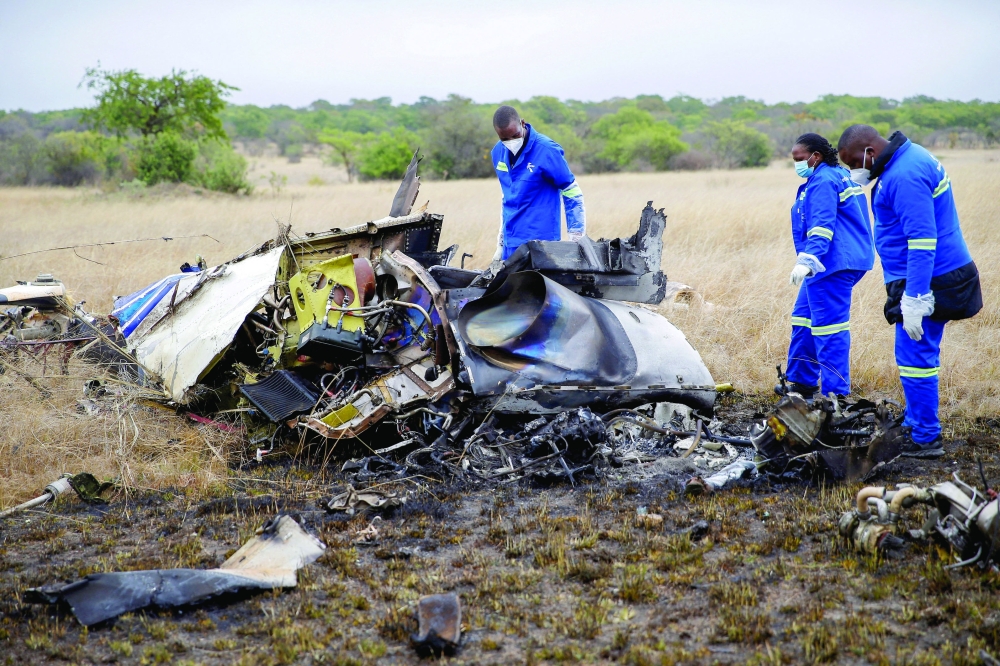





BULAWAYO: Flamboyant Zimbabwean businessman Wicknell Chivayo, killed in a helicopter crash on Wednesday, was one of the most recognisable faces of a class of conspicuously wealthy entrepreneurs with ties to the ruling party.
Famous for giving luxury vehicles and wads of cash to allies at highly publicised events, the 43-year-old's lavish lifestyle and extravagant handouts contrasted sharply with the economic hardship of ordinary Zimbabweans. The tycoon and his wife Lucy Muteke were among six people killed on Wednesday in a helicopter crash east of the capital Harare, his family said.
The last post on his Facebook account announced he had bought a top-of-the-range SUV for each of two advocates who supported him "from back in the days of poverty". Sir Wicknell, as he was popularly known, said he was also giving them "small petty cash" of $250,000 each, with extra for one supporting President Emmerson Mnangagwa against a challenge to recent Constitutional amendments.
Last month, Chivayo visited a major gospel church to hand over to the hugely popular televangelist preacher — also close to the president — gifts to him and his wife of a Rolls-Royce, Mercedes-Benz G-Wagon and Maybach. But as images of private jets, sprawling mansions and over-the-top parties have been shared, questions were being raised about how Chivayo and others in a certain Zimbabwean elite were able to access the opportunities that made their fortunes possible.
After economic collapse gave way to two decades of lacklustre growth, Zimbabwe's economy appears to be booming. Real GDP averaged nearly six per cent annually between 2021 and 2025, helped by stronger agricultural and mining output. But the gains have yet to translate into jobs or higher household incomes. About 80 per cent of Zimbabweans work in the informal sector, with median monthly earnings of $130, according to the World Bank.
"It may be normal anywhere in the world... for the super-rich to flaunt their wealth," social justice advocate Tendai Mbofana said. "But in Zimbabwe it becomes a big issue... when the sources are questionable and the majority is barely getting by."
Even if Zimbabwe has been doing well, "the formal economy is still small, public-sector salaries are low," economist Felix Chari said. "So when people see cars and cash being thrown around, it feels personal," Chari said.
Chivayo's close ties to the long-ruling Zanu-PF and Mnangagwa — who in July approved Constitutional changes that critics say could extend his time in office — have fuelled the cynicism. His company Intratrek Zimbabwe reportedly won several major government contracts, notably a $170-million deal in 2015 to build a 100-megawatt solar plant.
The tycoon — who spent three years in jail around two decades ago on a money-laundering conviction — also moved in high circles outside of Zimbabwe, rubbing shoulders with leaders in Eswatini, Kenya and Uganda.
In a message of condolence, Mnangagwa said he was "personally numbed" by the death of Chivayo and his wife whom he described as "consummately philanthropic", as shown by "countless acts of charity and generosity which ran into millions of dollars".
The debate comes against the backdrop of concerns about corruption, with Transparency International giving Zimbabwe a score of 22 out of 100 in its 2025 Corruption Perceptions Index, ranking it 157th of 182 countries.
"People are not saying no one should be rich," Mbofana said. "They are asking: where did it come from, and why is the state not working for everyone?" "Mining and agriculture can drive GDP. But if a nurse still earns $250 and an unemployed parent can't afford fees for their children... you will keep having two nations." — AFP
Oman Observer is now on the WhatsApp channel. Click here