On September 21, Oman did something governments seldom do. It put a deadline on itself. Under the new Executive Regulation of the Special Economic Zones and Free Zones Law, issued by the Public Authority for Special Economic Zones and Free Zones as Decision 81/2026, an investor who files a complete licence application will have an answer within seven working days. If none comes, the answer is yes. It has been reported as the last piece of a legal jigsaw begun with Royal Decree 38/2025. It is. But the clock is the part worth understanding.
Ask a manufacturer what it wants from a host government and it will not say a lower tax rate. Oman's zones have long offered holidays measured in decades, and full foreign ownership alongside them. What a manufacturer wants is a date. Borrowed money does not wait politely. Every month between land allocation and license is interest paid for nothing, and a delay that cannot be estimated cannot go in a spreadsheet. Give it a date and it can build the case. Leave it open and it builds later, or never.
The need is not abstract. The Eleventh Five-Year Development Plan, adopted in January, wants FDI inflows equivalent to 11 per cent of GDP and a private-sector contribution to GDP of 56 per cent by 2030. On a GDP base of about RO 42 billion, the first comes to roughly RO 4.6 billion. In the first quarter of 2026, FDI inflows reached RO 2.57 billion, on figures from the National Centre for Statistics and Information. Nobody closes a gap that size by shaving another point off a tax rate that is already zero.
Look at what Oman holds and the difficulty is clear. The FDI stock stood at a record RO 32.2 billion in the first quarter. Four-fifths of it sits in oil and gas; less than a tenth is manufacturing. This is not geology talking. Hydrocarbon money arrives through concession agreements in which the state is the counterparty and every milestone is haggled over in advance. A maker of pumps or cable gets no such courtesy. It applies and waits. The zones have done well within that model, RO 22.4 billion committed and 325 agreements signed last year alone. But each was, in effect, a private timetable.
The regulation makes the timetable public, and the same for everybody. Article 16 sets the seven-day rule; Article 17 allows a licence to be issued automatically after the electronic verification of the required data, documents and conditions, while Article 18 allows automatic renewal where the licensee's data are up to date and the prescribed conditions continue to be met. In a world where the twenty biggest host economies swallowed more than 80 per cent of global FDI last year, on UNCTAD's count, a country of five million people will not win on size. It can win on friction, which is what a seven-day rule removes.
The fine print cuts both ways. The clock starts only when the file is complete; Article 7 leaves that to the applicant. An incomplete application is not a slow one but a stationary one. And silence means yes for the operating licence alone. On a transfer of licence, a strategic-project approval or a real-estate license the authority has five, thirty and fifteen days, and there silence means no. This is by design; the routine decision is automated, the expensive one kept in human hands. But whoever assumes an unanswered letter is good news will be wrong three times in four.
For the foreign investor who reads it, the offer is large. A project above RO 10 million that brings technology, local content, supply security or exports can be declared strategic and win up to ten years without land rent and four years outside Omanisation quotas. Income-tax exemption now reaches ten classes of activity, data centres and green hydrogen among them. Goods may be exported without a permit. Residency follows the investment and extends to spouse and close family. None of it arrives unasked; a feasibility study, a timetable, proof of solvency and a commercial registration are the price of entry. But the question has changed. It is no longer whether Oman is ready for the investor, but whether the investor's file is ready for Oman.
For Omani businesses the gains are specific. Local content is one of the four tests a project must pass to be called strategic, so a foreign plant that buys fabrication, packaging and transport from Omani firms strengthens its own case for ten rent-free years.
Smaller Omani companies in the zones get the same seven-day clock as the multinational next door, and the Board may waive the RO 10 million threshold where a project's nature warrants. Somebody must assemble the files, keep the new register current and run the notices and quarterly reports the regulation requires: steady work for Omani lawyers, accountants, engineers and freight forwarders that outlasts the opening ceremony. The plan asks the private sector for 50,000 Omani jobs a year. The zones produced 4,467 last year against a target of 2,500, and each new plant counts twice, on its own payroll and in the firms that supply it.
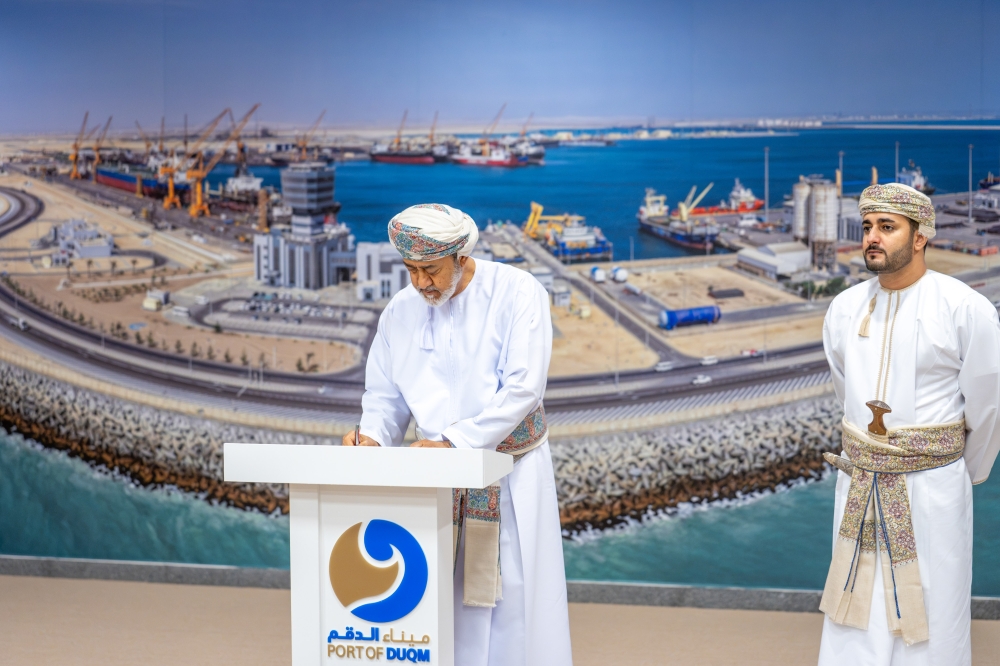
The six months to March 2027 that Article III allows existing licensees to bring their affairs into line is also the window in which first movers are decided. A company already in SOHAR, Al Duqm or Salalah can test its project against the exempt activity classes and strategic threshold now, and file before the queue forms. Ports on the open ocean and treaty access to India and the United States were always Oman's case as a manufacturing and logistics base. What was missing was a date, and Oman has now supplied one. The rest belongs to those who arrive with the paperwork, and to the Omani firms ready to carry it with them.
Oman Observer is now on the WhatsApp channel. Click here