As world leaders gathered in New York City for the 81st session of the United Nations General Assembly, the international order they have ostensibly come to defend is in worse shape than at any point since 1945. China and Russia never fully accepted the post-Cold War international system, many newly assertive middle powers resent it, and its principal financial backer, the American public, has lost interest in underwriting it. With the UN about to choose a new secretary-general and US President Donald Trump’s administration openly hostile to multilateralism, it is unclear how much longer the system can stagger on.
Sadly, no new order is in the making. This is not an interregnum between an American-led order and a Chinese-led one. We have long lived with instances of disorder — with states breaking the rules within a framework that they still recognise — but we are now approaching something new. I call it un-order: a situation in which states act without reference to any common framework.
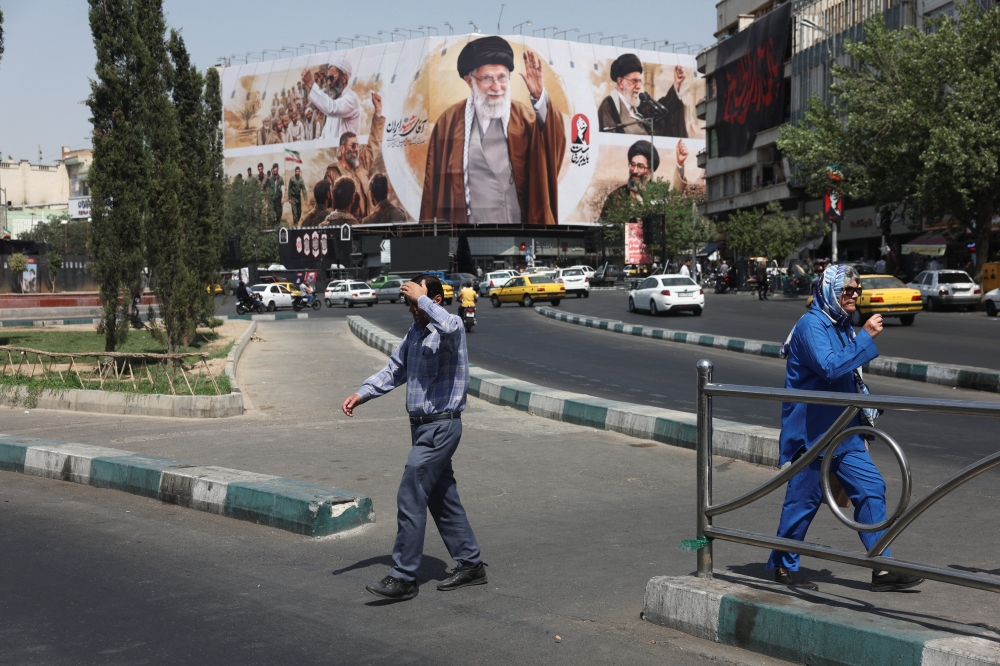
One can already see this new dispensation in how crises unfold. After the United States and Israel launched their war against Iran in February, the parties could not even agree whether a ceasefire existed, let alone who had won. Moreover, disputes regularly jump from one domain to another, such as when Trump’s designs on Greenland lead to tariff threats against the European Union. Everywhere one looks, the ties that once bound the world together are being turned into weapons. Over half of globally traded staple crops pass through at least one maritime chokepoint, and the closure of the Strait of Hormuz (and now the Bab Al Mandab) has shown what happens when they are used for leverage.
Europeans have responded to all this as architects would, drawing up blueprints, defending universal norms, and trying their best to keep the old institutions standing. Others are behaving more like artisans —improvising, repurposing what still works, and adapting quickly to the loss of what doesn’t. China has built up the Shanghai Cooperation Organisation and an expanded BRICS, joined the Arctic Council as an observer, and written its surveillance-friendly preferences into Internet standards at the International Telecommunication Union. Europeans could do well to learn a thing or two from this approach.
Yet even in a world of un-order, it would be a mistake to think that multilateralism itself is dying. Instead, it is migrating and being transformed. Our research at the European Council on Foreign Relations shows that middle powers are building creative new forms of cooperation everywhere.
For example, Barbados’s Bridgetown Initiative is reshaping the debate on climate and development finance; the India-Middle East-Europe Economic Corridor and Lobito Corridor are using infrastructure instead of treaties to bind countries together; and Qatar and Türkiye have become the go-to mediators in conflicts from Gaza to Ukraine. In other words, today’s middle powers are doing what the UN was built to do, but in a more improvised, ad hoc fashion.
For Europeans, this is an uncomfortable moment. As architects, they have the furthest to go to catch up with the times. But with the right strategy, they also have much to gain. After all, Canadian Prime Minister Mark Carney recently visited Strasbourg to seek an “alliance for the future” because he understands that the EU can serve as an anchor for the West.
To fulfil this role, Europeans must do three things. First, they should work with the new builders. That means pursuing observer status and engagement with groupings they currently treat as rivals. It means helping the UN act as the connective tissue for new platforms, linking the Bridgetown Initiative to international financial institutions, and Qatar’s personalised deal-making to formal legal and reconstruction bodies. And it means understanding how Brazilians, Indians, Indonesians, and South Africans view contemporary geopolitics.
Second, Europeans must recognise that they have spent the last few years eroding the credibility of the rule of law by defending it rhetorically but not in practice. They would do better to concentrate on enforcing a narrower interpretation of the rules that still have buy-in beyond the West, not least the prohibitions on territorial conquest, the targeting of civilians, and nuclear weapons.
Third, Europeans should spend their shrinking political capital more carefully. The rising risk of a global food crisis is a test. Together, Russia’s war on Ukraine, the blockage of the Strait of Hormuz, and the strongest El Niño on record are threatening global food supplies at a time when 2.3 billion people already face food insecurity. The UN helped tackle the last food crisis in 2022, but it probably will be unable to play the same role this time around.
This need for global leadership presents an opportunity for Europeans, who should pursue a new form of multilateralism. By convening a global coalition with Brazil, Egypt, Kazakhstan, Mexico, and Türkiye, Europe can bring together the countries most exposed to the crisis, pool and mobilise resources, and negotiate practical arrangements to keep food and fertiliser shipments moving. On an issue like food security, any such effort would win broad international support.
As European leaders hobnob with their counterparts from around the world this week, the first question they should be asking is not how to reform the UN, but how to approach the multilateral landscape as artisans. That means considering which new initiatives they should join, which institutions they can repurpose, and which other countries they can work with to get things done in an un-ordered world. @Project Syndicate, 2026
Mark Leonard
The writer is Director of the European Council on Foreign Relations, is the author, most recently, of Surviving Chaos: Geopolitics When the Rules Fail
Oman Observer is now on the WhatsApp channel. Click here