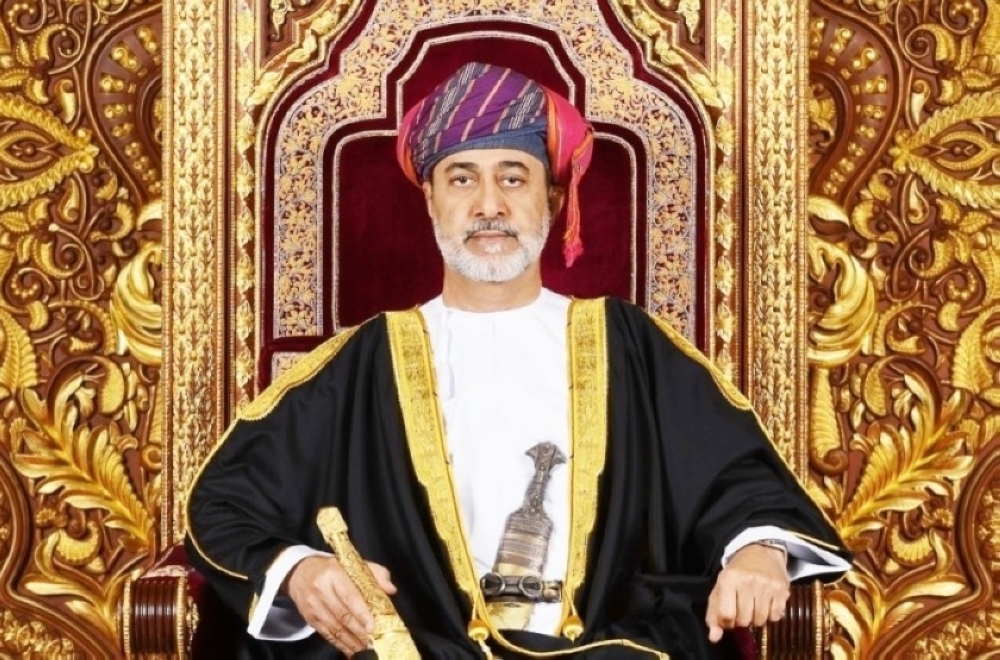
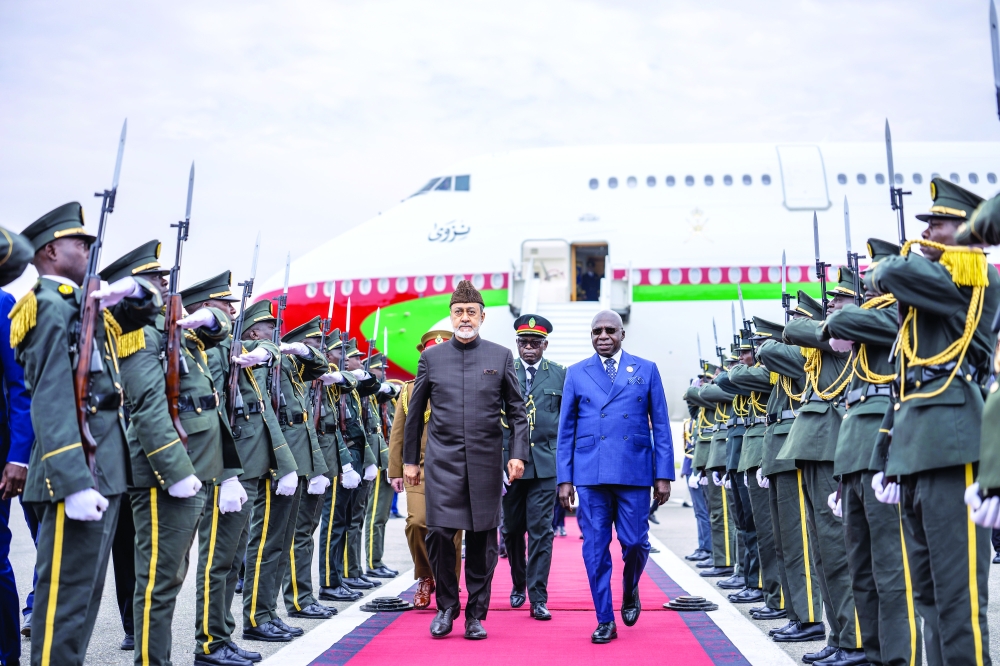
For the first time, an Omani Sovereign has undertaken state visits to two Sub-Saharan African nations. His Majesty Sultan Haitham bin Tarik’s visits to Botswana and Angola in mid-September 2026 therefore raise two important questions: Why Africa? And why now?
The answer is that Africa is not merely a continent of future potential. It is already rising. Botswana and Angola are living proof of how the continent’s 54 nations are increasingly determined to shape their own destinies, just as other parts of the world appear to be playing with fire and flirting with a possible World War III.
History offers a sobering starting point. In November 1884, European powers gathered at the Berlin Conference to divide Africa among themselves. No African ruler was invited. Borders were drawn across maps, communities were separated, and enormous resources were allocated to foreign empires with little regard for the people who lived there.
The consequences did not disappear with independence. They survived in extractive economies, artificial borders, institutional weaknesses and conflicts over resources. However, the more important African story today is not simply what was done to the continent, but what African nations are now determined to do for themselves.
Botswana provides one of the continent’s most compelling stories. When it gained independence in 1966, Botswana was among the world’s poorest countries. It had limited infrastructure, very few secondary schools and only a handful of university graduates. Shortly afterwards, diamonds were discovered.
In many countries, such a discovery might have become a curse. Botswana turned it into a national asset by combining natural wealth with stable institutions, prudent financial management and respect for the rule of law. Six decades later, it remains one of Africa’s most stable democracies and a powerful example of how resources can support national progress when institutions are stronger than individual interests.
Botswana now faces another historic test. Diamonds still provide roughly one-third of government revenue, while natural stones face weaker global demand and increasing competition from laboratory-grown alternatives. Its next chapter must therefore be built on diversification.
This is where Oman’s partnership becomes practical. Cooperation already covers mineral exploration, copper and gold development, petroleum storage and renewable energy. A 500-megawatt solar project near Maun is among the first major investments under this emerging partnership. Botswana aims to raise renewables from around 8 per cent of its electricity supply to 50 per cent by 2030.
During His Majesty’s visit, nine agreements and instruments were signed in areas including investment, aviation, energy security, mineral development, pharmaceutical security and business cooperation. These are not ceremonial documents. They can become the architecture of a long-term economic partnership.
Angola tells a different but equally powerful story.
After nearly five centuries of Portuguese rule, Angola achieved independence in 1975, only to descend into a devastating civil war. When peace finally arrived in 2002, the country faced the enormous challenge of rebuilding its infrastructure, economy and national trust.
Today, Angola is one of Sub-Saharan Africa’s leading oil producers and one of the world’s major diamond producers by value. Yet, like Oman, it understands that natural-resource wealth must become a platform for diversification rather than a permanent dependency.
The complementarities are clear. Oman brings experience in energy, ports, logistics, fisheries, mining, finance and special economic zones. Angola offers resources, Atlantic access, agricultural potential and entry into major African markets. The two countries signed ten legal instruments and three memoranda between public companies, covering petroleum, minerals, finance, tourism, agriculture, transport, logistics and housing.
Yet there is a deeper dimension to these visits: Oman is not discovering Africa. We are reconnecting with it.
For centuries, Omani sailors crossed the Indian Ocean using the monsoon winds, linking Muscat, Sur and Dhofar with the ports of East Africa. Zanzibar later became a major political and commercial centre within the Omani sphere. That shared history contains remarkable stories of navigation, trade and cultural exchange, as well as painful chapters that must be acknowledged honestly. Mature nations do not romanticise their history; they learn from it.
The opportunity today is to build a new relationship with Africa—not through domination or extraction, but through dignity, co-investment and shared value.
Africa has the world’s youngest population, expanding cities and increasingly connected markets. It holds many of the critical minerals required for the global energy transition, while its land, sunlight and human talent offer enormous potential in food security, renewable energy, technology and digital services.
Meanwhile, many established powers are spending their resources on escalating conflicts, expanding military alliances and preparing for confrontations that could push humanity towards World War III. Africa’s 54 nations face real challenges, but many are choosing a different battlefield: the struggle for development, diversification, dignity and a stronger voice in the world.
Oman is a natural partner in that journey. It stands between Asia, Africa and the Arabian Gulf. Its ports face the Indian Ocean, its diplomacy commands trust, and its investors increasingly seek meaningful opportunities beyond traditional markets.
The Royal visits were therefore more than diplomatic milestones. They signalled that Oman’s diversification must not be limited to new sectors; it must also embrace new geographies.
The Berlin Conference divided Africa without Africans. The new African chapter must be written by Africans—with trusted partners who understand that prosperity is strongest when it is shared.
That is why Africa. And that is why now.
Oman Observer is now on the WhatsApp channel. Click here