




SALALAH: The Sarb season is a distinctive natural phase in Dhofar Governorate following the subsidence of the Khareef season, endowing the governorate with markedly different features in terms of weather, nature and touristic and economic activity. It typically begins at the end of September and continues until roughly mid-December, though the timing of its onset and the intensity of its manifestations vary from one area to another.
As the influence of the monsoon winds recedes, the fog begins to dissipate gradually and the sky grows clearer, while hours of sunshine increase and humidity levels fall compared with the Khareef months.
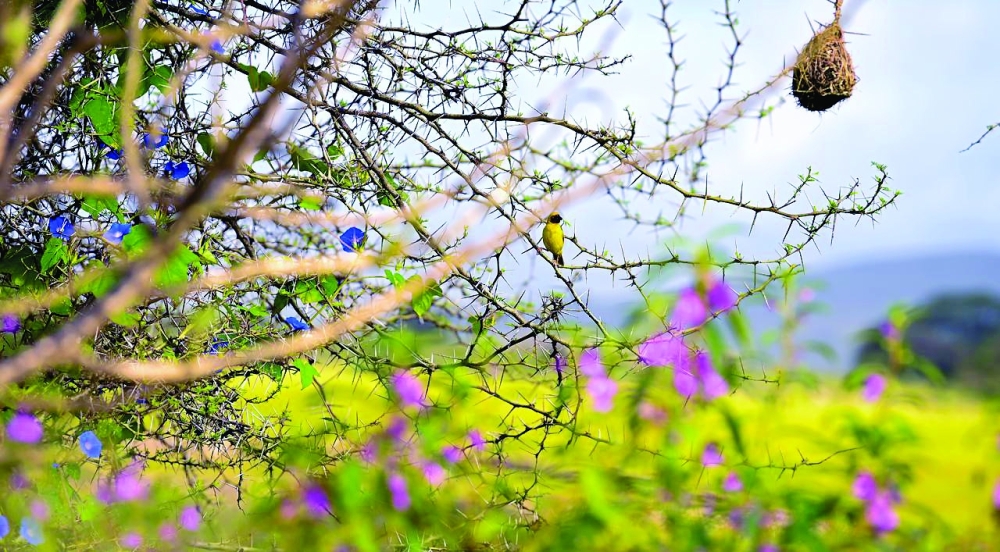
Yet the end of the Khareef season does not mean the disappearance of the rains' traces; quantities of water and moisture linger in the soil, and the vegetation cover continues to grow for a time. Meadows, wildflowers and seasonal plants therefore emerge across mountainous areas and plains.
These conditions afford the visitor a scene quite different from the misty, rain-laden landscape for which Dhofar is renowned during the Khareef season, as visibility becomes clearer and the details of the mountains, plains and coastline emerge more fully.
The wilayats of Rakhyout and Dhalkout and their surrounding areas stand out as important destinations during the Sarb season, owing to their geographical diversity, which brings together mountains, highlands, plains, pastures, green expanses, wildflowers and plants, coastal vistas and villages and rural areas.
This diversity renders the region suited to overland excursions, photography and the exploration of nature, particularly as visibility improves and the atmosphere settles.
Among the striking scenes of the Sarb season is the movement of camels — their migration between grazing areas in search of grasses and plants — as the camels benefit from the vegetation cover left behind by the Khareef rains, spreading across pastures and mountainous and rural areas. This scene is not merely a natural phenomenon; it reflects the continuity of traditional grazing patterns and the local community's enduring bond with the seasons of nature.
The movement of camels amid the meadows and mountains also lends a heritage dimension to the touristic experience, particularly in areas that combine natural scenery with rural life.
The touristic significance of the Sarb lies in its offering an experience distinct from the Khareef season. Whereas the Khareef is associated with fog, drizzle and monsoon rains, the Sarb is marked by clearer, more settled weather, allowing the visitor to engage in a variety of activities, such as excursions and exploration in mountainous areas, visiting plains and pastures, photography, observing wildflowers and plants, enjoying coastal vistas, and becoming acquainted with rural life and local heritage.
The Sarb can thus constitute a tourism season in its own right, rather than a mere transitional period between the Khareef and winter. Its significance extends beyond tourism to economic activities tied to the local environment: the vegetation cover provides natural pastures for livestock, while agricultural activity continues in a number of mountainous and rural areas. Local producers can likewise benefit from marketing fruits and vegetables, dairy products, honey, local agricultural produce and products linked to heritage and rural life.
Herein lies the potential to link tourism with the local economy, such that the season's benefits are not confined to hotels and tourism establishments but extend to farmers, livestock breeders, beekeepers, owners of small enterprises and crafts and local products.
The improvement in maritime conditions represents another facet of the Sarb season's significance. During the Khareef, fishing activity can be affected in certain periods by rough seas and high waves. As maritime conditions gradually improve, the movement of fishermen and sea-related activity returns to more favourable levels, adding a further economic dimension to the season, particularly for coastal communities whose livelihoods are partly tied to fishing and marine products.
Among the most important economic implications of the Sarb season is that it helps address the seasonality of tourism in Dhofar. If the Khareef represents a well-known tourism peak, the continuation of activity through the Sarb can help distribute tourism activity over a longer period of the year and make use of the governorate's natural endowments at different times. This means additional opportunities for hotel establishments, restaurants, cafés, tour organisers and activity and adventure companies. - ONA
Oman Observer is now on the WhatsApp channel. Click here