




For a long time, since he was a small kid, developing his senses and following his innate love for nature, long before he even knew what a chisel was, Ali al Jabri was already a sculptor. He just didn't know it yet.
Ali has his own perspective on creativity. He believes that it is a quiet accumulation, a lifetime of images and moments settling into memory, and that is the most interesting part of his story, which did not begin in a studio or a classroom. It began in the soil.
Al Jabri's surroundings moulded him into a sculptor; he grew up in a farming community, surrounded by fields. As children, he and others would gather the clay left behind after the floods, working it in their hands a small act of invention. There was wood too, and stone, all of it raw material for a childhood spent building.
“It was pure joy,” he recalls, speaking of those moments from his early days. Today, when he looks back, he recognises it differently and sees it as an early, unknown apprenticeship. Training of the hands, and of the eye.
One of the highlights Ali remembers very well is the day he tried to fire a piece of clay, with no real understanding of what firing even meant. He did not know the science of it, only that he wanted the clay to hold, to last, to resist. “It was curiosity that pushed me,” he recalls.
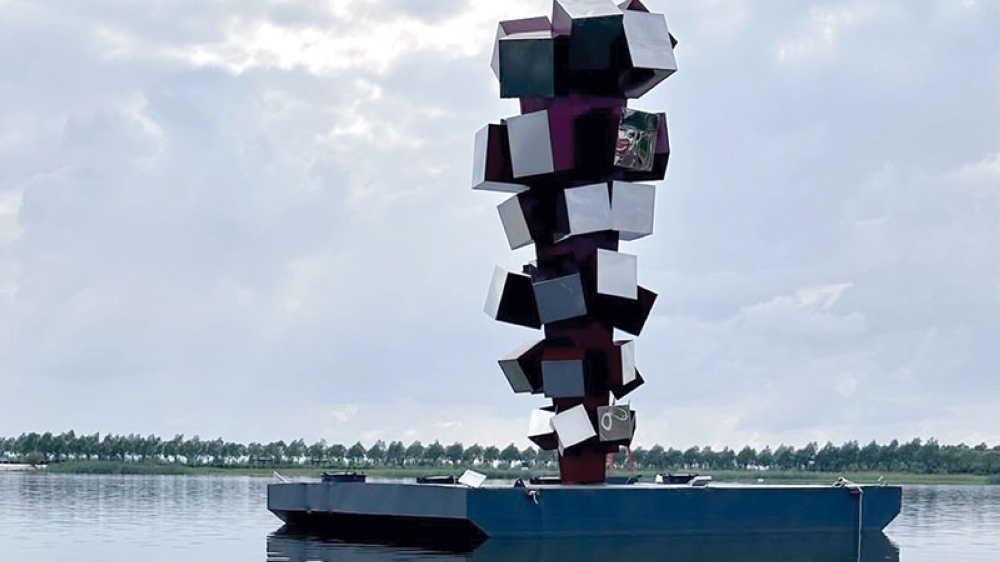
One memory in particular has stayed with him: the quiet role his father played. He recalls when his father returned, he would bring back small, unfamiliar treasures. Once it was a box of Lego. For Al Jabri, it became a rich experience. After a few days, he ignored the instruction booklet and built houses. The skills of construction and creation would later resurface in his fascination with sculptural installation.
By the time he joined Sultan Qaboos University to study art education, that instinct had a language to grow into. Courses in sculpture and ceramics sharpened what childhood had only hinted at, so he learned how to read material and how to trust the process of making.
It was there that someone finally said the word aloud. His professor, the late Dr Abdulwahab Abu Zeid, looked at him and said: “Ali, you are a sculptor.” It was not a passing compliment. It stayed with him, and it was a turning point in his journey; from that moment, Al Jabri began to feel the weight of a responsibility, toward a field that, barely had a presence in Oman.
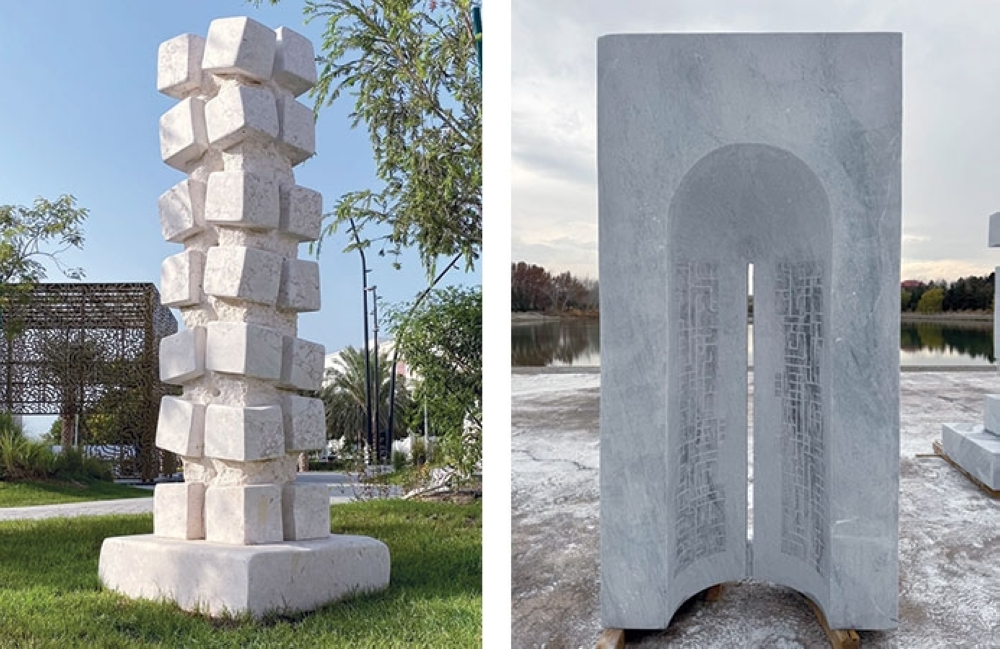
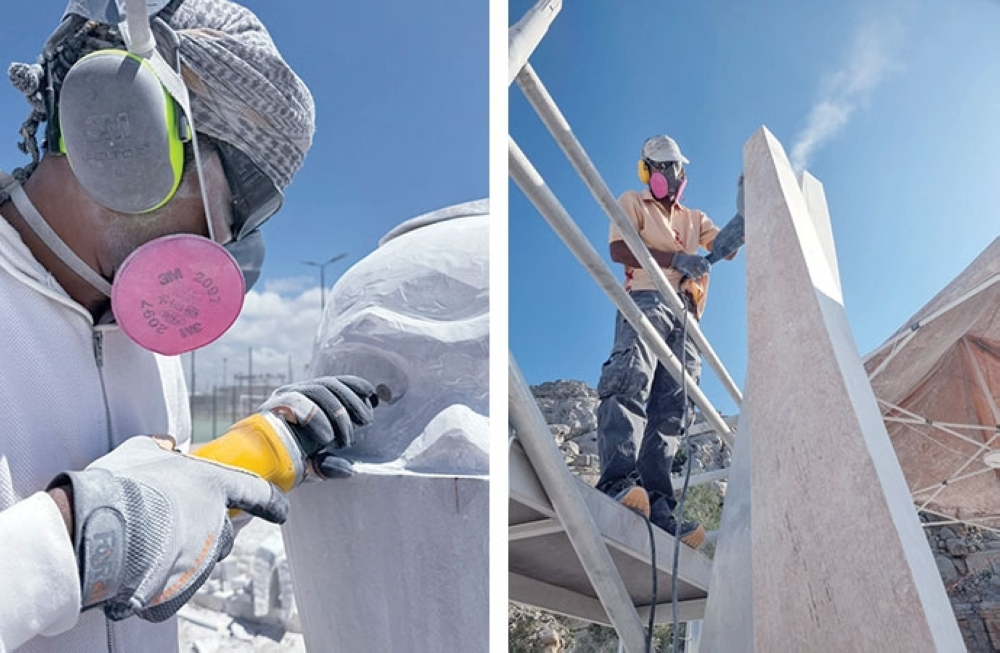
He then started to move between materials, each material answering to a different chapter of his life. He began with clay, moved to plaster, then to iron and cast metal, and eventually to marble and wood, the two materials that define him. Each material was more than a substance; it was like a teacher that taught him something new about form, about mass.
In 2012, a new chapter opened in a marble workshop led by Ayoub al Balushi. A year later, he worked alongside Al Balushi training sculptors in a wood workshop and wood became his signature. “I found in marble the solidity of the earth and its extension through time,” he says, “and in wood, the warmth and the living presence of the material.” Together, they let him build a visual dialogue.
Certain pieces have marked that journey. His very first plaster work won third place nationally, a piece he keeps, because it marks the true beginning of his professional life. Then came his first marble piece, which also won Oman's top prize. He keeps them in his personal collection. To him, they are not simply sculptures but rather witnesses to the two moments that truly transformed his path.
So, when people ask him, Al Jabri finds that he cannot give them a single date. The story began in the clay, in a box of Lego, in the curiosity of a child who tried to fire clay. It found its name later, when his professor told him what he was. It was a long accumulation that carried him from shaping clay to a full understanding of its nature; making sculpture not just his craft, but his life's responsibility.
Oman Observer is now on the WhatsApp channel. Click here