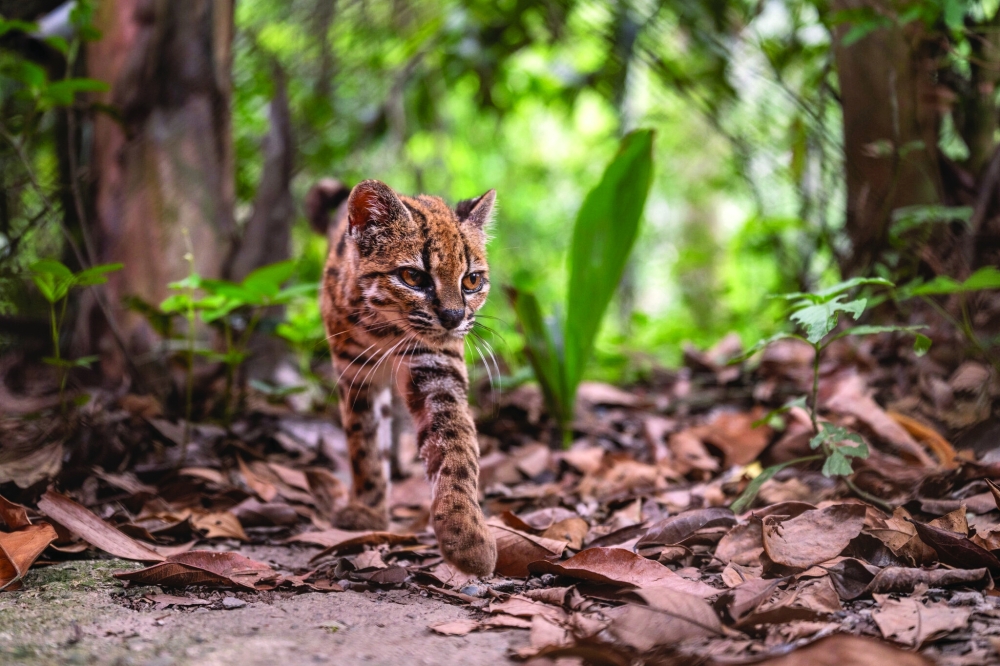
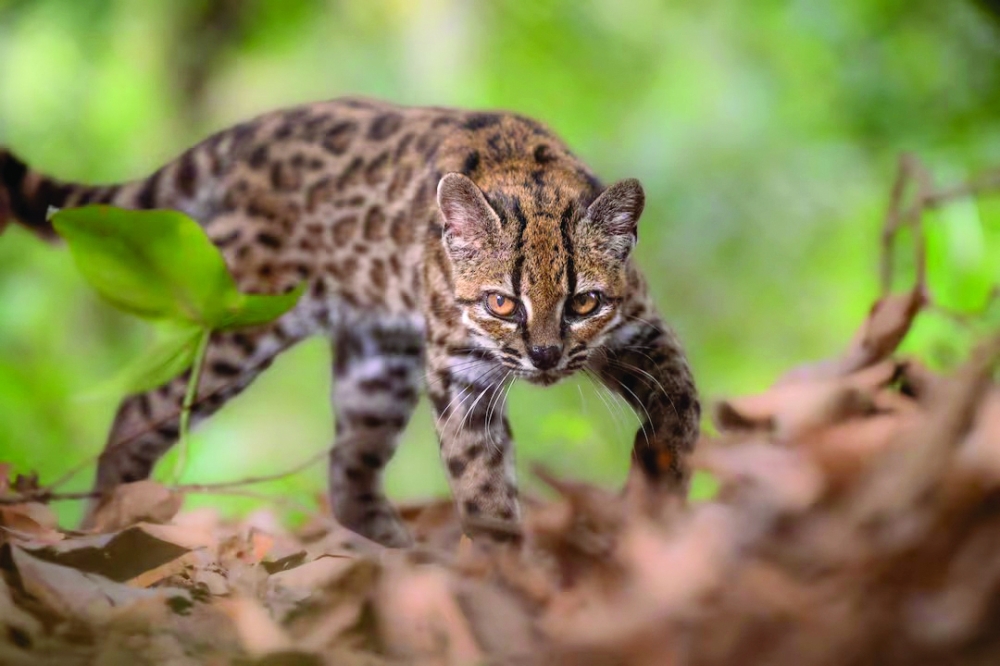





A diminutive wild cat inhabiting Bolivia’s cloud forests has been identified as a previously unknown species, marking the first time in more than a century that a new living cat species has been formally named and described.
Known as Tilcayo by local communities, the cat belongs to a group called tiger cats found across much of South America. It was discovered in Bolivia’s lush Yungas forest, a mountainous region characterised by high humidity and cloud-covered forests. Measuring about 46 cm long and weighing around 1.4 kg, it is smaller than the average domestic cat.
Researchers used genetic data to confirm the animal as a new species, giving it the scientific name Leopardus tilcayo while retaining its local name.
“Its fur is light brown ... with irregularly shaped rosettes across its body,” said Paola Nogales-Ascarrunz, a National Geographic Explorer and author of the study published in Current Biology.
Little is known about the cat’s biology. Remains of small rodents in scat samples suggest they may form part of its diet, while camera-trap evidence indicates it may be more active at night.
Tiger cats are considered cryptic species because they cannot easily be distinguished by appearance alone, said evolutionary biologist Jonas Lescroart of the University of Antwerp and study co-lead author.The team analysed DNA from 38 cats across several South American countries, including eight museum specimens, finding that tiger cats comprise five genetically distinct species. Genetic analysis suggested the Tilcayo lineage separated from other tiger cats about 1.4 million years ago.
The researchers also identified a new tiger cat subspecies in Peru’s Yungas, named Leopardus tigrinus antisuyo.
The findings could affect conservation assessments. The International Union for Conservation of Nature currently treats tiger cats as two vulnerable species with declining populations, but the researchers have shared their findings for a future review of the five lineages separately.
This is particularly important for the Yungas, which faces growing pressure from deforestation, agricultural expansion, fires and mining. Researchers highlighted forest restoration, protection of native forests and maintaining habitat connections as urgent priorities.
“There are many undiscovered species out there in the world, and they are at risk of disappearing before we even discover them,” said Eduardo Eizirik, senior author of the study. -Reuters

Oman Observer is now on the WhatsApp channel. Click here