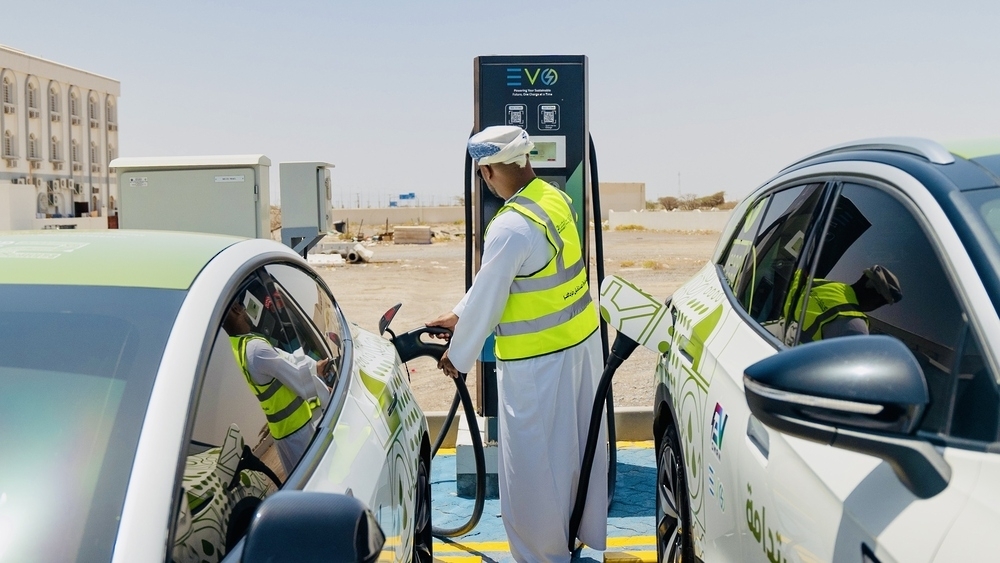





Oman’s electric vehicle ecosystem is entering a new phase with the introduction of electric vehicle charging service fees from October 1. This is aimed at regulating the market, providing clarity for users and supporting sustainable investment in charging infrastructure.
The tariffs were determined after assessing the economic and operational aspects of charging stations, including service costs and the sustainability of operations.
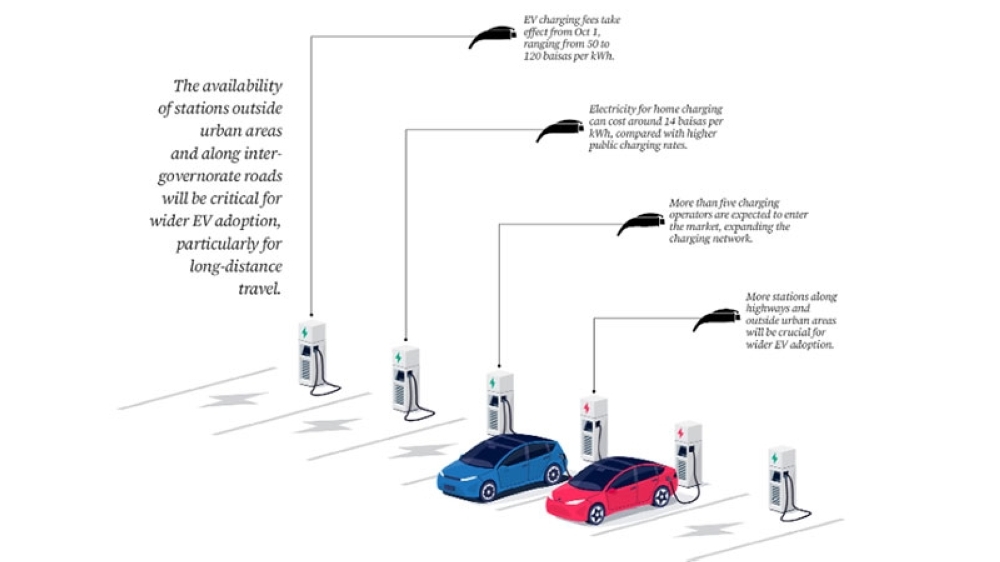
Under the approved tariff, charging fees will be 50 baisas per kilowatt-hour for chargers up to 90 kW, 90 baisas for chargers ranging from 91 to 180 kW, and 120 baisas per kilowatt-hour for chargers rated at 181 kW and above. The tariffs were determined after assessing the economic and operational aspects of charging stations, including service costs.
A hybrid vehicle owner, Abdulwahad bin Ibrahim al Farsi, hoped the rates would be reviewed and reduced and added that the regulated tariff would bring greater organisation and clarity to the market.
“Regulating the charging tariff is an important step in organising the market, but we hope the current rates will be reviewed and reduced, as lower charging costs would encourage more people to consider electric and hybrid vehicles and support their wider adoption in Oman,” he said.
Electric vehicle expert Issa bin Mubarak al Qatiti said the difference between a charger’s rated capacity and the actual power delivered to a vehicle is important when considering charging speed.
A charger rated at 180 kW does not necessarily deliver 180 kW throughout the charging process, as charging speed depends on the vehicle, battery, state of charge, temperature and energy management system. Under suitable conditions, charging may take around 30 minutes, while in other circumstances it could take considerably longer, approaching two hours.
Oman’s charging sector is gradually expanding, with more than five operators expected to enter the market. This is likely to increase charging points, enhance competition and provide users with more options.
The availability of stations outside urban areas and along inter-governorate roads will be critical for wider EV adoption, particularly for long-distance travel. Al Qatiti highlighted stations along major routes, including the Qurayat station on the road towards Sur, which can help motorists avoid significant detours.
Charging costs also differ significantly between home and public charging. According to figures cited by Al Qatiti, some public stations could charge up to 120 baisas per kWh, while others may charge around 90 baisas. By comparison, electricity for home charging can cost around 14 baisas per kWh, making home charging more economical for users able to install chargers at home.
However, public stations remain essential for long-distance journeys and motorists without home charging facilities. Faster chargers also involve higher investment, equipment and operating costs, reflected in higher service fees, while offering shorter waiting times.
As a result, users will need to balance charging speed and cost. A motorist who does not require rapid charging may choose a lower-capacity charger, while long-distance travellers may prefer faster charging to reduce waiting time.
Al Qatiti also warned that rapid growth in EV numbers without a corresponding expansion in infrastructure could create congestion at high-demand stations, increasing waiting times and affecting the user experience. New operators and wider investment will therefore be important in keeping pace with the expected growth in EV numbers.
Although public charging is more expensive than home charging, EVs can still offer economic advantages over conventional vehicles through potentially lower energy and maintenance costs.
The new tariff provides a clearer framework for both users and operators, allowing consumers to estimate costs while giving operators a pricing model to assess investment in charging infrastructure.
With the tariff coming into effect, the next phase will depend on balancing three key factors — charging speed, service cost and station availability.
Oman Observer is now on the WhatsApp channel. Click here