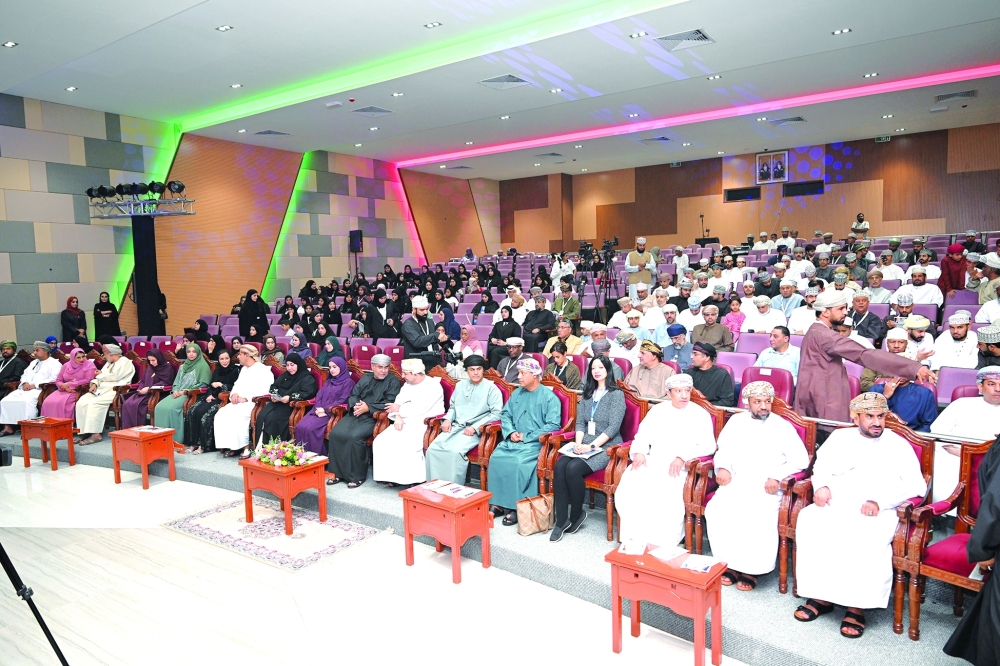





SALALAH: Fifteen productions from nine countries are competing for $150,000 in prizes at the second Dhofar International Theatre Festival, bringing Omani theatre onto the same programme as works from Europe, Asia and the Arab world during a nine-day gathering in Salalah.
Six of the 15 productions are Omani, while the international line-up includes works from Spain, Egypt, Tunisia, Türkiye, the United Arab Emirates, India, Georgia and Iraq.
Running till September 22, the festival is organised by Dhofar Municipality across three competitive tracks — Elite Performances, Main Productions and the Dhofar Theatre Competition. Each carries a grand prize of $50,000.
The structure gives theatre practitioners from Dhofar a dedicated competitive platform while exposing local performers and audiences to markedly different approaches to acting, direction, movement and stagecraft.
That contrast was evident from the opening day of the competition.
Spain’s Romeo and Juliet, staged at Ubar Theatre in the Elite Performances track, reinterpreted Shakespeare’s tragedy through flamenco, combining acting, movement, singing and guitar in a production built around a relatively restrained visual setting.
At the Sultan Qaboos Youth Complex for Culture and Entertainment, Egypt’s Shafiqa and Metwally opened the Main Productions track with a contemporary treatment of one of the country’s best-known folk narratives.
The programme has since widened further.
Tunisia’s The Runaways, Türkiye’s Fake Myself and Oman’s Nails of Eternity were followed by the UAE production Depths of the Soul and Oman’s Very Special Care.
Further productions include India’s Neythe – Dance of the Weaves, Tunisia’s Garden of Lovers, Georgia’s Hamlet and Iraq’s Abu Abdullah’s House.
Oman’s presence also includes Ashes, The Custodian, The Frankincense Tree and The People of the Sabbath.
Competitive performances continue until September 21, with the closing ceremony scheduled for September 22 at Al Murooj Theatre.
The festival’s international dimension extends beyond the productions themselves.
Its judging and selection panels bring together theatre practitioners from Oman, Kuwait, Morocco, Egypt, the United Kingdom, Spain, South Korea, France, Jordan, Bahrain and other countries.
The Elite Performances jury includes specialists from major theatre and performing arts institutions in Oman, Kuwait, Morocco, Egypt, Britain, Spain and South Korea.
The Main Productions jury is chaired by Syrian actor Ayman Zeidan and includes Egyptian actor Ahmed Bedir, Jordanian actor Munther Rayahneh, French scenographer Jean-Guy Lecat, British academic Dr Andrew Sullivan, Bahraini actress Haifa Hussein and Omani actor Talib Kahilan.
Ammar bin Obaid Ghawas, president of the festival, said the Elite Performances track brings together award-winning Arab and international productions, while Main Productions serves as the festival’s international competitive category.
The Dhofar Theatre Competition, meanwhile, is intended to give artists and theatre-makers from the governorate an opportunity to present their work within the wider festival.
That local component is significant. Rather than placing Omani theatre only alongside the international programme, six productions from the Sultanate form part of the competition itself.
The festival also includes specialist workshops and cultural activities, adding a training and professional-exchange component to the nightly performances.
Dr Ahmed bin Mohsen al Ghassani, Chairman of Dhofar Municipality and Chairman of the festival’s Executive Committee, said one of the event’s aims was to enable local talent to engage with different theatrical schools and exchange experience with practitioners from outside Oman.
He said theatre could serve as a means of communication between cultures, while the festival offered an opportunity to introduce audiences to Omani theatrical experiences.
That theme of exchange has also emerged in comments from visiting artists.
Egyptian actor Sherif Mounir called for stronger artistic cooperation between Oman and Egypt, including greater exchange of theatrical productions and possible joint creative projects.
Omani actor Saleh Zaal, among those honoured during the festival, said recognising theatre practitioners also helped document artistic careers and encourage younger generations to continue contributing to cultural life.
Syrian actor Jamal Suleiman, returning to Salalah after around 18 years, pointed to the changes he had seen in Dhofar, saying the governorate had expanded while retaining the landscape and character he remembered from his earlier visit.
Oman Observer is now on the WhatsApp channel. Click here