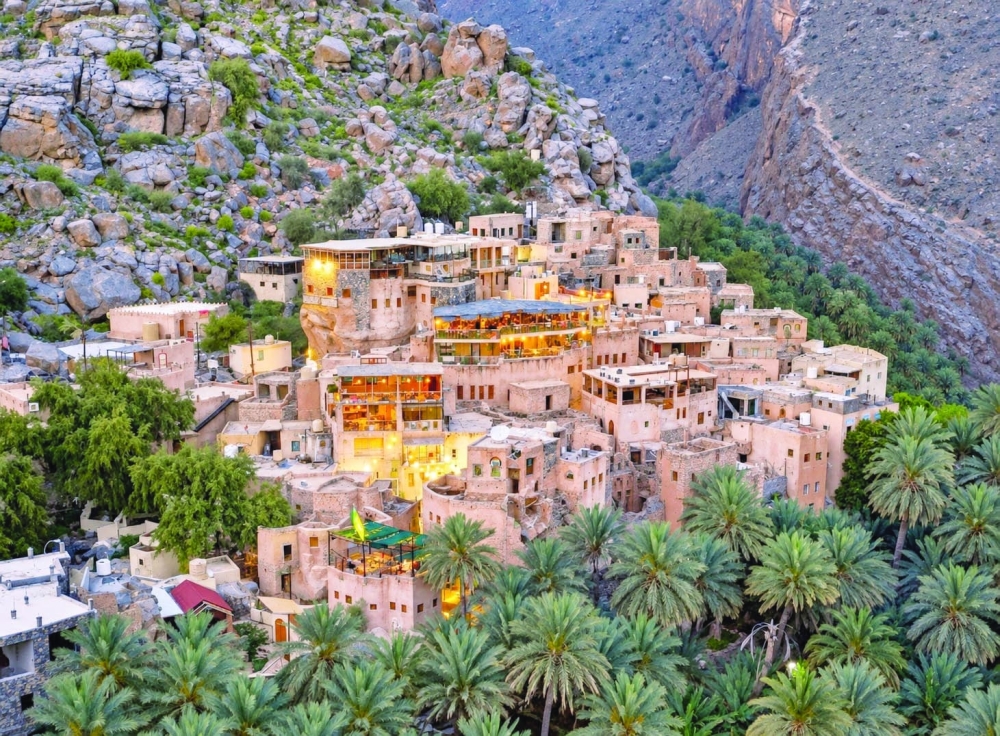





NIZWA: Oman is stepping up efforts to turn historic neighbourhoods in Al Dakhiliyah Governorate into tourism and investment destinations, seeking to bring private capital and small businesses into more than 220 traditional settlements while preserving their architectural character.
The Ministry of Heritage and Tourism is studying and rehabilitating a number of historic neighbourhoods and heritage sites based on their readiness and potential economic and social impact, according to Ahlam bint Hamad Al Qasabiya, Director of the Heritage and Tourism Department in Al Dakhiliyah Governorate.
The programme seeks to repurpose historic buildings for commercial and cultural activities, including heritage guesthouses, traditional cafes and restaurants, handicraft exhibitions, private museums and cultural centres.
Events, festivals and heritage markets are also being encouraged to generate economic activity and attract visitors throughout the year.
Al Qasabiya said the rehabilitation strategy sought to balance preservation of the sites' architectural and heritage value with their development as sustainable tourism, cultural and economic destinations.
Al Dakhiliyah has more than 220 historic neighbourhoods, or harat, giving the governorate a sizeable pool of heritage assets that could be developed for tourism.
Several have undergone rehabilitation and development in recent years, including Al Aqr and Al Sibani in Nizwa; Al Ain and Al Sawad in Izki; Bani Shaiban, Al Hawashim and Al Jami' in Adam; Al Aqr and Al Sujra in Jabal Al Akhdar; Misfat Al Abriyeen and the Old Neighbourhood in Al Hamra; and Al Bilad in Manah.
Restoration work covers traditional gateways, known as sabahs, historic mosques and main entrances, alongside improvements to walkways and alleys aimed at making the sites more accessible to visitors without compromising their architectural character.
Among the projects are the restoration of Al Waljah Mosque and the sabah of Al Sibani neighbourhood in Birkat Al Mouz, as well as landscaping and paving works at the neighbourhood's entrance.
Restoration has also been completed on the traditional gateways and watchtowers of the Al Ain and Al Sawad neighbourhoods in Izki.
In Jabal Al Akhdar, work is continuing on a heritage trail linking the villages of Al Aqr, Al Ain and Al Sharijah. The project includes paving the route with flat stones and installing seating areas as part of efforts to combine the wilayat's natural and heritage attractions.
The ministry is also supporting owners of heritage houses by supplying restoration materials and providing technical supervision to help convert properties into heritage guesthouses.
In Adam, it has supported community initiatives to restore and maintain the Al Hawashim and Bani Shaiban neighbourhoods by providing traditional construction materials, including sarooj, kandal wood and stone.
The rehabilitation programme is also generating opportunities for small and medium-sized enterprises involved in construction, restoration and related services, while artisans and productive families can use increased visitor traffic to market traditional products.
The ministry said revitalised neighbourhoods could stimulate local economies through higher tourism spending while creating opportunities for entrepreneurs in accommodation, food and beverage, cultural activities, handicrafts and tourism services.
Private-sector participation will be central to the programme, providing financing, operational expertise and marketing capabilities needed to turn heritage properties into commercially sustainable projects and attract local and international investment.
The ministry sees scope to develop the neighbourhoods into integrated destinations combining heritage accommodation, cultural and artistic activities, craft workshops, seasonal events, guided tours and walking trails.
Digital technology could also be used to present the history and cultural narratives of individual sites, helping broaden the visitor experience and encourage tourists to stay longer.
The programme supports Oman Vision 2040 objectives to diversify the economy through tourism and cultural and creative industries while increasing the contribution of SMEs and creating economic value from the Sultanate of Oman's heritage assets. — ONA
Oman Observer is now on the WhatsApp channel. Click here