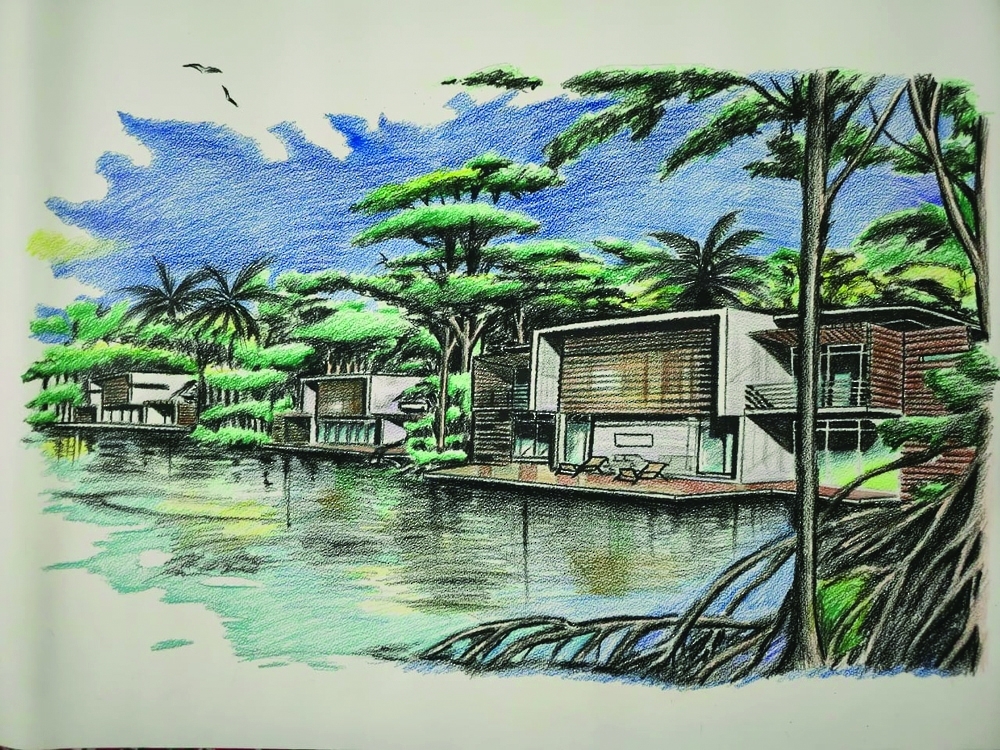





A new generation of young Omani artists is exploring diverse paths in fine art, combining traditional techniques with modern tools while seeking distinctive artistic identities and drawing inspiration from Omani culture.
Their experiences span portraiture, pencil drawing and Arabic calligraphy, reflecting a growing interest in using visual art to explore human emotions, cultural memory and personal expression.
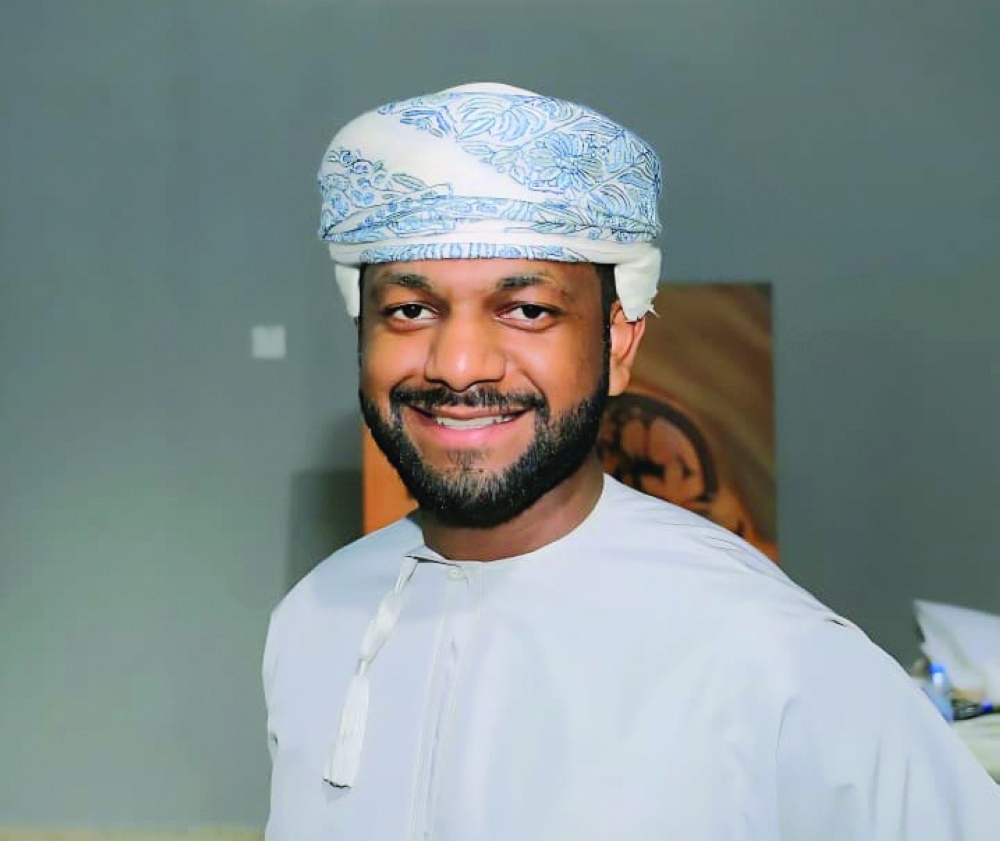
Artist Suwaid bin Masoud al Yaarubi has made portraiture the centre of his artistic journey. His interest began in 2014 when he wanted to create a lasting gift for a friend. What started as a personal gesture developed into a sustained artistic practice, strengthened by encouragement from those around him.
Al Yaarubi pays particular attention to facial proportions, distances and measurements, believing that a successful portrait requires more than physical resemblance. For him, the artist must also capture something of the character and emotion conveyed by the face.
He considers skin tones among the most challenging aspects of coloured portraiture, requiring multiple layers and careful attention to differences associated with age. Omani faces have featured prominently in his work, helping him develop precision while also allowing him to document aspects of society and its cultural memory.
One of his favourite works, ‘The Story of a King,’ depicts an elderly man, focusing on his wrinkles and expressions. Al Yaarubi completed the painting over four consecutive days.
While acknowledging the potential of digital technology and artificial intelligence, he views them as tools that can assist artists in developing ideas and adjusting reference images rather than replacing traditional artwork. He hopes to develop a distinctive style, participate in international exhibitions and eventually hold a solo exhibition.
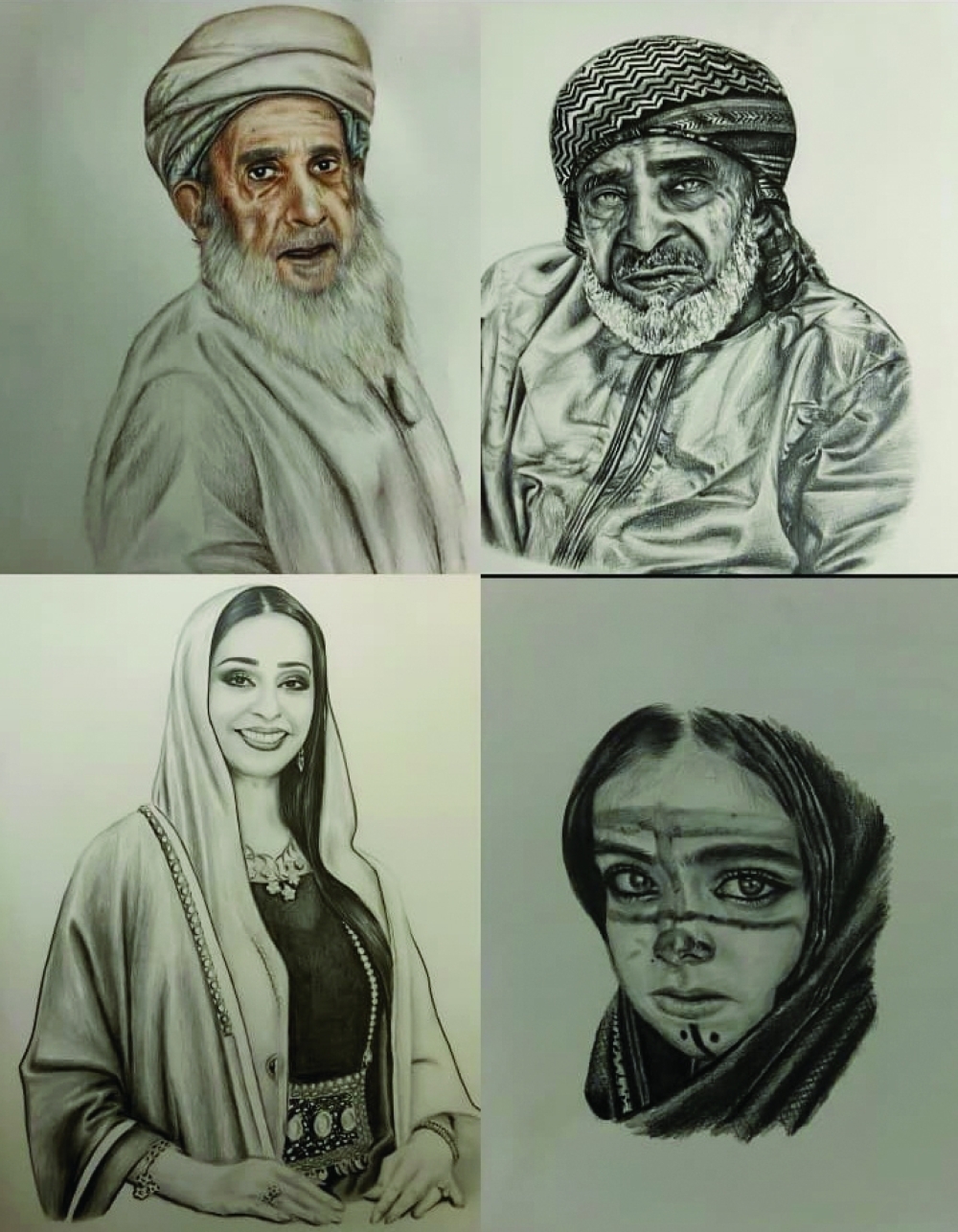
Artist Khawla Mohammed Ali follows a different approach, working primarily in black and white and finding particular expression through pencil drawing. Although she has experimented with acrylic and oil paints, she continues to return to pencil because of its flexibility and its ability to convey emotions and detail.
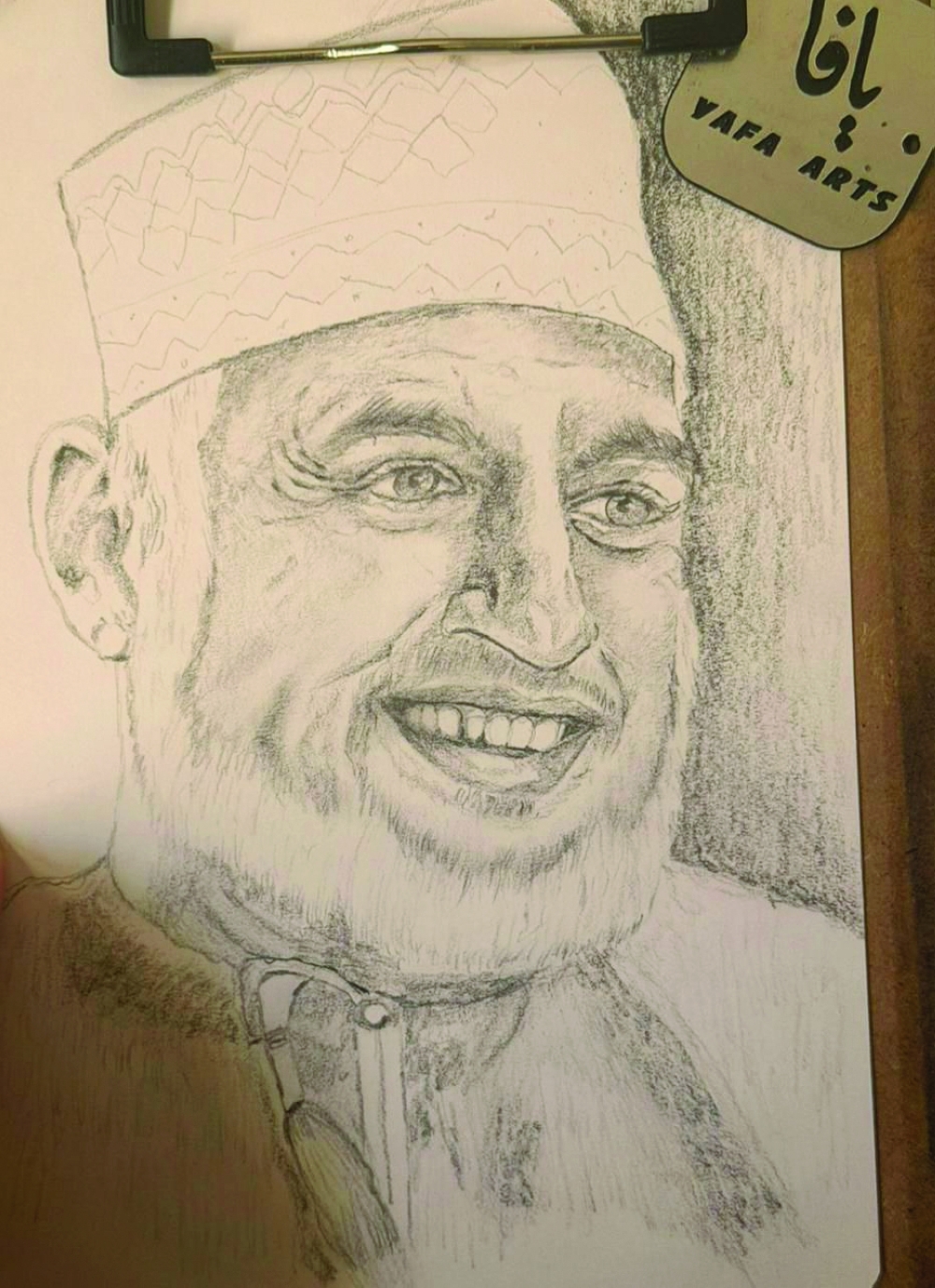
Portraits occupy a prominent place in Khawla’s work, with facial expressions and emotions providing a recurring source of inspiration. Omani characters of different ages and emotional states also feature in her drawings.
She considers establishing facial proportions and the initial features among the most demanding stages of her work. Depending on the level of detail, a drawing can take from a week to 14 days or longer.
Khawla sees digital art and modern technologies as complementary to traditional drawing, but remains attached to hand-drawing for its authenticity and direct sensory connection between the artist and the tools.
Meanwhile, Marwa bint Abdullah al Hosani has made the Arabic letter the foundation of her artistic practice. Her interest in calligraphy began during childhood and developed more formally around 2022 through specialised workshops.
For Marwa, the letter is more than a means of writing. She explores its curves, proportions, extensions and relationships with surrounding spaces, transforming it into a visual element that can be appreciated even before its linguistic meaning is read.
She seeks to balance authenticity and modernity by experimenting with composition while preserving the identity and fundamental rules of Arabic calligraphy. She hopes eventually to establish a private gallery combining calligraphy, contemporary art, exhibitions and workshops.
Together, the three artists reflect a young Omani art scene increasingly focused on developing distinctive visual languages while maintaining connections with traditional tools and cultural identity. – ONA
Oman Observer is now on the WhatsApp channel. Click here