




Oman is preparing to strengthen domestic air connectivity. The difficult decision will not be where an aircraft can land, but where public money should help keep one flying.
That question matters as the National Aviation Strategy 2040 moves towards a Public Service Obligation, or PSO, framework for regional airports. Where an air connection is socially or economically important but the commercial market cannot provide an adequate service, the state can support essential connectivity.
But a public-service route should begin with a transport problem, not an empty runway.
Oman’s civil aviation rules already point in this direction. They allow PSO arrangements for remote, sparsely populated or developing regions, while requiring consideration of alternative transport and whether those alternatives can provide an adequate journey within a reasonable time.
That distinction is crucial.
Masirah, Musandam and Al Duqm do not present the same transport problem. An island has different needs from an industrial centre and both differ from a destination already served reasonably well by road. Passenger demand therefore cannot be the only test, but neither should existing airport infrastructure become an automatic argument for subsidy.
Recent traffic data underline the point. Al Duqm handled only tens of thousands of passengers in the first half of 2026, while Suhar recorded limited passenger activity.
Those figures do not prove that either airport lacks value. Airports can support industry, logistics, emergency access and long-term regional development. But they do demonstrate that infrastructure and demand are not the same thing.
A runway does not create a market.
Before supporting a route, policymakers should ask a more basic question: what specific problem does this flight solve that a road, ferry or other transport option cannot solve adequately?
If the answer is geographic isolation, essential access, tourism development or support for a strategic economic centre, then public support may be justified. But the objective should be defined before the operator is chosen.
That means defining what the government is buying: frequency, capacity, operating period, fare limits, reliability and the level of compensation required.
Oman’s regulations contain much of this logic. They provide for public tendering and require compensation to be linked to the net cost of operating the service, after revenues are taken into account, together with a reasonable profit.
This should remain the foundation of any broader PSO programme.
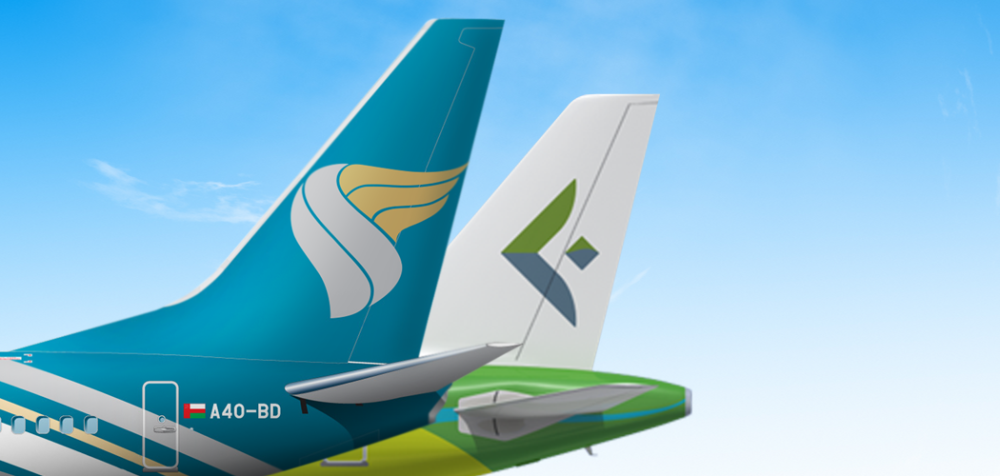
Competition matters as well. Following the government’s acquisition of SalamAir, Oman’s two principal national carriers are publicly owned while remaining commercially separate.
There is nothing inherently wrong with a publicly owned airline operating a publicly supported route. But ownership and public-service procurement are different decisions.
Where practical, qualified operators should compete for the service on clear terms. The winning bid should be judged on service quality, fares, reliability and the compensation required — not on ownership.
There is a legitimate counterargument. Regional development cannot always wait for demand to appear first. Roads, ports and airports are often built before the economic activity they are intended to support reaches full scale. Judging every new air link only by its early load factor could therefore undermine development policy.
That argument is valid.
But it makes measurement more important, not less.
If a route is intended to support tourism, measure whether it creates additional visitor demand and spending. If it supports an industrial centre, assess whether it improves business access and investment. If it serves an isolated community, measure the accessibility problem it is meant to solve.
And every subsidy should have an exit test.
If demand grows to the point where an airline can operate commercially, public support should be reduced or removed. That would be a policy success. Equally, if a route remains expensive, poorly used and unable to demonstrate the benefit for which it was created, continuation should not become automatic.
Oman has already invested heavily in aviation infrastructure. The next phase requires something harder than building airports: choosing where connectivity genuinely creates public value.
Some routes will deserve support even if they cannot make money. Others should remain commercial decisions. In some cases, the better investment may not involve an aircraft at all.
The principle should remain simple.
A public-service flight should start with a public problem — and end when that problem no longer requires a subsidy.
Oman Observer is now on the WhatsApp channel. Click here