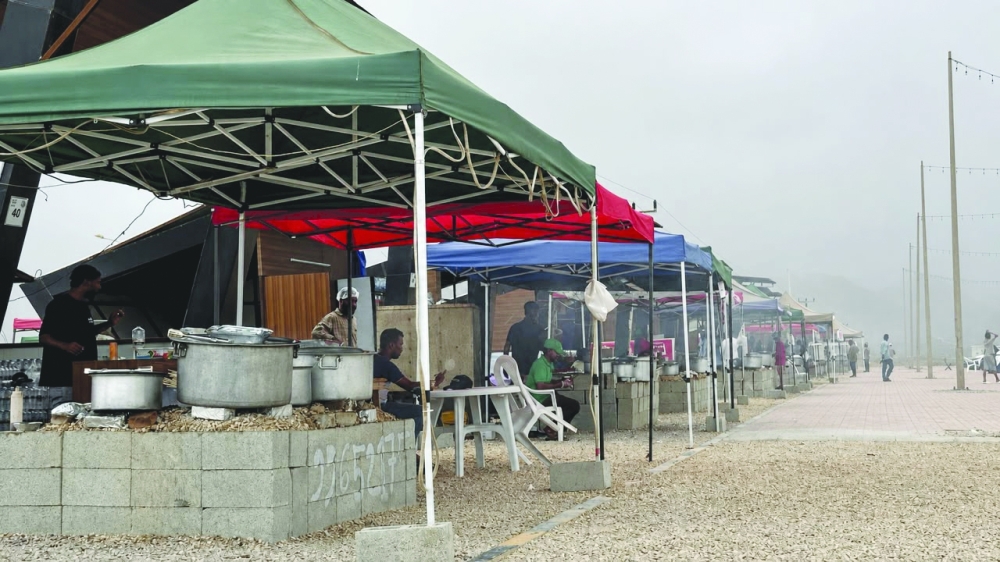





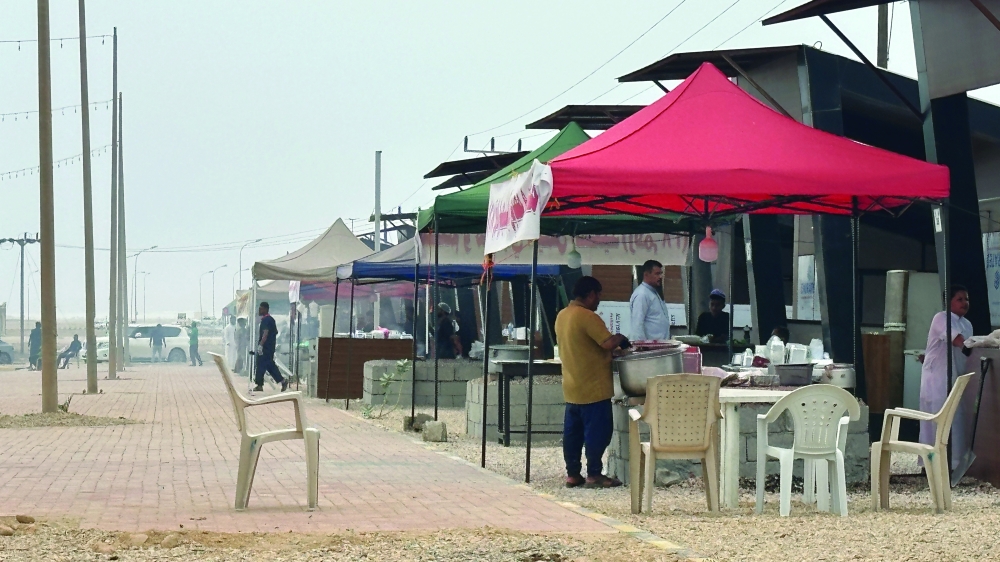
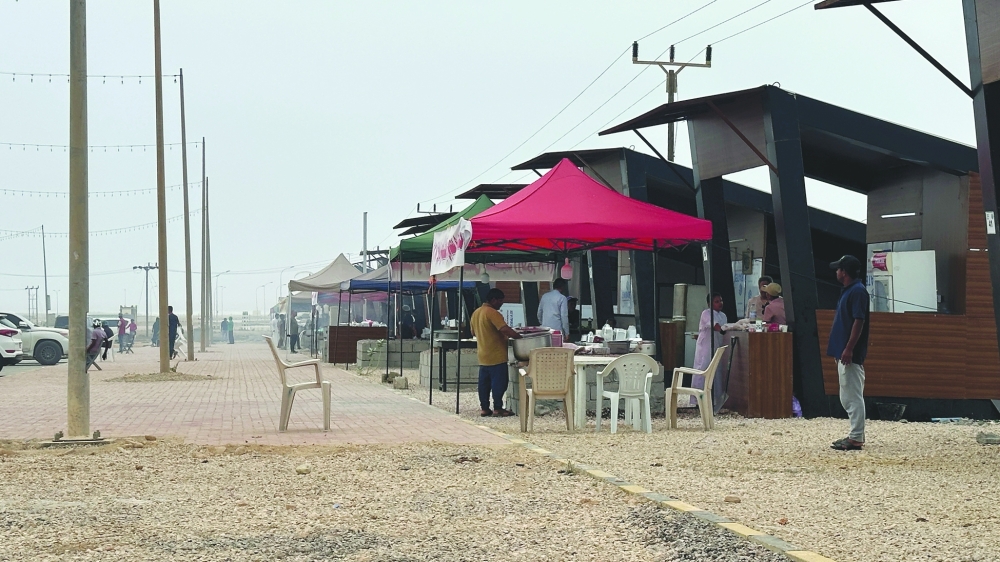
SALALAH: At Nashib, where temporary kiosks serve madhbi, the traditional meat grilled on hot stones, during Khareef, the name on a permit answers only one question. The more important question is who buys the stock, directs the workers, bears the losses and ultimately receives the profits.
An Omani job-seeker who has held a Riyada card since 2022 is operating a madhbi kiosk for the first time during the 2026 season. He participated last year through a pastry outlet after quotas for other activities had been filled.
Speaking on condition of anonymity, he estimated that 15 madhbi kiosks were operating at Nashib this year. In his assessment, only three were directly managed by their Omani permit holders. The remainder, he said, appeared to be managed by expatriate workers under arrangements he believed went beyond normal employment.
The figures are based on his on-site assessment and are not an official count.
The distinction is important. The presence of an expatriate employee is not, by itself, evidence of hidden trade. A small business may lawfully employ expatriate workers. The concern arises when a permit holder relinquishes effective control over management, decision-making, financial risk and returns, or receives a fixed payment while another person uses the licence to conduct the business.
The investor said inspections should look beyond who is present during a single visit. Purchase invoices, meat-supply records, wage transfers, sales records and banking transactions could help establish whether the licence holder is genuinely operating the outlet or merely lending their name to it.
The concern is not new. In November 2025, Dhofar Municipality said it had removed kiosks at several locations because they were unlicensed, had expired permits or failed to comply with municipal requirements. It said the removed kiosks were being managed by expatriate workers in violation of permit conditions and that permits would be reissued to citizens who supervised their businesses themselves.
A second Omani investor, whose experience began a decade ago and was not specific to current Khareef kiosks, described the financial incentive behind such arrangements.
After leaving school and finding neither a place to continue his studies nor suitable employment, he entered business in 2016. He said he obtained activity licences for businesses he did not personally operate and rented some licences and signboards for fixed monthly payments.
“At one point, 10 activity licences could bring in RO 600 to RO 700 a month without any real operating effort,” he said. “The money was attractive to a young man with no steady income. In about two years, I was able to start a family and buy a car, but I was not building a real business.”
His father, a trader who managed his own business, persuaded him to leave the arrangement and change course. The investor described the Covid-19 pandemic as a turning point, followed by closer scrutiny of business accounts, lease contracts, wage transfers and other compliance requirements.
His account does not establish how widespread such practices are among current Khareef outlets. It does, however, illustrate how a licence can become a source of passive income rather than a pathway into genuine entrepreneurship.
Oman has been strengthening enforcement against hidden trade. Ministerial Decision 412/2023 provides the legal framework for addressing practices in which a person enables another individual to undertake an activity they are not legally permitted to conduct by using someone else’s commercial registration, licence or approval.
In April 2026, the Ministry of Commerce, Industry and Investment Promotion said it had completed Phase II of its campaign covering small and medium enterprises holding Riyada cards. It verified 27,288 commercial registrations, issued 409 administrative undertakings to non-compliant registrations and temporarily suspended 45 commercial registrations. Another 696 establishments regularised their status.
These are national figures and do not indicate how many of the cases involved seasonal businesses in Dhofar.
Consumer inspections are also extensive. During Khareef Dhofar Season 2026, the Consumer Protection Authority in Dhofar deployed 52 inspectors in 19 field teams, including 10 teams covering Salalah and surrounding areas.
Inspectors conducted 17,778 visits across Dhofar during the first half of the year, targeting high-demand activities including food outlets, fruit and coconut stalls and madhbi restaurants.
The inspections cover price displays, invoices, product quality and safety, accuracy of commercial information and misleading practices. While essential, such checks do not necessarily establish who exercises effective control over a permit. That can require municipal licensing records, employment data, tax information and commercial registration records to be assessed together.
The issue is particularly significant in a short tourism season. A temporary permit can provide an Omani entrepreneur with income, practical experience and an opportunity to test a business model.
If effective control passes to another party, however, that opportunity can be undermined. If a permit is subsequently cancelled for non-compliance, a replacement entrepreneur may also lose valuable weeks of trading during the peak season.
The success of seasonal licensing therefore cannot be measured only by the number of permits issued. It should also be assessed by how many outlets are genuinely owner-managed, compliant and operational, and how quickly vacant or non-compliant sites are reallocated.
“Hidden trade will not end unless the project owner stands over the business and runs it,” the second investor said. He argued that enforcement can go only so far if citizens continue to accept fixed payments in return for allowing others to use their names and licences.
Oman Observer is now on the WhatsApp channel. Click here