The writer is founder and CEO, Smart Investment Gateway, economist, board adviser & business transformation mentor
For 30 years supply chains were organized around one question: who is cheapest? Since 2020 a second has displaced it: who can be counted on? Global Trade Alert logged 4,088 harmful trade measures in 2025 alone. The International Energy Agency estimates that the top three refining countries account, on average, for about 86% of processing capacity across critical-mineral markets. The World Economic Forum's competitiveness scenarios conclude that ownership, technology origin and supplier nationality have themselves become sources of regulatory risk.
The upshot is that five industries have moved out of the trade column and into the security column: energy, food, minerals, medicine and computing. In each, buyers will pay a premium for supply they can verify, from a partner they expect to be dealing with in five years' time.
Call the resulting business an assurance economy. Its product is not a lower price but certainty - verified origin, verified quality, verified continuity - and certainty is fetching margins that commodity manufacturing has not seen in a generation.
This reclassification suits Oman better than it suits its neighbors, because it inverts the constraint the sultanate has always been told is decisive. Competition on price rewards scale, and Oman has none. Competition on assurance rewards credibility, and Oman has plenty: working ties in every direction, a free-trade agreement with America in force since 2009, GCC market access, a deep-water port beyond the Strait of Hormuz, 18 submarine cables and 50 years of keeping its word. Smallness is not the binding constraint in an assurance market. Trust is, and trust is the one input Oman holds in surplus.
Nowhere is that more concrete than in minerals. Vision 2040 asks the mining sector to reach 10% of GDP, from roughly 1.4% in 2020. Omani geology alone cannot deliver it. Minerals Development Oman, backed by the Oman Investment Authority, holds multiple mining and exploration interests across the Sultanate; its flagship Mazoon Copper Project is designed to produce approximately 115,000 tonnes of copper concentrate annually. Useful, but not transformative. The road from 1.4% to 10% runs through other countries' ore.
Africa holds the deposits, America wants the output, and neither is content with the refining capacity that exists today. Washington's answer so far is the Lobito corridor, where the Development Finance Corporation and the Development Bank of Southern Africa closed a $753 million financing package in June to rehabilitate more than 1,300 km of Angolan railway, with the project expected to substantially increase transport capacity. There is no eastern equivalent - and no corridor of either kind ends at a refinery.
Oman could be both. An eastern corridor, carrying East African ore a few days' sail to Duqm or Salalah for separation and magnet-making before it moves on, requires three things the sultanate can assemble. Mineral and exploration rights, secured by MDO and the OIA alongside African producers. Infrastructure finance, for which American development capital is already committed in Africa and openly looking for projects to replicate. And a refining node all sides accept. The third is the scarce ingredient, and it is where neutrality stops being sentiment and becomes an asset with a price. Producers who will not send ore in one direction, and buyers who will not receive it from another, can both deal with Muscat.
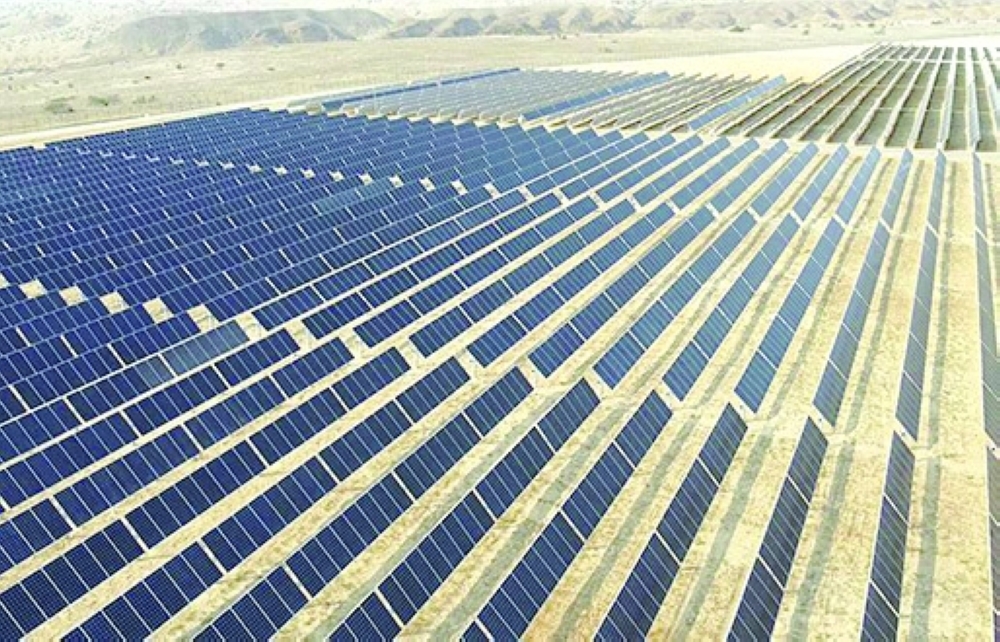
The same logic extends across the rest. Energy security means manufacturing the transition - electrolyzers, solar components, grid equipment - not merely fueling it; Oman has ambitious plans for more than 30 GW of renewable-energy capacity and aims to lift renewables from a small base today toward 30% of electricity generation by 2030. Food security means precision fermentation, which converts a land-and-water problem Oman cannot solve into an energy-and-biology one it can. Health security means owning the marketing authorization rather than renting the production line; Sohar already has a pharmaceutical cluster and Salalah has expanded its refrigerated-container capacity, strengthening its role in handling temperature-sensitive cargo. Digital security means the layer above the data hall, where sovereign custody and certified post-quantum migration are exports requiring no factory at all.
Two developments make all this newly practical. The first is artificial intelligence, though not as usually imagined. Oman's opportunity is less to build an AI sector than to use AI as the plumbing that makes assurance affordable. Proving provenance has always been the expensive part: inspectorates, laboratories, chains of custody, continuous audit. That administrative bulk was available only to large states, which is why small economies were confined to low-trust, low-margin work. Machine learning collapses the cost. Digital product passports, automated inspection and dossier preparation mean a country of roughly 5 million people can run a certification regime that once required the bureaucracy of one with 50m.
The second is power. Mineral separation, fermentation, computing, sterile manufacturing and desalination are each electricity-hungry, which makes cheap renewable generation the cost line inside all five securities rather than a commodity to be shipped out as ammonia. In June Oman capped power at 12 baizas per kilowatt-hour for firms tied to food security. The principle deserves wider application.
Defence, which dominates every conversation about self-reliance, is not a sixth pillar but the customer for the other five. Every defence program is now a procurement problem in minerals, energy, medicine, food and computing, bound by rules of origin. A country that qualifies as an assured supplier is inside that market without building a weapons industry.
For policymakers the implication is that Oman's binding constraint is no longer capital, land, power or partners. It is assurance infrastructure, and that can be bought. Fund accredited laboratories, metrology and mutual-recognition agreements on the same basis as a runway - when Oman and Saudi Arabia moved to recognize each other's certificates of origin, Omani industrial exports to Saudi Arabia rose 39% to RO 733 million in the first seven months of 2025. Count certifications and marketing authorizations held in Oman alongside the rials and jobs investment promotion reports today. And lift research spending from 0.37% of GDP, against 0.56% in Saudi Arabia, because assurance cannot be certified into existence without science beneath it.
The jobs follow rather than lead. Assurance industries are staffed by chemists, metrologists, regulatory specialists and engineers - which is what Omani universities produce and what the labor market is not yet absorbing.
Five industries have been reclassified as strategic. The premium has shifted from price to trust. Oman holds the scarcer asset - and the window will not stay open for ever.
Oman Observer is now on the WhatsApp channel. Click here