




Muscat: Oman Environmental Services Holding Company (be’ah) commissioned some 2.2 million tonnes of new engineered landfill capacity during 2025 and is developing a further 3.4 million tonnes at Thamrait, as waste volumes across its national network continued to climb, according to the company’s newly published 2025 Sustainability Report.
Municipal solid waste received rose to 2.88 million tonnes during the year, up from 2.57 million tonnes in 2024, while industrial waste intake more than tripled to 43,216 tonnes from 12,649 tonnes a year earlier, the report’s data appendix shows.
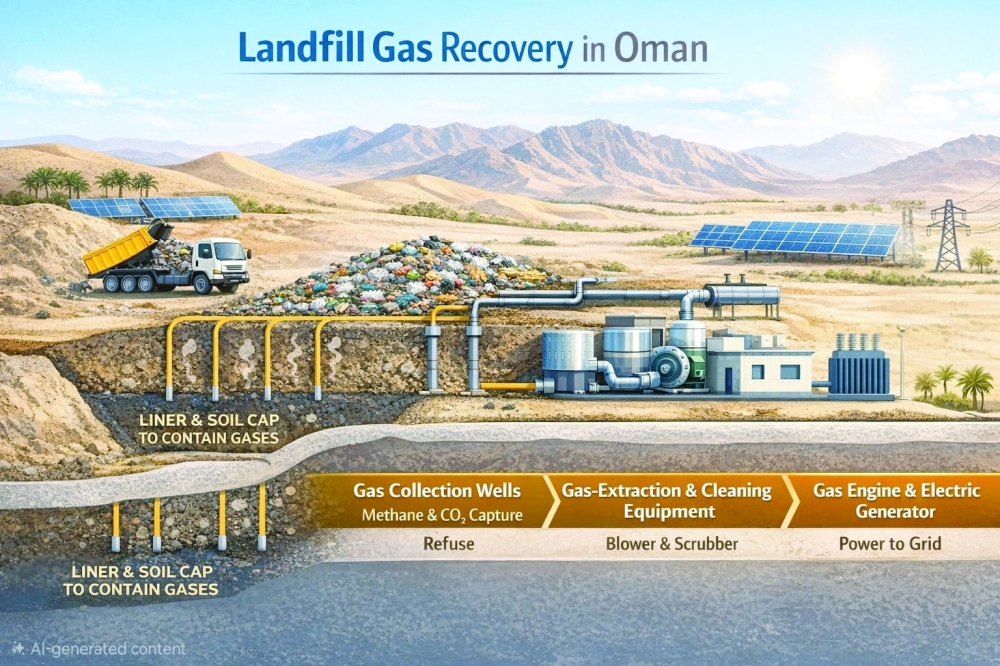
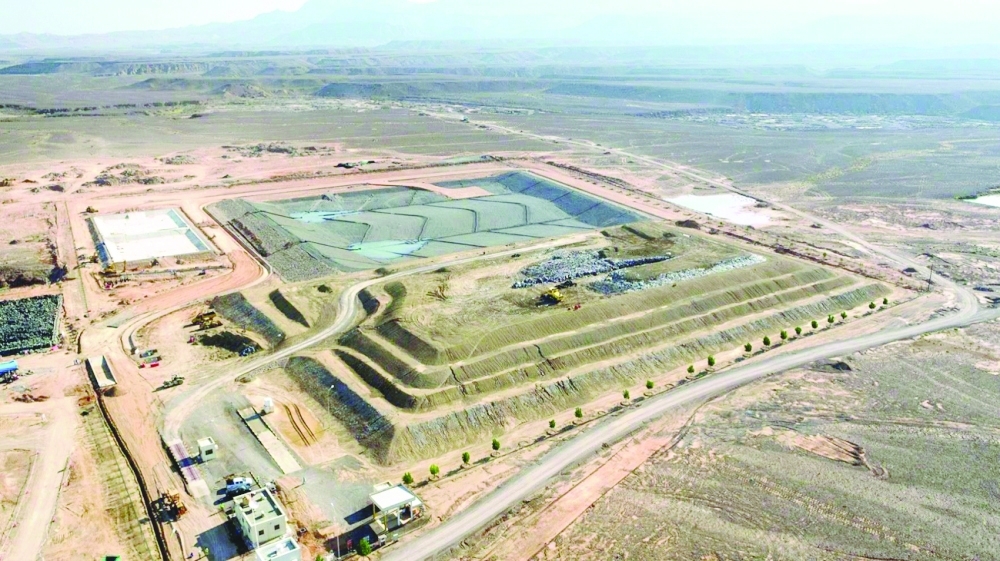
The largest completed expansion was at Tahwa Landfill, where a new engineered cell added 1.9 million tonnes of disposal capacity supported by a 5,000-cubic-metre leachate evaporation pond. The project was delivered ahead of schedule and fully commissioned, the report said. At Izz Landfill, the closure of Cells 1 and 2A was combined with a first-phase expansion of Cell 4 that added 300,000 tonnes of capacity, while the closure of Cell 2 at Barka Landfill included the commissioning of a dedicated biogas extraction and collection system.
The ongoing Thamrait Landfill Cell 2 development — the largest in the programme at 3.4 million tonnes — incorporates a 10,000-cubic-metre evaporation pond, groundwater monitoring wells and a permanent leak detection system.
The expansion drive builds on a decade-long transformation of the sector that has seen 317 historical dumpsites closed and 35 critical sites rehabilitated, with disposal now concentrated in 11 engineered landfills served by 23 transfer stations.
In industrial waste, the Al Duqm facility received 32,400 tonnes of the national total, with Suhar handling 10,400 tonnes and the recently developed Raysut site 426 tonnes. Around 40,400 tonnes were processed during the year. Construction of Phase 2 of the Industrial Waste Treatment Facility at Suhar, which will add physical-chemical treatment and incineration units, reached 47 per cent overall completion, with engineering 82 per cent advanced. The company’s accredited laboratory cut analysis turnaround times from 21 to 14 days and expanded its ISO/IEC 17025-accredited scope by 21 parameters.
The report also detailed progress on the National Naturally Occurring Radioactive Material (NORM) Facility in Bahja, mandated by the government in September 2024 to centralise the treatment and disposal of radioactive waste from oil and gas operations. Construction is planned to commence in the third quarter of 2026, with operations targeted by the end of 2028. A symposium on integrated radioactive waste management, co-organised with the Environment Authority in collaboration with the International Atomic Energy Agency, was held in Muscat in December 2025.
In healthcare waste, be’ah treated about 3,961 tonnes collected from 2,165 institutions nationwide, using autoclaving for 2,652 tonnes and incineration for 1,309 tonnes at its Liwa, Al Amerat and Thamrait facilities. Services were extended to veterinary clinics during the year, while a CRM integration initiative cut service response times from four days to one.
Circular economy initiatives featured across special waste streams. Of some 3 million tonnes of construction and demolition waste received, 2 million tonnes were processed through five crushers for reuse as backfilling, sand and aggregate. Shredded end-of-life tyres are being supplied to Oman Cement Company as alternative kiln fuel under a strategic agreement, while green and bulky waste offtake arrangements directed material into composting, biochar and animal feed production. A further 83,196 tonnes were collected from Petroleum Development Oman concession areas, nearly 60 per cent of it construction and demolition material.
The operational push comes as be’ah completes the transition of waste collection services to municipalities, recorded as a 2025 milestone, refocusing the company on downstream infrastructure, treatment capacity and resource recovery in line with Oman Vision 2040.
Oman Observer is now on the WhatsApp channel. Click here