




US July payrolls seen rising 80,000 after 57,000 gain in June* Money markets show traders split on whether Fed will raise rates next month* Brent falls as investors shrug off tensions, focus on Hormuz deal
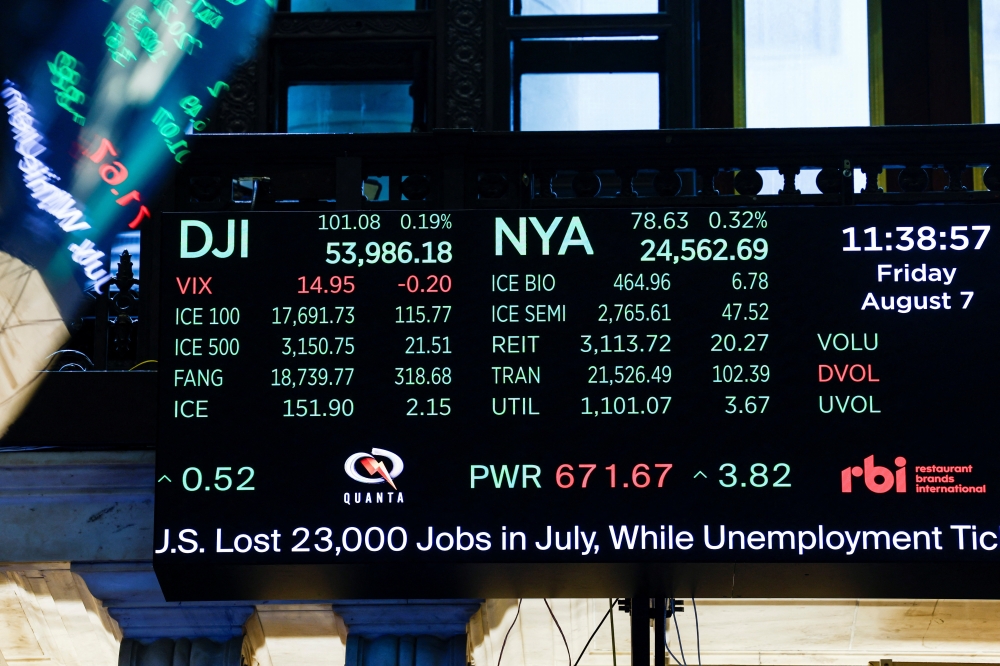
Global stocks headed for their strongest weekly gain since May on Friday, ahead of major US jobs data, as investor optimism over robust earnings growth and enthusiasm over AI helped offset concern about the conflict in the Middle East.
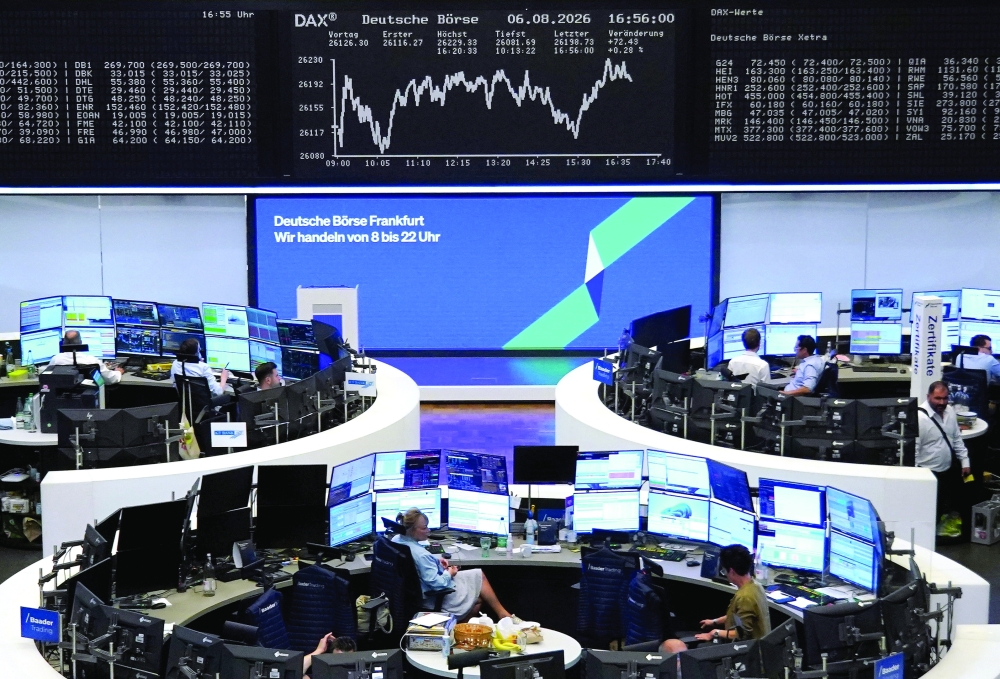
MSCI's All-World index has risen 2.4 per cent this week, the most in three months and on Friday was steady, while shares in drugmakers and technology companies lifted Europe's STOXX 600 by 0.6 per cent on the day and 2 per cent for the week.
After bouts of volatility sparked by concerns over the durability of the AI-driven rally, investors are now squarely focused on the US payrolls report due later in the day, which could prove crucial for the interest rate outlook. Forecasts are centred on a rise of 80,000 jobs for July after a 57,000 gain in June, with the unemployment rate forecast to hold steady at 4.2 per cent.
Money markets show traders are split over whether the Federal Reserve will raise rates next month, meaning Friday's payrolls number could be instrumental in tipping the balance in one direction or another.
"With yields and inflation still the key risks for stocks, we expect Friday's NFP to trade as a 'good news is bad news' print", said Michael Feroli, chief US economist at JPMorgan, adding that a strong jobs number would reinforce higher-for-longer pricing and put upward pressure on rates.
Conversely, equities may respond positively to a soft non-farm payrolls report as yields ease and policy expectations shift towards a dovish path, added Feroli.
Given Fed Chair Kevin Warsh's reluctance to offer any kind of guidance on what to expect in terms of monetary policy, the employment data could cause an even greater splash in the market than usual, analysts said.
"An exceptionally poor, or strong, print can in this way produce a much larger impact on pricings than in a time before, when the Fed was much clearer about its options. Vacuums must be filled by whatever is available and the market was always going to pick itself as the solution and I suspect the practical impact of that will be a broad increase in volatility", Caxton strategist David Stritch said.
On the US market, Nasdaq futures rose 0.6 per cent and S&P 500 futures were up 0.3 per cent. Shares in Cloudflare rose 16 per cent in pre-market trading on Friday, having surged 18 per cent after Thursday's closing bell following the cloud services provider's upbeat forecast.
Brent crude futures reversed course on Friday to fall 0.7 per cent to around $82 a barrel, as investors shrugged off Saudi Arabia's warnings.
Iran, meanwhile, is reviewing a preliminary bill that would bar US, Israeli and other "hostile" vessels from transiting the Strait of Hormuz, Iran's semi-official Fars news agency reported on Thursday, citing a lawmaker. The draft bill would impose fines of up to 20 per cent of a ship's cargo value for violations of the proposed restrictions.
Treasury yields were roughly unchanged on the day, as uncertainty ahead of the jobs data kept trading activity subdued. The 2-year note yield was last at 4.243 per cent, while the 10-year yield traded at 4.67 per cent.
The US currency held steady, leaving the Japanese yen at around 158.3 to the dollar. The US jobs report could decide the next moves in the yen after last week's historic currency market intervention by Japan and the US sparked a sharp rally.
Gold, meanwhile, has traded in a mirror image of the dollar, rising to its highest in around six weeks this week, compared with the dollar trading around six-week lows.
Oman Observer is now on the WhatsApp channel. Click here