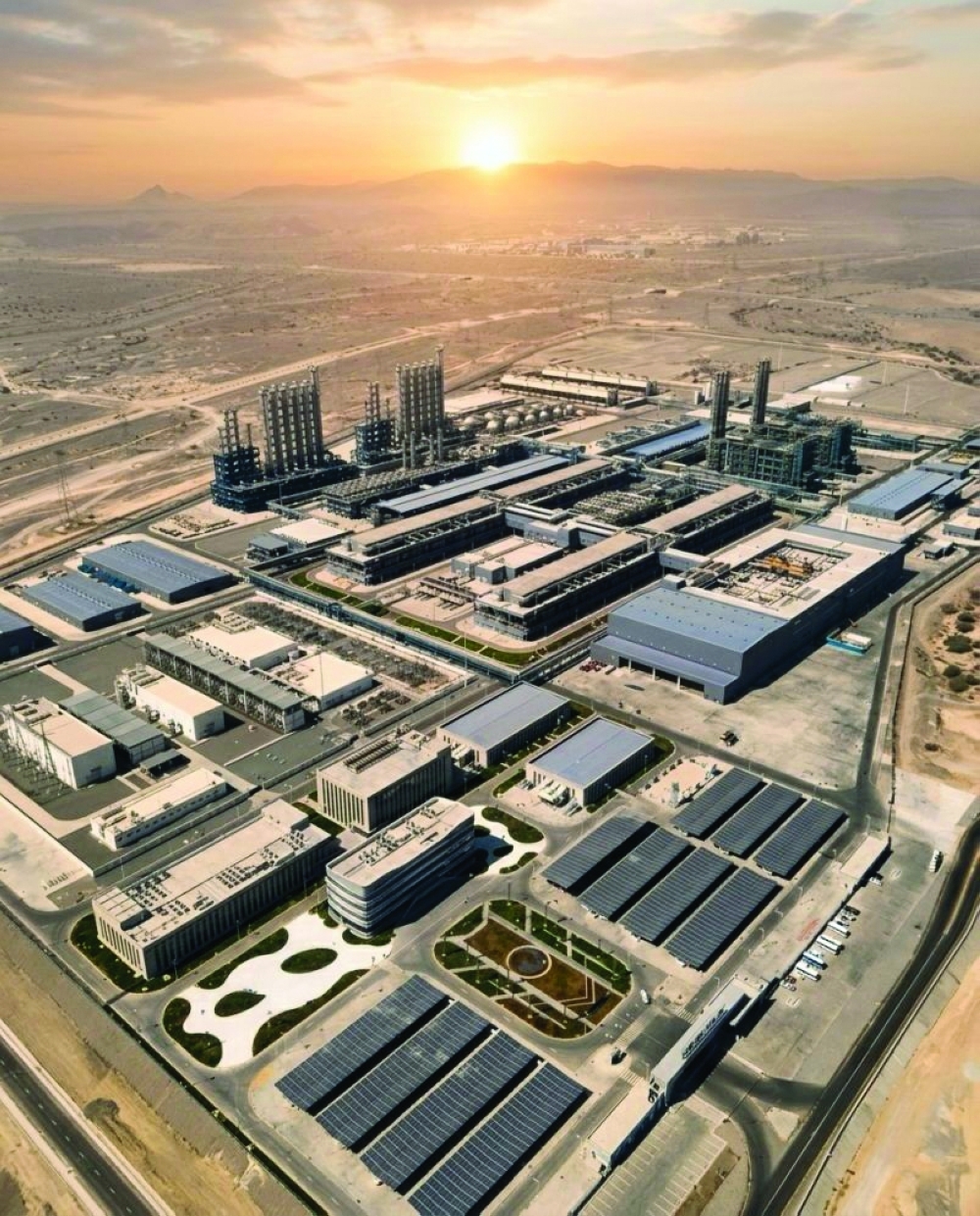
Industrial companies listed on the Muscat Stock Exchange (MSX) delivered a strong financial performance during the first half of 2026, reflecting the continued resilience of Oman's manufacturing sector despite an increasingly uncertain global economic and geopolitical environment. Aggregate net profits rose by 51.18 per cent, increasing from RO 57.20 million in H1 2025 to RO 86.48 million in the corresponding period of 2026.
The results demonstrate that Oman's industrial sector continues to benefit from economic diversification policies under Oman Vision 2040, sustained industrial investment, improved production efficiency and expanding regional export opportunities. They also indicate that manufacturers have successfully adapted to higher operating costs and supply chain disruptions that have affected global industries over the past two years.
The strongest contribution came from OQ Base Industries, whose net profit increased by 85.70 per cent to RO 43.30 million, compared with RO 23.32 million in the first half of 2025. The company accounted for nearly half of the total profits generated by listed industrial companies, making it the principal driver of the sector's overall growth. The improvement reflects stronger operational performance, improved production efficiency and favourable market conditions for petrochemical and industrial products.
Several other manufacturers also reported outstanding financial improvements. Dhofar Foods and Investment recorded the highest percentage growth, with profits increasing by 560.63 per cent to RO 2.20 million, reflecting improved operational efficiency and stronger sales performance. Raysut Cement returned to profitability after recording RO 2.71 million in net earnings compared with a loss of RO 2.59 million a year earlier, suggesting a gradual recovery in construction activity across domestic and regional markets. Likewise, Building Materials Industries moved from a marginal loss to profitability, signalling improving demand within the construction materials segment.
Among the sector's established manufacturers, Oman Flour Mills, Oman Cement; and Oman Chromite delivered strong earnings growth, while Oman Refreshment Company; and Al Anwar Ceramic Tiles continued to report healthy profitability. These results indicate that growth was broadly distributed across several manufacturing subsectors, including food processing, construction materials, mining, consumer goods and heavy industry. Meanwhile, Voltamp Energy and Oman Cables Industry maintained relatively stable earnings, reflecting the maturity and resilience of their business models despite a more competitive market environment.
Nevertheless, not all companies experienced positive results. Oman Chlorine; and Muscat Gases reported losses during the period, while Al Jazeera Steel Products; and Al Maha Ceramics posted modest declines in profitability. These weaker performances may reflect softer regional demand, pricing pressures, rising production costs and increased competition within certain manufacturing segments.
The results also underline the importance of external economic and geopolitical developments. During the first half of 2026, manufacturers worldwide continued to face uncertainty arising from geopolitical tensions in the Middle East, ongoing disruptions to international shipping routes, fluctuating energy and commodity prices; and persistent trade policy uncertainties among major economies. These factors have contributed to higher freight costs, longer delivery times and greater volatility in raw material prices.
For Oman, however, these challenges have been partially offset by several structural advantages. Oman continues to benefit from its strategic geographic location outside major maritime bottlenecks, modern ports and logistics infrastructure, competitive industrial zones and expanding trade partnerships with Gulf Cooperation Council (GCC) countries, Asia and Africa. These advantages have strengthened the competitiveness of Omani manufacturers and enhanced the country's role as a regional industrial and logistics hub.
Looking ahead, the outlook for the second half of 2026 remains cautiously optimistic. Continued implementation of industrial policies under Oman Manufacturing Strategy 2040, increased investment in downstream manufacturing, renewable energy, mining, food security and advanced manufacturing is expected to support further growth. However, companies will need to remain vigilant against external risks, including prolonged geopolitical tensions, volatility in global commodity markets, inflationary pressures and potential slowdowns in global economic growth.
Overall, the financial performance of listed industrial companies demonstrates that Oman's manufacturing sector is entering a period of stronger and more diversified growth. The broad-based improvement in corporate earnings, led by OQ Base Industries and supported by the recovery of cement producers and other manufacturers, reflects increasing industrial competitiveness and reinforces confidence in the sector's contribution to economic diversification. If geopolitical risks remain contained and investment momentum continues, the industrial sector is well positioned to sustain its positive trajectory throughout the remainder of 2026 and beyond.
Oman Observer is now on the WhatsApp channel. Click here