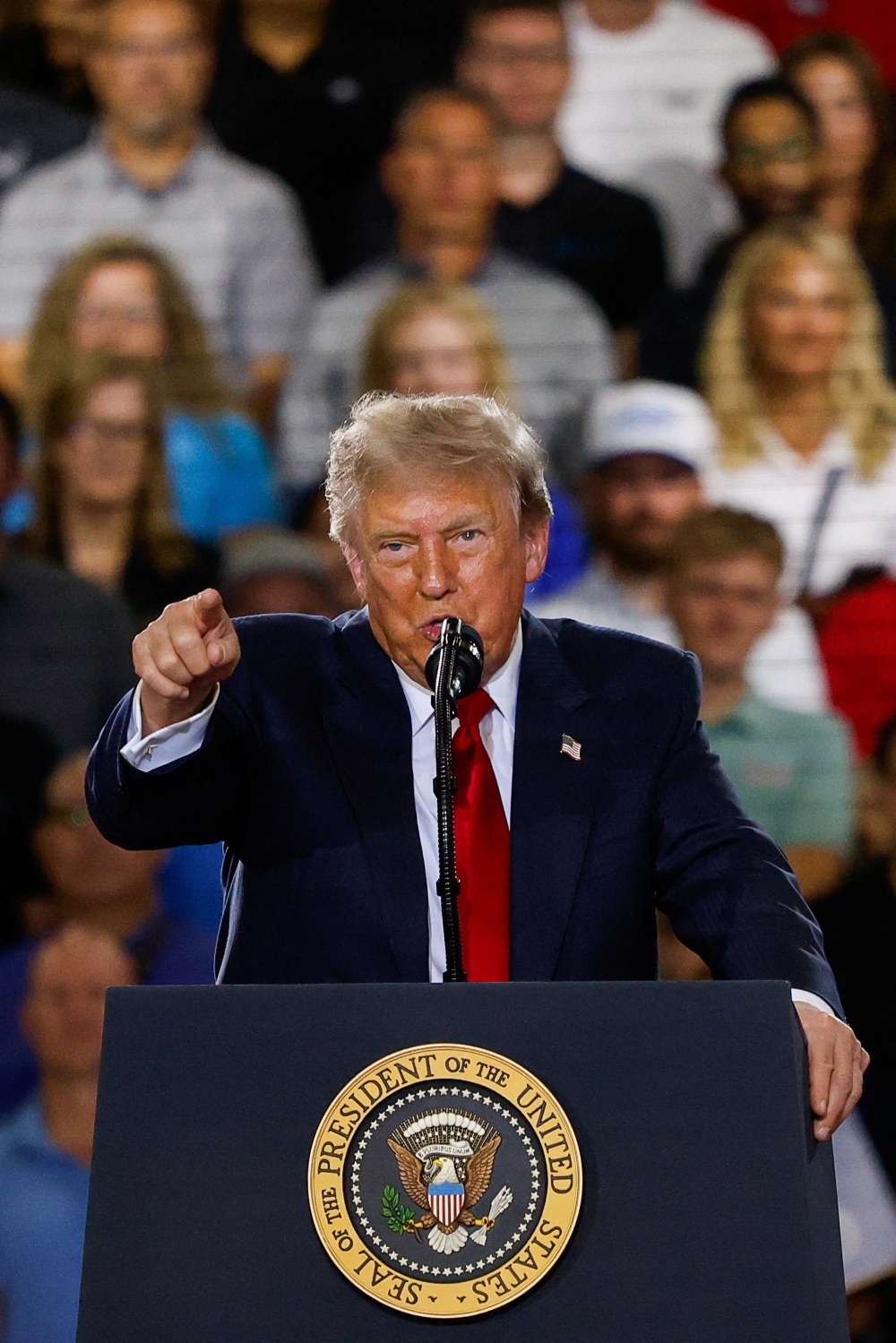





President Donald Trump said Monday that there was “a good chance” a new round of diplomacy with Iran could yield a breakthrough, but warned that he would quickly resume the airstrikes he paused over the weekend if that did not happen.
“We’re talking right now,” Trump told reporters aboard Air Force One. “Iran took a beating over the last 14 days, and they asked us very nicely, ‘Please stop; let’s meet,’” he said, an assertion that Iran quickly denied.
Having failed to achieve his goals through two weeks of renewed attacks on Iran, it is unclear whether Trump can expect better results through more negotiations, including on his crucial objective of restoring free navigation to the Strait of Hormuz.
Former U.S. officials said that a defiant Iran probably sees Trump’s leverage waning fast as the November midterm elections approach. Some top Republican officials are already urging him to finish the conflict.
Yet Trump will face a crosswind Tuesday when Prime Minister Benjamin Netanyahu of Israel visits the White House. Netanyahu favors continuing the war and is likely to make that case to Trump, analysts said.
While Trump insisted that the recent U.S. attacks had led Iran to request new talks with his administration, Iran denied that claim and gave no sign that it was prepared to make new concessions or even speak directly with U.S. officials.
And Saudi Arabia said it had intercepted several drones on Monday despite the U.S. bombing pause. Other countries in the region, including Israel and Jordan, also reported drone attacks.
During a news conference Monday, Iran’s Foreign Ministry spokesperson, Esmail Baghaei, denied that Iran had offered to negotiate in return for a U.S. bombing pause. Tehran will communicate with Washington only through intermediaries, he said.
Qatar and Pakistan have been playing that go-between role. They are trying to restore a June 17 ceasefire agreement between the United States and Iran that collapsed this month. The agreement halted U.S. strikes on Iran, lifted a U.S. naval blockade on Iranian ports and, in Trump’s telling, reopened the Strait of Hormuz to free navigation.
But Iran interpreted vague language in the ceasefire deal as granting it authority over the strait. Iranian officials insisted that ships follow a designated route along its coastline and attacked some tankers that took an alternate route along Oman’s coast.
By early July, most shipping through the waterway had ground to a halt. Oil prices shot back above $100 for the first time in weeks.
In response, Trump restored the U.S. blockade of Iranian ports and resumed airstrikes.
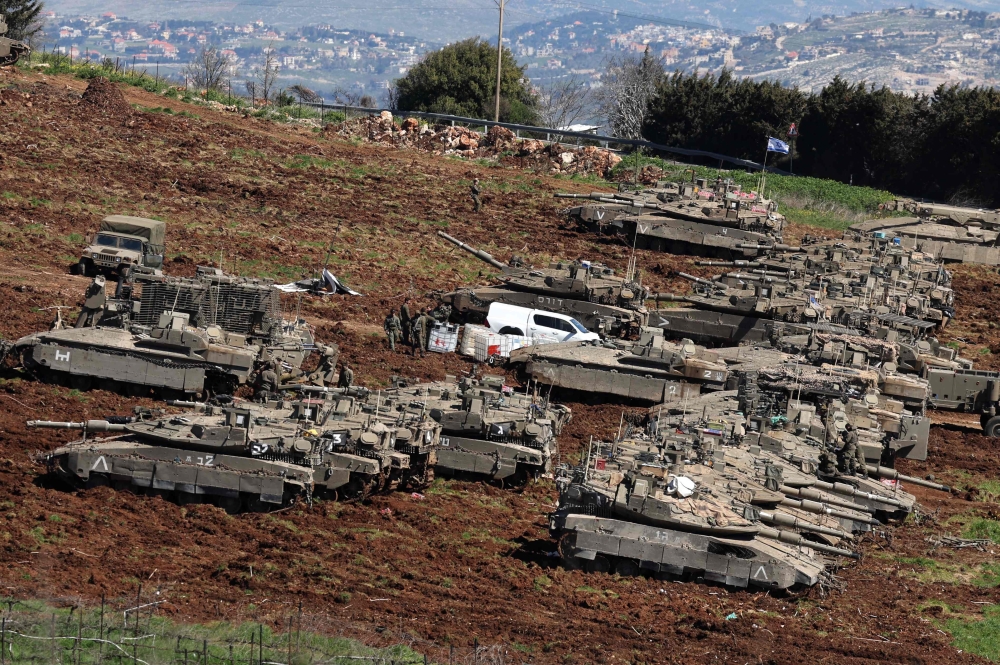
Trump warned last week that he might dramatically escalate his attacks on Iran. He threatened to hit major infrastructure targets like bridges and power plants, along with an underground facility known as Pickaxe Mountain that experts fear Iran might use to reconstitute its nuclear program. He decided against that approach over the weekend after warnings from senior officials that the United States was running low on antimissile interceptors and other critical munitions.
Trump denied Monday that the U.S. military was running low on such weapons. “We have a lot of ammunition,” he said, while perhaps hinting at a more complicated truth: “I’d like to have more, to be honest, but so much was given to Ukraine.”
Trump insisted that greater military pressure had brought Iran back to talks, without providing details about what sort of diplomacy was underway. “The only reason they want to meet is that we’ve been hitting them very hard,” he said.
Iran has also been engaged in talks with Oman on managing the Strait of Hormuz, which runs through the territorial waters of both countries. (The United Nations considers the strait an international waterway that cannot be subject to the sort of fees and tolls on commercial shipping that Iran has sought to impose since the war began.)
Omani diplomats visited Tehran for talks Friday and Saturday, an Iranian Foreign Ministry spokesperson told reporters Sunday.
Michael Makovsky, the president and CEO of the Jewish Institute for National Security of America, a hawkish pro-Israel think tank based in Washington, said that Netanyahu will urge Trump to resume a major military campaign against Iran. He added that Netanyahu, who played a key role in persuading Trump to launch the war, will be sensitive to perceptions that he is pressuring the U.S. president.
Makovsky said he hoped Trump chose a return to military action. “Almost four months of diplomacy have gone nowhere,” he said, adding that “the war-diplomacy stop-and-starts make us look fickle and weak.”
But as Trump learned over the past two weeks of escalation, military action tends to rattle markets and send energy prices soaring, hitting American consumers hard at the gas pump.
High U.S. gas prices are already stressing congressional Republicans ahead of the midterm elections, and signs of their impatience with the conflict are growing. “We got to wrap it up,” Speaker Mike Johnson told reporters last week.
“The Iranians know that Trump’s timelines are shorter than their own timelines,” said Dana Stroul, the Pentagon’s top Middle East policy official in the Biden administration.
Stroul argued that Trump would need more help from U.S. allies to solve his dilemma.
One sign of that came Monday with the word that U.S. and British officials are planning to convene a high-level meeting in London this week to discuss a potential international coalition to protect shipping in the strait.
Details of the meeting were still being worked out, including whether Defense Secretary Pete Hegseth and Gen. Dan Caine, the chair of the Joint Chiefs of Staff, would attend and what the goals of the gathering would be.
But a senior Defense Department official, speaking on the condition of anonymity to discuss diplomatic matters, said the meeting had taken on greater significance after the latest wave of U.S. attacks against Iranian military sites failed to stymie Iran’s attacks on commercial ships in the strait.
Another U.S. military official added Monday that Iran was continuing to harass ships seeking to transit the strait.
“The Trump administration tried going it alone against Iran, and now they are actually waking up to the fact that working with allies and partners in an international construct is necessary if they want to restore freedom of navigation,” said Stroul, who is director of research at the Washington Institute for Near East Policy.
Some Western European countries have previously said they would send ships to help patrol the strait, but with a major caveat: The hostilities between Iran and the United States must end first.
This article originally appeared in The New York Times.
Oman Observer is now on the WhatsApp channel. Click here