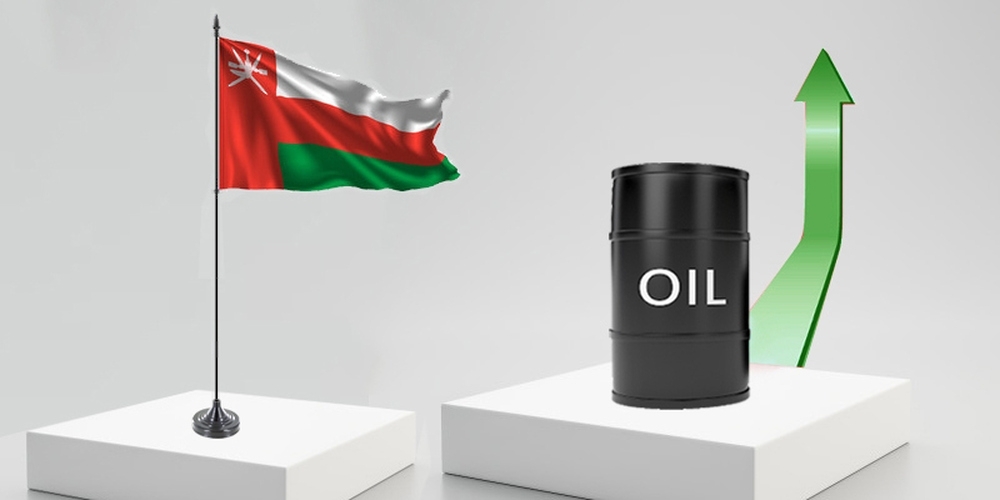
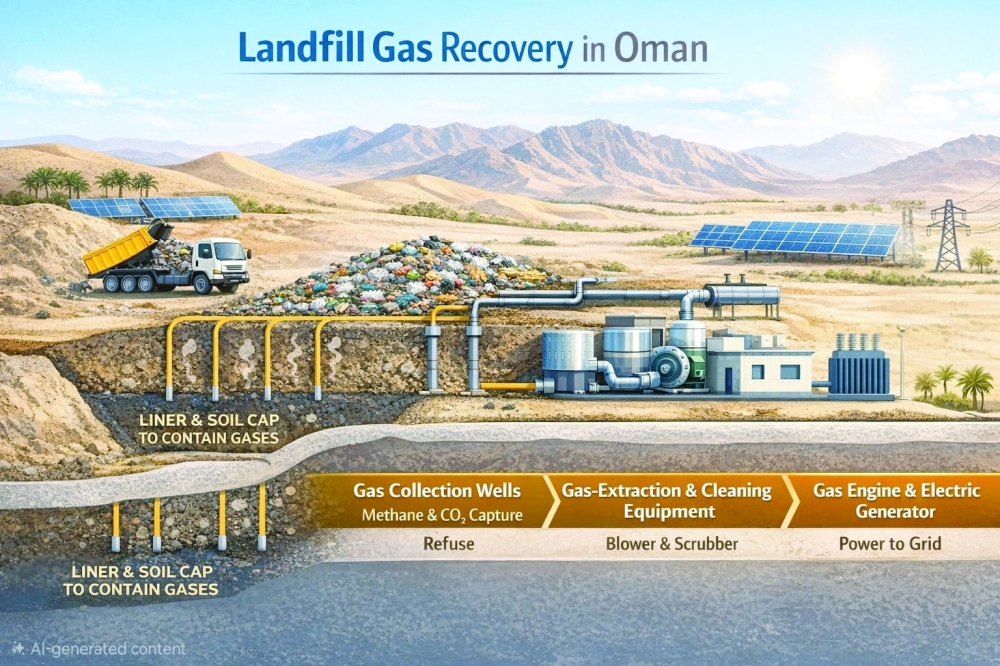
Every generation inherits an anxiety about work. Ours has two: machines that learn faster than we do, and a planet that warms faster than we act. Yet buried inside this double worry is the most underrated jobs story of the decade. The green economy is no longer an environmental slogan; it has quietly become one of the world’s most reliable employment engines, and nowhere is the opportunity more real or more urgent than in Oman.
Start with the global evidence. The World Economic Forum’s Future of Jobs Report 2025 projects that climate-change adaptation will be the third-largest contributor to net global job growth by 2030, adding around five million jobs, with climate mitigation adding another three million and clean-energy generation, storage and distribution a further one million. Environmental engineers, renewable energy engineers and sustainability specialists now sit among the fifteen fastest-growing occupations worldwide. The same report finds that “green hiring” has consistently outpaced overall hiring since 2021, and that postings requiring at least one green skill rose by nearly 22 per cent between 2022 and 2023 almost double the 12 per cent growth in workers actually acquiring those skills. Demand, in short, is sprinting ahead of supply. That gap is not a problem; for a young jobseeker, it is an invitation.
The region has read the signal. Across the Gulf, economies built on hydrocarbons are racing to build the industries that will outlast them solar at record-low tariffs, green hydrogen corridors, carbon markets. Nearly half of employers surveyed globally by the WEF (47 per cent) expect decarbonisation efforts to transform their organisations by 2030; in carbon-intensive sectors such as mining, metals and automotive, that share rises to roughly seven in ten. When incumbent industries transform, jobs do not simply disappear they migrate. The question for every Gulf state is whether its own citizens are ready to move with them.
Oman has answered with unusual clarity. Vision 2040 placed diversification and human capital at the center of national strategy long before it was fashionable, and the commitment to net-zero emissions by 2050 reinforced in May 2026 when the Ministry of Energy and Minerals unveiled an updated Net Zero Strategy and a regulatory framework for carbon markets has turned ambition into architecture.
The green hydrogen programme, steered by Hydrom, targets roughly one million tonnes of production annually by 2030 and 7.5–8.5 million tonnes by 2050, underpinned by an estimated $140 billion of investment across the value chain, according to the Ministry of Energy and Minerals.
The Eleventh Five-Year Development Plan (2026–2030) is designed precisely to convert these projects into livelihoods. And the macroeconomic footing is solid: the IMF’s 2025 Article IV consultation noted a fiscal surplus of 3.3 per cent of GDP in 2024, contained inflation, and growth expected to firm towards 3.7 per cent the kind of stability that lets a country invest in its own transition rather than merely survive it.
What does this mean in human terms? Think of the jobs a single hydrogen complex creates: solar and wind technicians, electrolyser operators, grid engineers, water-treatment specialists, logistics planners, safety inspectors, financiers who can price green risk lawyers negotiating complex energy and offtake agreements, and digital specialists managing increasingly intelligent energy systems.
Add the circular economy waste-to-value industries, recycling, remanufacturing alongside building retrofits, sustainable tourism, ESG reporting and climate-tech start-ups, and you have an employment ecosystem that is broad, skilled and difficult to automate. These are quality jobs: technical, well-paid, and globally transferable.
Honesty, however, requires naming the challenges. Artificial intelligence will erode clerical and routine work here as everywhere; the WEF expects cashiers, data-entry clerks and administrative assistants to be among the fastest-declining roles globally.
Its arithmetic is sobering: of every 100 workers worldwide, 59 will need retraining by 2030, and 11 are unlikely to receive it. Oman’s education and training system, for all its progress, still produces more graduates for the economy we had than for the economy we are building. Green skills from electrochemistry to energy auditing to environmental law remain underrepresented in curricula. And unless national statistics begin to measure green employment properly, we will be managing the transition blindfolded.
Three recommendations follow. First, a National Green Skills Compact: government, universities, vocational colleges and the private sector agreeing on a common skills framework tied directly to the hydrogen, renewables and circular-economy project pipeline, with employer-sponsored apprenticeships built in from day one.
Second, retool rather than replace: fund mid-career transitions so that an oil-and-gas technician in Fahud can become a hydrogen technician in Al Duqm the skills overlap is larger than we admit. Third, measure it: task the National Centre for Statistics and Information with publishing a regular green-jobs account, so that policy follows evidence, not anecdote.
To Oman’s young men and women, the message is simpler. Yes, some doors are closing; your parents’ career map will not navigate your terrain. But a larger set of doors is opening, and this time the wind, the sun and national strategy are all pushing in the same direction. Previous generations found prosperity beneath the ground. Yours will build it in the open air in panels, turbines, molecules and ideas. The green transition is not a sacrifice Oman is making for the world It is one of the most promising jobs opportunities the country has ever created. Claim it.
Oman Observer is now on the WhatsApp channel. Click here