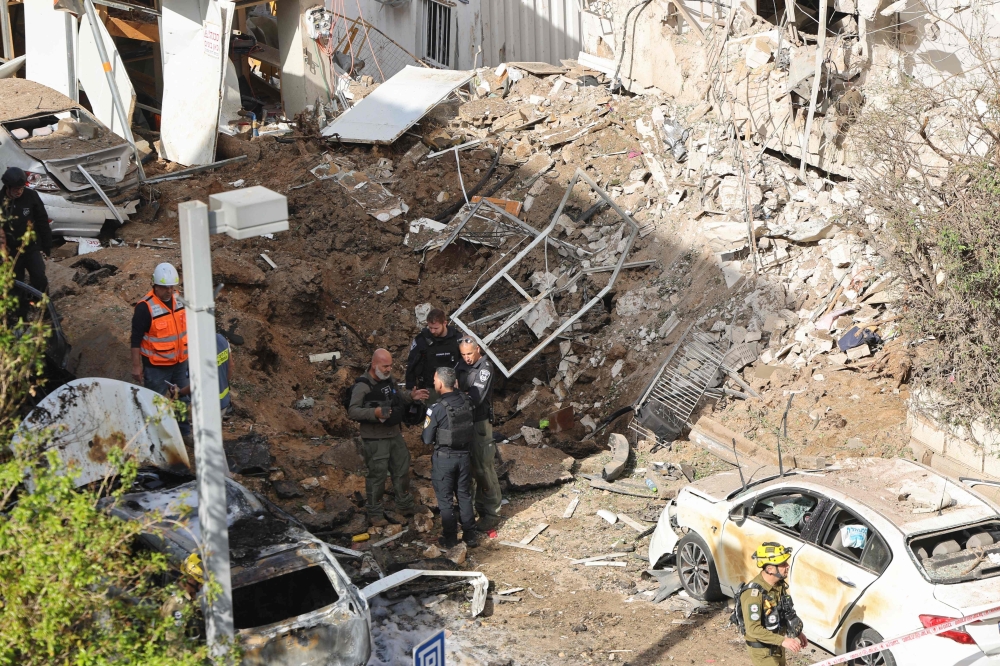





KYIV: Russia fired two dozen ballistic missiles at Kyiv overnight on Sunday, killing one person and wounding 16, in an ever-escalating air war that is taking an increasing civilian toll on both sides. The latest bombardment highlights a dual challenge for Ukraine in its fifth year of war. It is facing intensifying Russian missile attacks alongside rare domestic political instability triggered by a sudden wartime shake-up of its defence leadership.
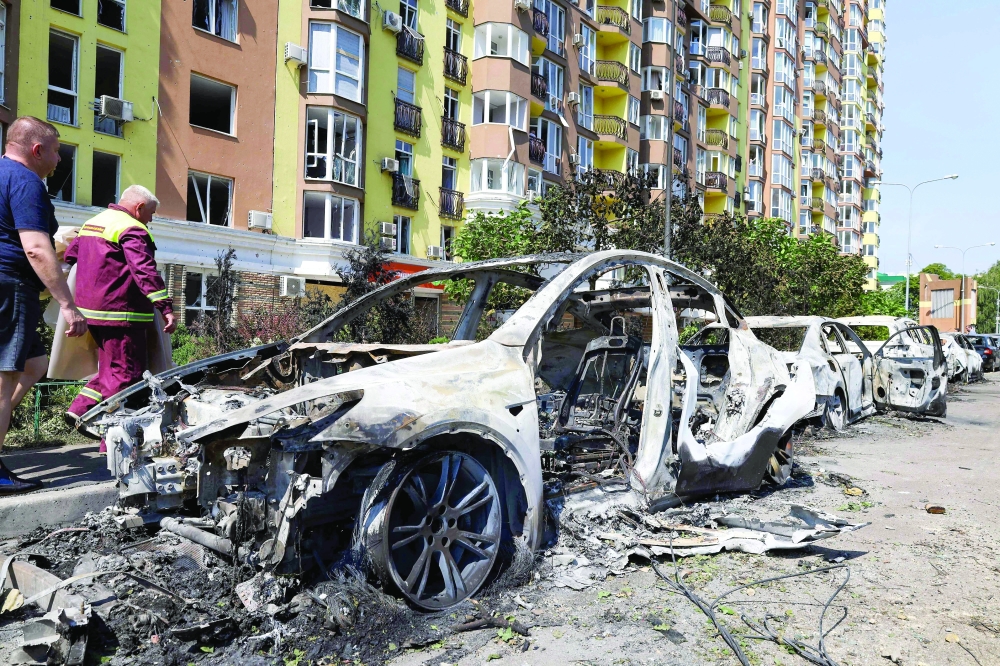
"The missiles just kept coming one after another, the explosions were powerful, it was horrible," 47-year-old Kyiv resident Ganna Zagorodnia said. "I thought that life was just about to end." In the morning, journalists in Kyiv saw charred apartment blocks with windows blown out and mangled, overturned cars. "Overnight, Russia carried out one of its largest ballistic missile attacks on Kyiv," Ukrainian President Volodymyr Zelensky said on X. "The enemy launched more than 40 missiles of various types — most of them against the capital," he said.
Among them were 25 ballistic missiles — weapons that are fast, hard to intercept and typically fired in rapid salvoes. Zelensky said that one person was killed and 16 others wounded in the attack, which police said targeted six districts. According to Kyiv Mayor Vitali Klitschko and local authorities, strikes damaged apartment buildings, supermarkets and an entertainment centre. Russia, which denies targeting civilians, said it struck military facilities and logistics hubs in Kyiv and port infrastructure used by the Ukrainian army in the Black Sea city of Odesa.
"Protection against ballistic missiles is our constant and top priority right now. Interceptors are needed everyday," Zelensky said. Since the start of the US-Israeli war on Iran, Ukraine has suffered from a shortage of air defence projectiles for its US-designed Patriot systems, which are essential for fending off ballistic rounds.
Exploiting the shortage, Russia has intensified its air raids on Kyiv in recent weeks, launching mass ballistic barrages roughly once a week. "Over the past 35 days, Ukraine's capital city has already endured three massive attacks (today is the fourth) involving virtually the same number of ballistic missiles," air force communications chief Yuriy Ignat wrote on Facebook.
Even as the war raged, thousands have been gathering in big cities across Ukraine for three consecutive days to protest at the removal of popular defence minister Mykhailo Fedorov. The tech-savvy minister was ousted by Zelensky in a surprise government reshuffle amid signs Ukraine had stabilised the battlefield, triggering a rare public backlash. Zelensky hinted at potential changes in the army, as rare wartime protests over the removal of a popular defence minister rocked the country for a third day. Mykhailo Fedorov, 35, a tech-savvy minister who championed drones and military reform, was sacked earlier this week in a controversial government reshuffle by Zelensky. "There were many consultations yesterday and today. Of course, I hear what people are saying," Zelensky said in an evening address, adding that he had spoken with both Syrsky and Fedorov. "Decisions regarding the army will be developed," he said.
On the Russian side, a Ukrainian strike killed one person in the Kursk region, near the Ukrainian border, regional governor Alexander Khinshtein said on Telegram. Another drone salvo hit the Caspian Pipeline Consortium's terminal near the Russian Black Sea port of Novorossiysk — a key export route for Kazakh oil, partly owned by Chevron and Shell.
The consortium said two tankers loaded with Kazakh crude were damaged and pumping operations were halted. On Saturday, Ukrainian drones destroyed two large e-commerce warehouses in the Moscow and Tambov regions of Russia, killing eight workers and causing major fires.
Kyiv has in recent months intensified its strikes on Russian territory, disrupting the lives of ordinary Russians — strikes it calls retribution for more than four years of bombardments against its territory. The campaign, which Kyiv calls "long-range sanctions", has mostly targeted Russia's oil infrastructure, triggering a full-blown fuel crisis in one of the world's biggest oil-producing countries. According to the United Nations, June was the deadliest month for civilians in Ukraine since April 2022, with at least 293 people killed. Talks on ending Europe's bloodiest conflict since World War II remain frozen, while fighting at the front is effectively at a standstill. — AFP
Oman Observer is now on the WhatsApp channel. Click here