




BEIJING: China on Friday successfully tested an experimental rocket retrieval system using a net attached to a sea platform, state media reported, in the hope of breaking US dominance in reusable rockets.
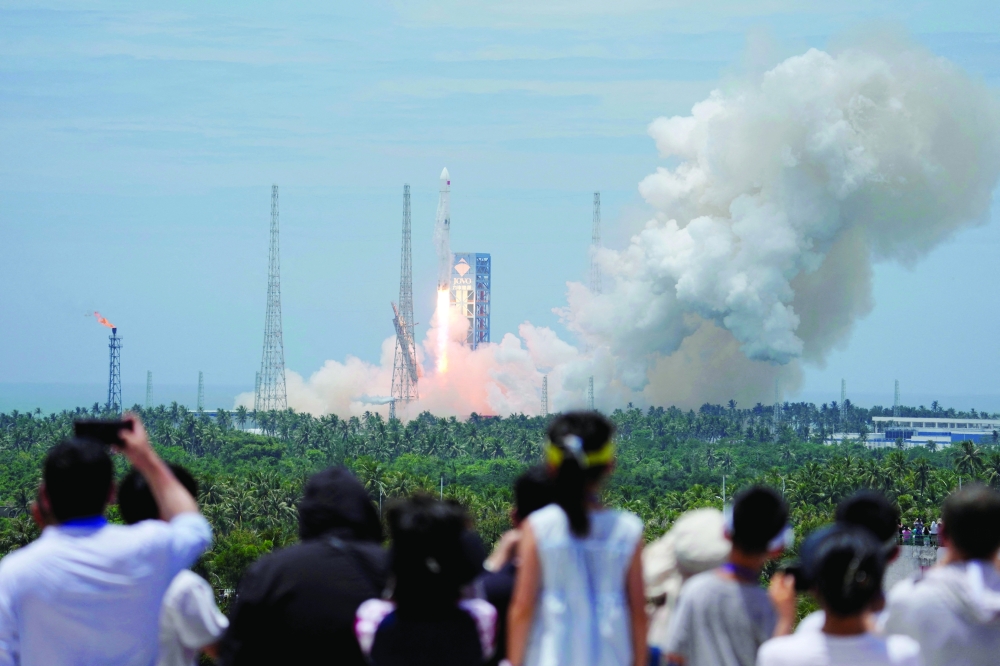
The Long March 10B rocket lifted off from the Hainan commercial space launch site in southern China at 12:15 pm and, about six minutes after separation of its booster and upper stage, the booster returned vertically and was recovered on an offshore platform, state broadcaster CCTV reported. The test marks China's first successful retrieval of an orbital-class rocket, putting the country closer to developing reusable rockets.
Shares in Chinese aerospace firms jumped on the news, with China Spacesat and China Satellite Communications hitting their daily limits. The Long March 10B has been compared to the Falcon 9, SpaceX's widely used medium-lift rocket. It was developed for commercial aerospace by the country's main state rocket developer, the China Academy of Launch Vehicle Technology and is capable of carrying a payload of at least 16 metric tons to low-Earth orbit. But unlike the Falcon 9, the Long March 10B does not autonomously land on deployable legs on a ground pad or drone ship, using instead "landing hooks" to catch the net attached to a sea platform. By contrast, SpaceX landed a Falcon 9 rocket from an orbital flight for the first time in December 2015, followed by Blue Origin's New Glenn in November 2025. By now, SpaceX's Falcon 9 launches around 150 times a year, or roughly three times a week, with its booster reused dozens of times if necessary. The engine-packed booster is generally viewed as the most valuable part of a rocket. China has spent nearly a decade developing reusable rocket technologies, from early low-altitude hover tests to orbital-class booster recovery attempts in recent years.
A system of reusable rockets will lower launch costs for China's rapidly expanding commercial satellite constellations. Private Chinese firms are also stepping up efforts to test their reusable rockets amid intense global competition to acquire the technology and China has eased IPO rules for firms developing reusable rockets to help them raise funding.
Two attempts by private Chinese firm LandSpace and state-owned China Aerospace Science and Technology Corporation last year failed to complete the crucial final step of landing and booster recovery. As part of the Long March 10 family being developed for China's crewed lunar missions before 2030, the Long March 10B could also provide data and validate technologies relevant to the broader lunar programme.
China plans to use the Long March 10's booster stage again for another launch by the end of this year, CCTV said. — Reuters
Oman Observer is now on the WhatsApp channel. Click here