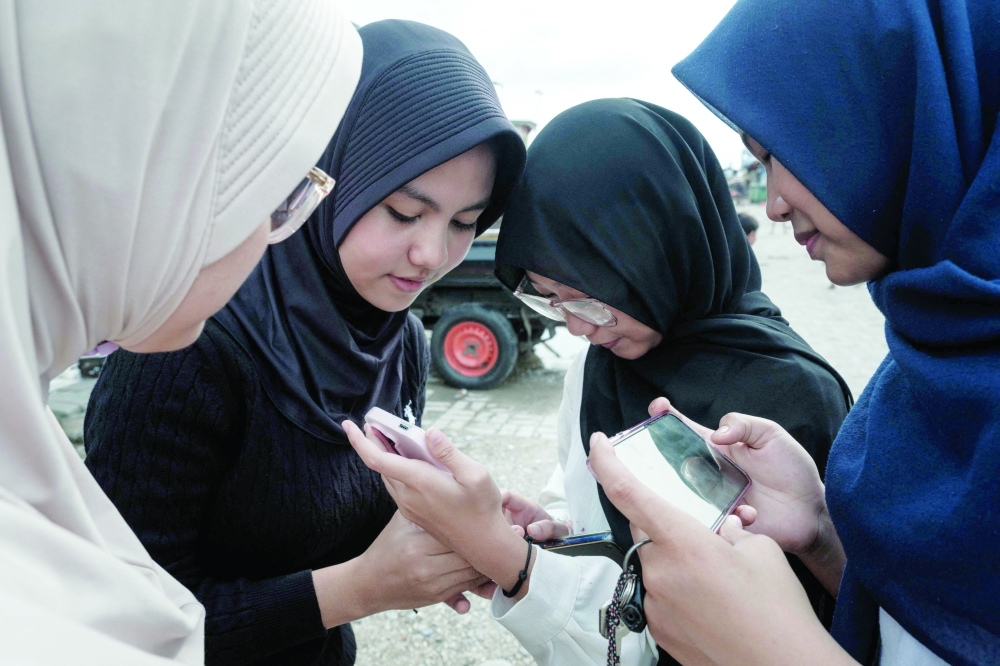
This United Kingdom Government has achieved, say its critics, very little; however, the electorate has been heard in one respect, and while youth will disagree, Mums and Dads nationwide will applaud a pending social media ban for U16s.
Spanish PM Pedro Sanchez pledged recently to protect his youth from the “digital Wild West.” Danish PM Mette Frederiksen accused mobile phones and social networks of "stealing our children's childhood". Austria has plans for a parallel complementary educational programme on media and artificial intelligence to offer support. France, during 2015, banned mobile phones in colleges, between the ages of 11 and 15, that may yet become a total ban.
Norway, Italy, Poland, Portugal, and Slovenia are ‘working through’ the legislative process. In Asia, Indonesia and Malaysia are active, while India and even China, on a reduced basis, are actively investigating their options. For now, the US is leaving legislation to individual states to implement, whereas Brazil has passed a ‘Digital Statute of Children and Adolescents Act,’ as the first move in its protective programme.
Australia is the one country, so far, to implement legislation. Their eSafety Commissioner Julie Inman Grant said the restrictions "aim to protect young Australians from pressures and risks that users can be exposed to while logged in to social media accounts,” where design features encourage greater screen-time, and promote engagement with content harmful to their health and well-being.
Greek Prime Minister Kyriakos Mitsotakis said he was "certain that many of the younger ones will be angry, but our role is not to be pleasant.” Young people are not going to like it, and they will resist, disliking a thing that they know is good for them, but such is the impetuosity of youth, but will ultimately have no option.
That, though, is somewhat mitigated through the nationwide consultation process, with the outcome that 90 per cent of parents favoured banning U16s from key social media platforms, with initial thinking that Facebook, Instagram, Snapchat, TikTok, YouTube, and X would all come under the ban, but that messaging apps such as Signal and WhatsApp would remain unhindered.
From 2027, U16s will no longer be able to access the identified social media. They will still be able to keep in touch with friends and family, continue their learning and revision practices, and stay abreast of news, current affairs, and gaming, and keep safe from harm by making ‘stranger communication’ a much less likely for the pre and early-teens.
The government will further promote well-being and healthier lifestyles through safe, dedicated online noticeboards, calendars, and platforms where they can form friendships, develop study habits, and grow within a protective online environment. It has earmarked £500 million to support the young population, and the Department of Education has £132 million to ensure there is no ‘vacuum’ into which young social media users will fall. It is also investing over £3 billion in some 250 youth centres, school sport facilities and equipment, and refurbishing a thousand arts, cultural, and heritage sites to offer greater diversity of active experiences.
Social and societal isolation, and the entire youth landscape of resilience and confidence will be tested in this, if in no other way than individual age compliance, possibly by reverse engineering data already held in terms of adult age-verifications currently held through the Online Safety Act (2023) with its full range of Ofcom inspired data, provisions, penalties and protections, to ensure fairness, validity and reliability.
Make no mistake, however, this legislation, when it happens, will be challenged like no other, because the U16 generation is the most entitled and petulant, and given their technological excellence, there will be significant kickback. From them, from parents who would give up for ‘peace and quiet,’ or the accessibility of virtual private networks, VPNs, with a government update due next month on identity and online safety perspectives.
This will not be easy, but nothing with such merit, nurtured by good, ever comes easy, “la shay' jayid yati bisuhula.”
Oman Observer is now on the WhatsApp channel. Click here