Dhofar Governorate no longer needs to prove that people will come.
Every Khareef Dhofar Season confirms that. Families drive south from across Oman and the Gulf. Flights to Salalah fill. Roads, viewpoints, markets, hotels and restaurants carry the familiar signs of a season that has become one of the country’s strongest tourism brands.
That success deserves recognition. But the next question is more important than visitor numbers.
How much of the money stays in Dhofar? This is the missing number in the Khareef story. It is also the number that will decide whether the season remains a temporary tourism peak or becomes a real engine of local economic development.
The official picture is encouraging. Dhofar Municipality has said the value of work assigned to small and medium enterprises during Khareef rose to RO 6.5 million by the end of the third quarter of 2024, compared with about RO 4 million in 2023. Around 328 entrepreneurs benefitted from activities and services at event sites in 2024.
These are not small achievements. They show that local businesses are being given space in the season, not left outside it. They also reflect a more serious attempt to connect tourism with entrepreneurship, jobs and local income.
But they do not answer the larger question.
RO 6.5 million is the value of work facilitated through official channels. It is not the full value captured by SMEs. It does not tell us how much was spent in local cafés, family-run restaurants, perfume shops, transport services, farms, tour operations, home-based producers, roadside outlets or small retail businesses across the governorate.
Nor does it tell us how much flowed out of the local economy through imported goods, external suppliers, large chains, online bookings and companies headquartered elsewhere.
That distinction matters.
A tourism season can look successful from the road, the hotel lobby and the airport terminal, but still deliver limited long-term value to the local economy if too much of the spending leaves the governorate whose landscape and season created the demand.
This is not a criticism of Khareef. It is the next stage of measuring its success.
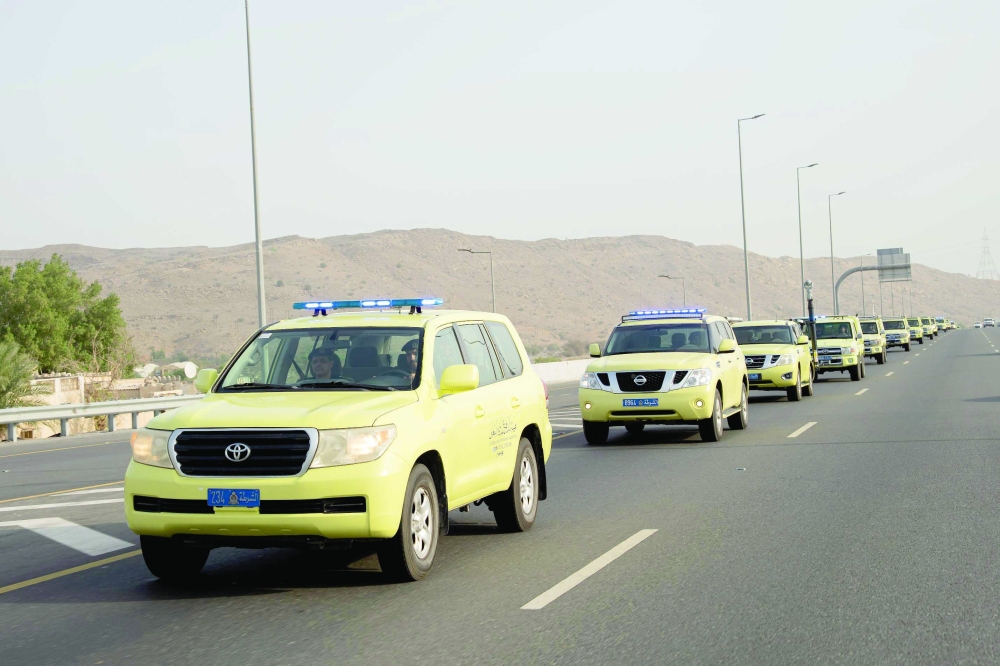
Preliminary figures showed that more than one million visitors came to Dhofar between June 21 and August 31, 2025. Most arrived by land. That means Khareef is not only an aviation or hotel story. It is also a road economy, a family-travel economy and a local-services economy.
Every vehicle heading south carries potential spending: fuel, food, accommodation, maintenance, shopping, tours, local products and entertainment. The key question is how much of that spending reaches local businesses and how much becomes a passing transaction with little lasting impact.
There is also a difference between SMEs that official figures often do not show.
For an established café, food brand, perfume retailer or tour operator, Khareef may be an accelerator. It can increase sales, widen visibility and open new markets. For a temporary stall, small vendor or productive family, the season may be much more serious. It may represent a large part of the year’s income compressed into a few weeks.
Both may be counted as SMEs. Their realities are not the same.
This is why licensing speed, site quality, footfall distribution, procurement rules and payment cycles matter. For a major company, delay is an inconvenience. For a small seasonal operator, it can be the difference between profit and loss.
Dhofar’s tourism strategy should now move from participation to retention.
The governorate does not only need more SMEs at Khareef venues. It needs more SMEs that survive after Khareef. It needs seasonal vendors who become year-round businesses. It needs local suppliers who enter hotel and events supply chains. It needs farmers, artisans, transport operators, guides and food producers who are not merely present in the season, but strengthened by it.
That is the real meaning of tourism under Oman Vision 2040. The aim is not just to attract visitors. It is to build productive local economies, create private-sector jobs; and turn natural and cultural assets into sustainable value.
For that to happen, Dhofar needs an annual Khareef economic-retention account.
It should publish, in one clear report, estimated visitor spending, SME capture, local procurement, jobs created, seasonal licences issued, businesses that returned from the previous year and businesses that became permanent after the season.
The data does not need to be perfect at the beginning. But it needs to begin.
Without it, the public will continue to see arrivals, occupancy rates and event activity. These are useful indicators, but they are not enough. They tell us that the season is busy. They do not tell us whether the local economy is becoming stronger.
Dhofar has already won the argument on attraction. People come.
The next argument is about value.
If the money circulates locally, if entrepreneurs grow, if seasonal income becomes permanent enterprise, then Khareef is not only a tourism success. It is an economic-development model.
But if the season brings crowds without enough local retention, then the boom remains incomplete.
The future of Dhofar tourism should not be judged only by how many visitors arrive in the mist.
It should be judged by how many local businesses are still standing, hiring and growing after the mist has gone.
Oman Observer is now on the WhatsApp channel. Click here