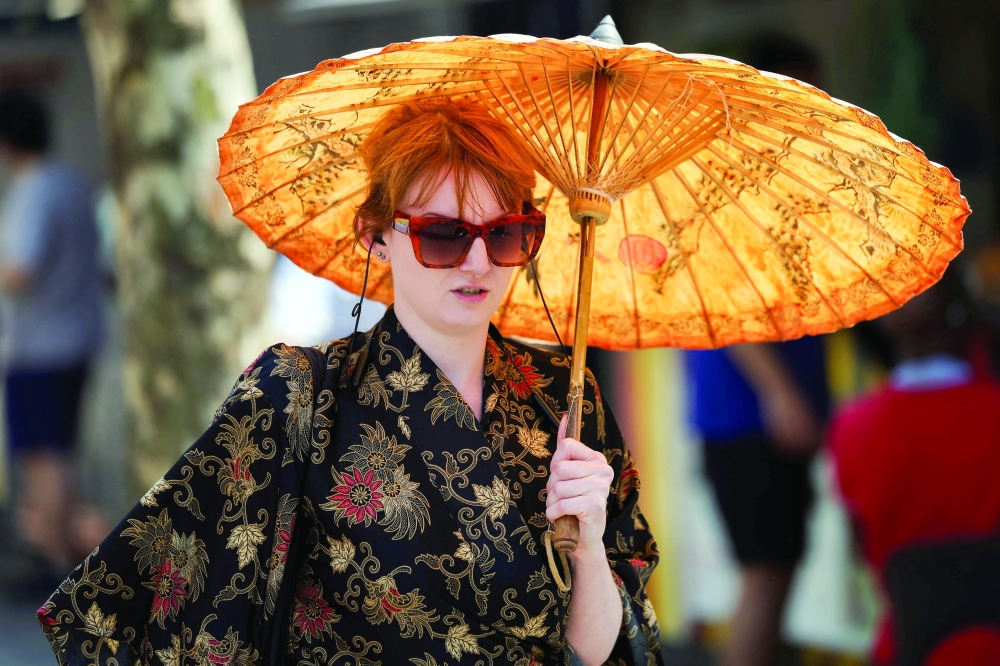





DOHA: While temperatures in the Gulf regularly climb above 40C in June, commuters waiting for the bus in Doha do so from the cool comfort of air-conditioned shelters.
In Dubai, delivery drivers drop into air-conditioned rest stations for a break during the hottest parts of the day, and in Riyadh, often the best place for a walk or a jog is the local shopping mall.
As Europe sweats and struggles in the grip of a heatwave, what can Europeans learn from the Gulf, one of the hottest places on Earth?
Air conditioning
Air conditioning has shaped modern life in the Gulf since it first arrived in the 1930s.
According to a 2025 report by the International Energy Agency, 80 per cent of households in Gulf countries own an air conditioner, and AC accounts for around half of peak electricity demand across the Middle East and North Africa.
The UAE and Qatar use outdoor air-conditioned areas at many tourist attractions and shopping areas.
Before Qatar's 2022 World Cup was moved to winter months, the country was criticised for proposing the use of air conditioning in its open-air stadiums in the summer months.
Saudi Arabia, due to hold the football competition in 2034, has also promised climate-controlled stadiums in its bid.
International campaigners have criticised air conditioning as damaging to the environment, arguing that it also increases reliance on fossil fuels that contribute to climate change.
But in the Gulf, it is widely accepted as a necessity with few practical alternatives.
Traditional architecture
The Gulf's futuristic cities have developed in the era of air conditioning, but traditional building styles were developed to maximise natural cooling effects.
Typically, buildings were constructed with thick mud walls that would slowly absorb heat, and would often include cooling central courtyards to facilitate the movement of air.
In crowded neighbourhoods, narrow streets would be shaded from direct sunlight and the breeze would be funnelled through their alleyways.
Mashrabiya latticework windows, which increase shade and allow natural ventilation, can be seen across the Gulf and wider Middle East.
Among the most distinctive features of Gulf architecture, originating in modern-day Iran, are wind towers known as barjeel.
The tall, chimney-like towers pull fresh air into buildings and allow hot air to ventilate out through large vertical slots.
Work and lifestyle
Gulf inhabitants maximise their daily routines to avoid the hottest parts of the day — often starting early or working late into the night.
Dubai and Doha have opened beaches at night in recent years.
Several Gulf countries have implemented mandatory midday work breaks during summer, prohibiting outdoor work under direct sunlight in open areas during the hottest hours of the day. — AFP
Oman Observer is now on the WhatsApp channel. Click here