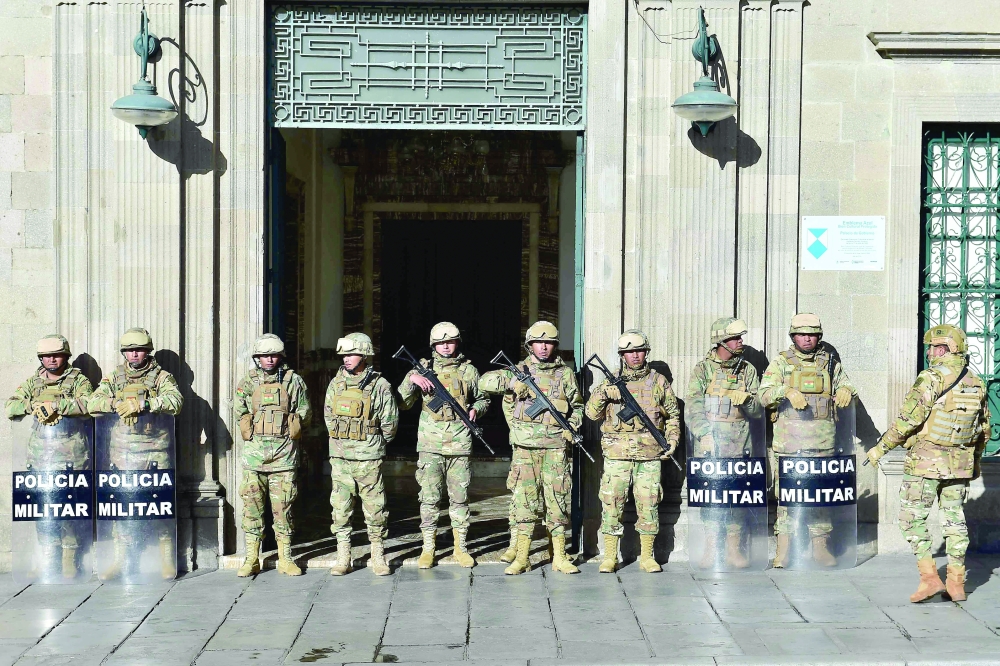





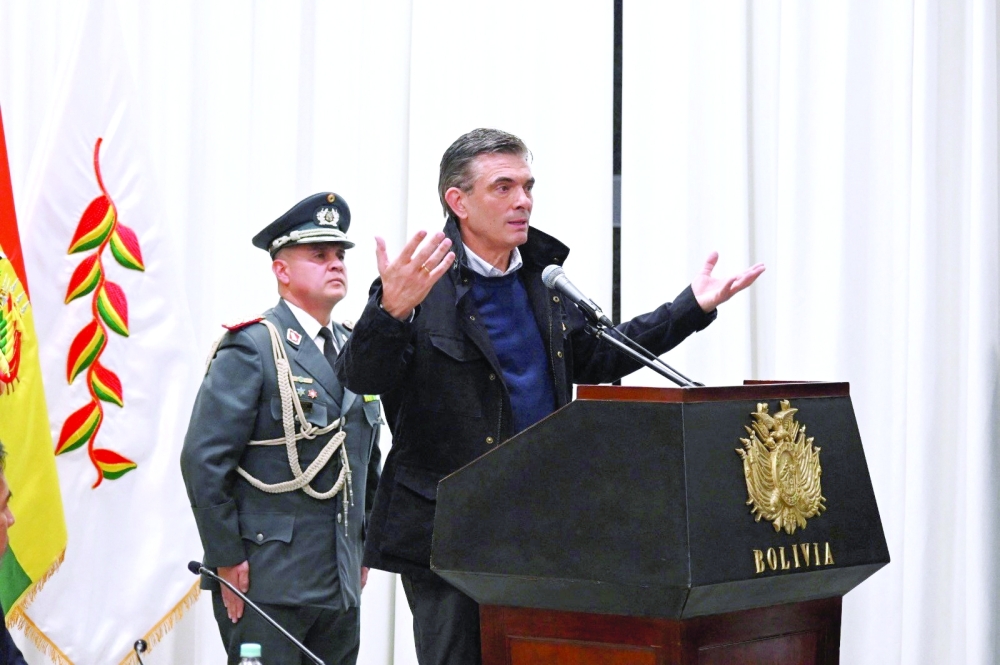
LA PAZ: Bolivia’s political and social crisis intensified on Saturday as President Rodrigo Paz declared a state of emergency, enabling wider military deployment to clear blockades and restore order amid protests that have brought the economy to a halt over the past 50 days. Addressing the nation early on Saturday morning, Paz said anti-government blockades were no longer a social protest but an organised attempt to destabilise Bolivia's democracy. "There comes a moment when failing to act ceases to be prudence and becomes irresponsibility. And that moment has arrived," Paz said, promising the measure would protect citizens and ensure the flow of essential goods, while warning that those continuing disruptions would face legal consequences.
Protesting groups, many allied to former leftist president Evo Morales, have cut off key roads, stranding trucks and choking supplies of food, fuel and medicines to many areas, including La Paz, Bolivia's administrative capital. At least 200 police officers wearing tactical gear and carrying canisters of tear gas gathered in the streets surrounding a police headquarters in El Alto, a major city that borders La Paz, in the early morning hours of Saturday.
Some opposition lawmakers have warned the emergency measure could further ratchet up tensions, while analysts and legal experts have also said the emergency powers could deepen unrest if they lack public support and fail to address underlying causes of protests. Paz made the announcement just hours after he unveiled a deal struck on Friday with the main union, the Bolivian Workers’ Confederation (COB), that aimed to ease tension.
However, many roads connecting the South American nation's main production centre are under the control of rural associations aligned with Morales, who were not a part of the negotiations and are continuing to protest mainly in the area of Cochabamba. Congress cleared a path for the emergency declaration in May when it repealed a law that had set limits on the executive branch's use of emergency orders and was seen as favouring labour unions and social organisations.
While the order goes into effect immediately, the president must notify Congress of the state of emergency within 24 hours of issuing the decree, which then has up to 72 hours to approve or reject the measure. "This is not a state of emergency to restrict people’s lives... It is a state of emergency to give freedom back to the people, to free Bolivia from those who use political conflict to block roads and harm the population," Paz said.
The conflict initially erupted after Paz abruptly cut long-standing fuel subsidies to shrink the deficit, amid a worsening dollar crunch and talks with the International Monetary Fund. Despite later steps to stabilise fuel prices and reverse unpopular land reforms, protests intensified into broader discontent, with unions demanding wage increases, an end to fuel and dollar shortages, and Paz’s resignation.
Paz has been in power for just seven months, after nearly two decades of governments under the leftist Movement Toward Socialism (MAS), headed by Morales, who governed Bolivia from 2006 to 2019. Under Bolivian law, a president can be subject to a recall referendum after completing two and a half years in office.
Paz, who took office with the backing of President Donald Trump as part of a broader strategy to increase US influence in the hemisphere, has blamed Morales — a towering figure of the left who governed for nearly 14 years — for stoking the unrest. Morales has backed the protest movement, called for early elections and cast the unrest as resistance to Paz's economic policies. In an exclusive interview with Reuters this week, Morales denied any role instigating dissent, saying the "indigenous rebellion” was driven by economic hardship. — Reuters
Oman Observer is now on the WhatsApp channel. Click here