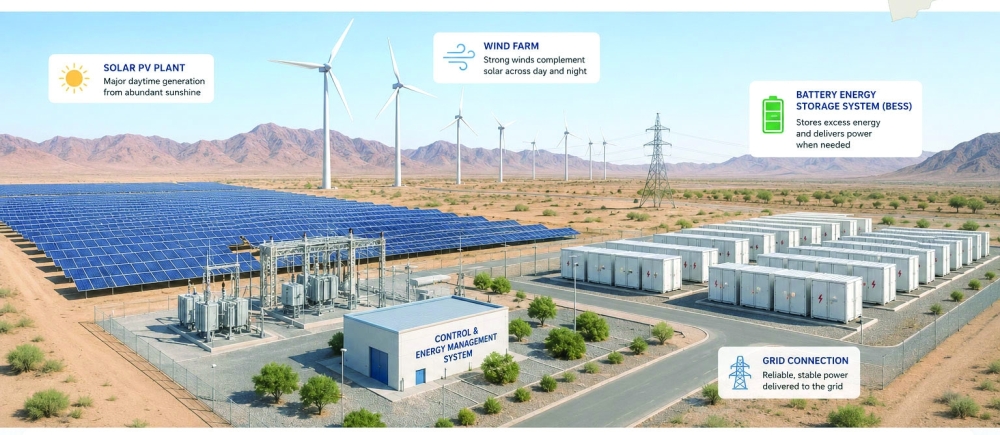
For years, the global energy conversation has focused on one objective: building more renewable energy capacity. Record investments in solar and wind farms have transformed the energy landscape and accelerated the transition away from fossil fuels.
Now, a new chapter is emerging.
Attention is increasingly shifting towards electrification, a process that extends beyond producing clean electricity to using it across entire economies. From transportation and buildings to industrial operations and cooling systems, countries are looking at replacing fossil fuel-powered activities with electricity generated from renewable sources.
The transition represents one of the most significant changes to global energy systems in decades. Rather than viewing renewable energy as a standalone sector, governments are beginning to see electricity as the backbone of future economies.
The shift comes as electricity demand is expected to rise substantially over the coming years, driven by population growth, urbanisation, digital technologies and the rapid expansion of artificial intelligence.
The concept is straightforward. Building renewable energy projects is only part of the solution. The greater challenge lies in integrating that clean electricity into everyday life.
Electric vehicles are among the most visible examples, but electrification extends far beyond transport. Heating systems, industrial processes, ports, airports and even cooling infrastructure are being redesigned to operate on electricity instead of conventional fuels.
This is particularly relevant for countries with hot climates, where air conditioning already accounts for a significant share of electricity consumption. As cooling demand continues to rise globally, improving energy efficiency and powering cooling systems with renewable energy will become increasingly important.
For Oman, electrification presents an opportunity that aligns with the country’s broader economic diversification agenda.
The Sultanate has already established itself as an emerging renewable energy player through large-scale solar projects and ambitious green hydrogen developments. The next phase could involve expanding how that clean energy is utilised domestically.
Industrial zones could gradually integrate electrified operations, public transport systems could evolve, and future developments may increasingly incorporate smart energy management systems designed around electricity rather than fossil fuel consumption.
Electrification could also help strengthen energy resilience by reducing dependence on conventional fuels for domestic energy needs while allowing hydrocarbon resources to continue supporting export markets.
Around the world, countries are beginning to realise that the energy transition is no longer solely about producing cleaner energy. It is about redesigning the systems that underpin modern life.
The future energy race may therefore be defined not by who builds the most renewable projects, but by who can successfully electrify their economies.
For Oman, the foundations are already being laid. The question now is how quickly the next phase of the transition can be integrated into everyday life.
Oman Observer is now on the WhatsApp channel. Click here