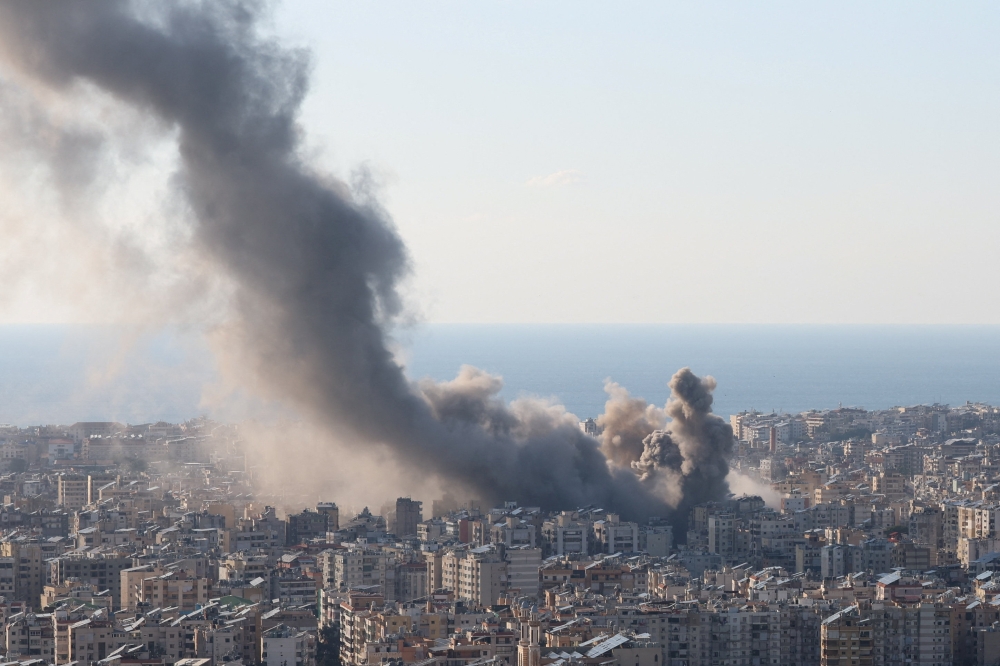





BEIRUT: Israel struck Beirut's southern suburbs on Sunday for the second time in a week in response to what it said was Hezbollah fire at northern Israel, while its military also carried out broader strikes on southern Lebanon. The latest escalation came despite expectations that a deal between the United States and Iran to end the Middle East war could be imminent, as Tehran insists a ceasefire in Lebanon must be part of any deal.
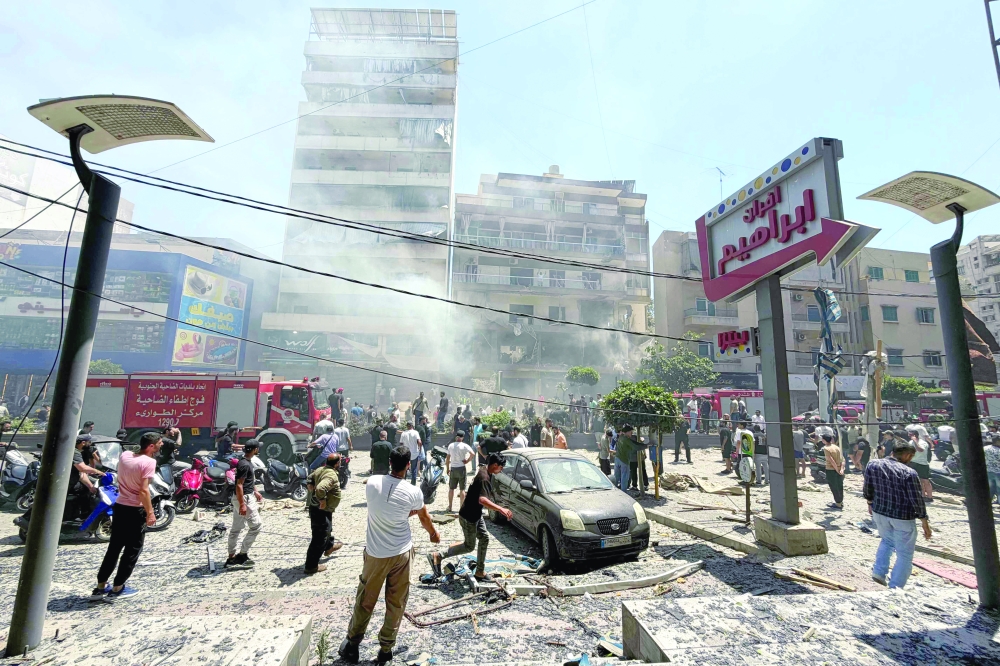
Lebanon's official National News Agency (NNA) said a strike hit an apartment in the Ghobeiry neighbourhood of Beirut's southern suburbs, a Hezbollah stronghold known as Dahiyeh. A correspondent saw smoke and dust rising near a heavily damaged apartment as debris covered the street and people searched for survivors, with panic in the area after the strike along a busy road filled with shops.
Israeli officials including Prime Minister Benjamin Netanyahu have warned that Israel would strike south Beirut should Hezbollah target northern Israeli communities, a position they say has the backing of Washington. The Israeli military earlier on Sunday said three drones, suspected to have been launched by Hezbollah, struck northern Israel in separate incidents, causing no casualties. Hezbollah on Sunday claimed several attacks on Israeli troops who have invaded south Lebanon but did not immediately claim any attack on north Israel.
Israel's military also struck Beirut's southern suburbs last Sunday, hitting apartments in two buildings after saying it had intercepted rockets launched by Hezbollah into Israeli territory. Iran launched missiles towards Israel in response to that attack, triggering Israeli retaliatory strikes before both sides halted fire. Iran had repeatedly warned it would strike Israel if the Lebanese capital was targeted.
On Sunday, Lebanon's NNA reported Israeli strikes on more than a dozen locations in the country's south, both before and after the Israeli army issued evacuation warnings for almost 30 locations ahead of strikes there. Israel's military activity in recent days has been focused on the region around the major south Lebanon city of Nabatieh, and many of Sunday's Israeli army evacuation warning locations were north of the city.
A military source said on Sunday that a small Lebanese army force which had been present in Kfar Tibnit, adjacent to Nabatieh, evacuated its position there a day earlier after Israeli incursions into the village. Requesting anonymity, the source emphasised that the Lebanese army was still present at the army barracks in Nabatieh city. A correspondent saw around a dozen vehicles, including some military trucks and heavy machinery as well as civilian vehicles, heading out of Nabatieh on Sunday. — AFP
Meanwhile, Lebanon's foreign ministry said it had lodged a complaint with the United Nations over Israel's alleged spraying of herbicide glyphosate in Lebanese territory near the border earlier this year. In a statement circulated on Sunday, the ministry said it had sent a letter to the UN Security Council and the UN secretary-general this week to complain about the incident, which occurred in February, a month before the latest Israel-Hezbollah war erupted on March 2.
The ministry said "laboratory tests and chemical analyses carried out on soil samples" in the south Lebanon border villages of Aita al-Shaab, Ras Naqura and Dhayra "confirmed the use of glyphosate at high levels of concentration". It said the levels "greatly exceed" those usually found in agricultural areas after regular use by farmers. The statement said the complaint was based on a report from Lebanon's government-linked National Council for Scientific Research (CNRS).
At the time, the UN peacekeeping mission in Lebanon said Israel had notified it of its plans to spray a "non-toxic chemical substance" near the border and had warned peacekeepers to take shelter. Lebanon's President Joseph Aoun had denounced the spraying as a "flagrant violation of Lebanese sovereignty and a crime against the environment and health". The ministry statement also said Lebanon had complained to the Security Council about ongoing Israeli attacks on Lebanon, including "the targeting of a Lebanese army vehicle" earlier this month that killed two on-duty officers and a soldier.
Noting ongoing direct negotiations between Israel and Lebanon aimed at ending the hostilities, the statement said "Israel's targeting of Lebanese army personnel directly undermines these diplomatic efforts". In April, Israel and Lebanon began landmark direct talks in Washington seeking to halt the hostilities, with another round scheduled later this month between the two countries which have no formal diplomatic relations. Military delegations from the two countries also held security talks at the Pentagon last month.
Oman Observer is now on the WhatsApp channel. Click here