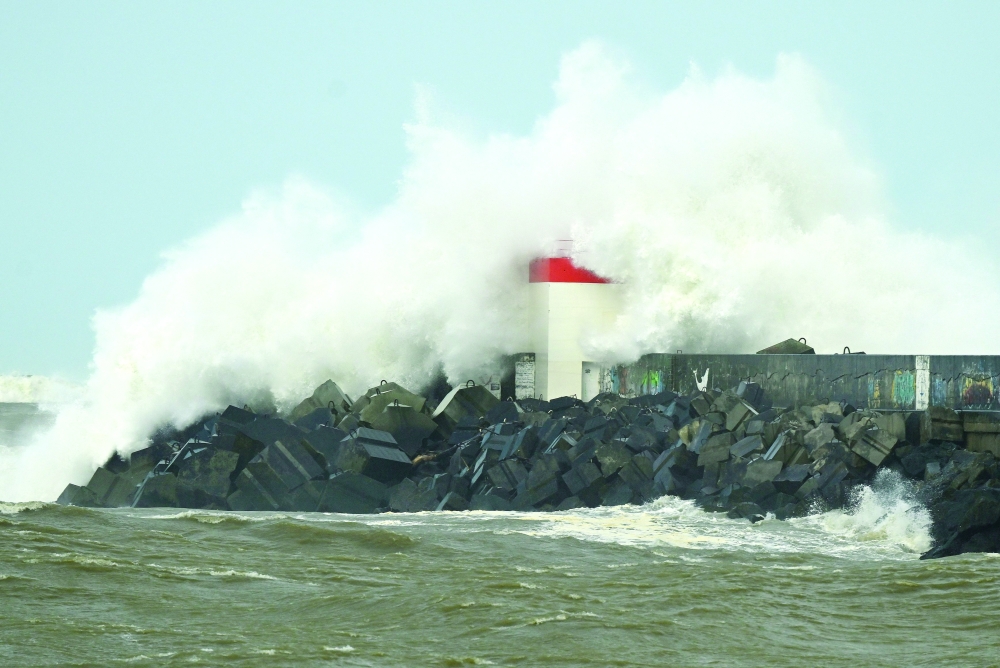
As our planet warms and extreme weather intensifies under climate change, a new weather warning has cast its shadow across the oceans: a natural event known as El Niño has begun in the tropical Pacific.
El Niño is a periodic warming of surface waters in the central and eastern tropical Pacific Ocean, driven by the weakening of the usual east-to-west trade winds. The El Niño is not a storm but a basin-wide reorganisation of Pacific winds and currents that tips the climate system towards heat and hydrological extremes.
El Niño does not have the same impact everywhere; it redistributes risk across geographies. Sea temperatures in the tropical Pacific have risen sharply in recent months, adding to decades of human-induced warming. 2027 will most likely be another record-hot year with disruptions to food supplies, weather, and economies.
According to the World Meteorological Organisation (WMO), the last 11 years were the warmest in records dating back to the 1850s. The planet is gaining more heat energy than it can release, driven by the warming gases such as carbon dioxide. This record-high energy imbalance is melting our planet’s ice caps. According to the WMO secretary general, human activities are increasingly disrupting the natural equilibrium, and the world will have to live with these consequences for hundreds and thousands of years to come.
To amplify climate change, scientists have predicted that the El Niño effect has begun, with a rise in recent sea temperatures. Some forecasts predict that this could also be called a super El Niño, even among the strongest ever recorded.
Sea temperatures in the central and tropical Pacific have now exceeded the 0.5 °C above-average threshold used to define El Niño. The winds above the Equatorial Pacific have begun to shift, a sign that the atmosphere is now responding to the warmer ocean rather than the ocean warming on its own.
There is a 63% chance that a very strong El Niño will occur during November to January and could be among the largest El Niño events ever recorded. A very strong El Niño would typically raise global air temperatures by about 0.2 °C, releasing heat stored in the ocean into the atmosphere. That extra hot air would land in a world already setting record-high temperatures. It is predicted that, at the end of this year and into 2027, we will likely see very high temperatures globally.
El Niño and La Niña are naturally occurring warm and cool phases of a climate pattern in the tropical Pacific known as the El Niño-Southern Oscillation, or ENSO cycle. La Niña, the cooler phase of the ENSO cycle, is still weakly present in the Pacific Ocean and has largely been in charge since December 2024. This has led to a temporary drop in global temperatures; 2025 was slightly cooler than 2024, the world's hottest year on record. This amplified cycle translates into more extreme and frequent ENSO-linked droughts, floods, heat waves, wildfires, and severe storms.
However, things are about to change, as global scientists report that the current La Niña is close to its end. Whilst most climate prediction models favour the development of El Niño later this year, there remains considerable uncertainty about how strong it might be and, hence, how much the world's climate and weather patterns could be affected.
The United Nations, World Economic Forum, World Meteorological Organisation, and other national weather agencies are releasing global bulletins and urging countries to treat this as a forecast-driven emergency, not just another piece of climate noise.
Moving forward, the next step is for nations to prioritize climate risk, draft climate-change-disaster laws and budgets, build early warning systems, and coordinate policies across water, agriculture, health, and social protection. With technological advancements such as artificial intelligence, the government must institutionalise early action rather than rely on last minute crisis management.
Oman Observer is now on the WhatsApp channel. Click here