




MUSCAT, June 6
As climate challenges intensify globally, Oman is accelerating efforts to balance economic development with environmental sustainability through an integrated climate agenda aligned with the objectives of Oman Vision 2040.
Eng Khalid bin Mohammed al Balushi, Acting Director-General of Climate Affairs at the Environment Authority (EA), said Oman is steadily translating climate commitments into practical programmes and projects, positioning sustainability at the centre of national development.
Speaking to Observer, Al Balushi said the Environment Authority is spearheading national climate action through planning, coordination and oversight of climate policies in cooperation with government institutions and stakeholders.
“The Authority acts as the national coordinator, linking different sectors and government entities to ensure climate priorities are integrated into development plans and national programmes,” he said.
He noted that the Authority is leading the implementation of the National Climate Change Adaptation and Mitigation Strategy, adopted in 2019, which outlines sector-specific adaptation priorities and climate response measures.
Balancing development with environmental protection remains central to Oman’s approach. Al Balushi explained that major industrial and economic projects are required to conduct Environmental Impact Assessment (EIA) studies before permits are granted, in accordance with the Environmental Protection and Pollution Control Law.
“This helps direct investments towards cleaner technologies and low-carbon economic growth without compromising development objectives,” he said.
Oman has also advanced environmental governance through stronger legislation, digital monitoring tools and improved climate data systems. Among recent initiatives is the launch of the ‘Manakh’ digital platform, designed to support the preparation of climate-related international reports, while providing policymakers with accurate indicators and data-driven insights.
Al Balushi said the Environment Authority has strengthened regulatory frameworks, including the Climate Affairs Management Regulation, which requires industrial facilities to submit emissions reports and integrate carbon reduction measures into environmental licensing requirements.
The Authority also relies on a national emissions monitoring system covering sectors such as energy, transport, industry and waste management, based on internationally recognised methodologies adopted by the Intergovernmental Panel on Climate Change (IPCC).
Nature-based solutions continue to play a significant role in Oman’s climate strategy. Al Balushi highlighted the National Project to Plant 10 Million Trees as one of the country’s most ambitious environmental initiatives aimed at expanding green cover, combating desertification and increasing carbon absorption through native species such as acacia, ghaf and jujube trees.
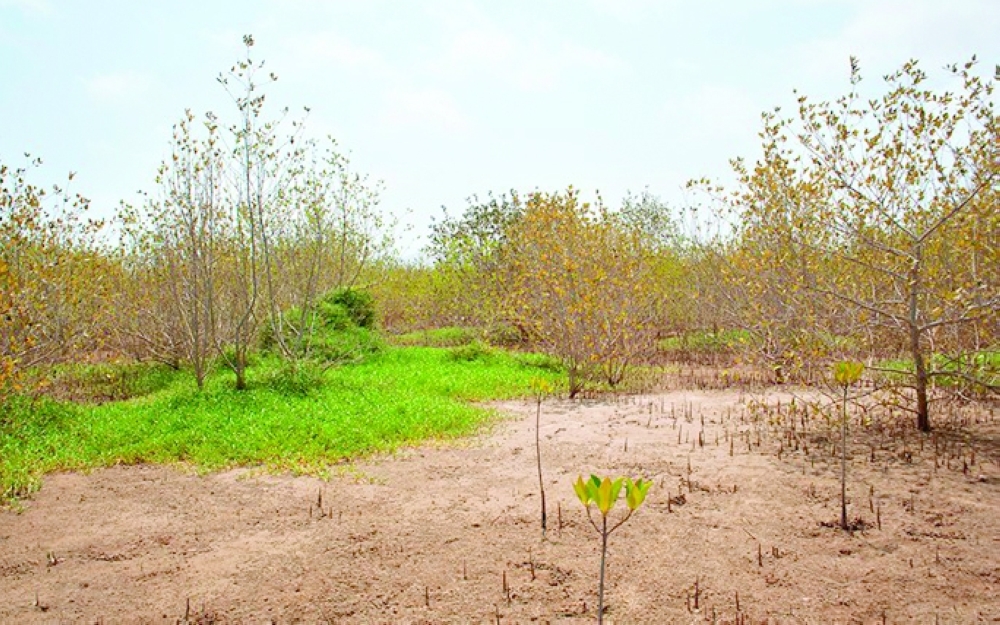
He also underscored the success of mangrove restoration efforts, with millions of seedlings planted across lagoons and coastal areas to enhance carbon storage through blue carbon ecosystems.

Climate action, he added, is progressing alongside biodiversity conservation through initiatives such as the Arabian Oryx Sanctuary and the Daymaniyat Islands Nature Reserve, which contribute to ecosystem resilience and the protection of endangered species.
Beyond environmental protection, Oman is also focusing on awareness and education. In partnership with the Ministry of Education, sustainability and climate concepts are being integrated into school curricula, alongside support for youth-led environmental innovation and green school initiatives.
Looking ahead, Al Balushi said Oman Climate Week 2026 will serve as a major platform for regional and international dialogue on climate priorities, bringing together local and global stakeholders to strengthen cooperation, attract investment in clean energy and promote technology transfer.
He added that the event will also support efforts to formulate unified Gulf and Arab climate positions for international climate negotiations, further reinforcing Oman’s role as an emerging regional hub for sustainability and green economic development.
“Protecting the environment and preserving natural resources is no longer merely a slogan,” Al Balushi said. “It has become a practical national pathway supported by legislation, strategic projects, digital transformation and evidence-based policymaking.”
As Oman deepens its sustainability efforts, the country is increasingly positioning climate resilience and environmental stewardship as key foundations for long-term prosperity.
Oman Observer is now on the WhatsApp channel. Click here