




MUSCAT, JUNE 6
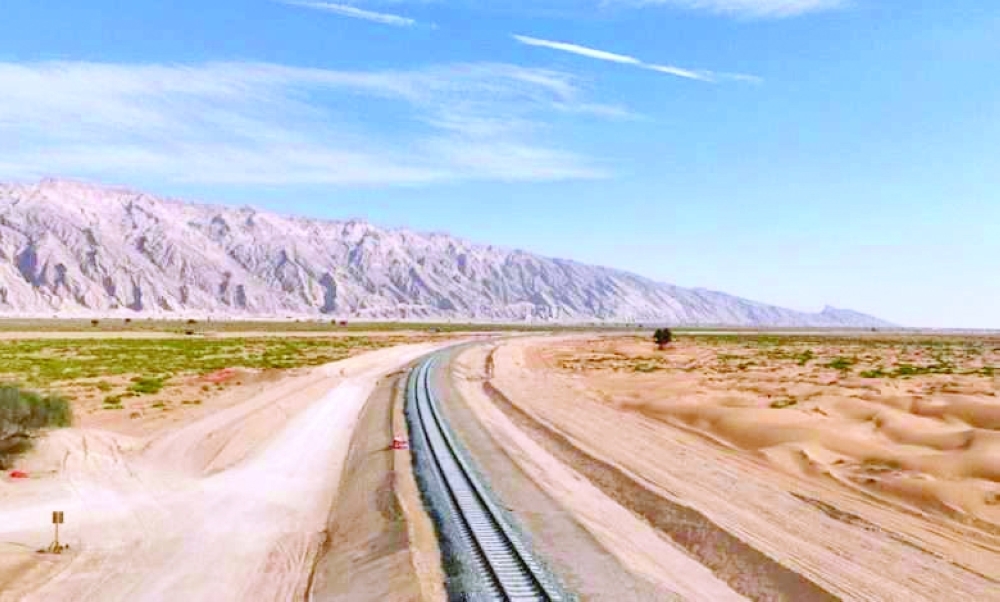
Reflecting the accelerated implementation of one of the region's most important infrastructure projects, track laying and installation work has commenced on the Hafeet Rail project, linking the Sultanate of Oman to the United Arab Emirates. This marks the transition from excavation and civil construction to the railway infrastructure phase, key officials revealed over the weekend.
The project, undertaken by Oman and Etihad Rail, which will design, develop, and operate a railway network connecting Sohar Port to the UAE's national rail network, will directly enhance the efficiency of supply chains and facilitate regional trade, in addition to its future role in developing passenger transport services.
According to the latest data released by Hafeet Rail, the project was approximately 40% complete as of April 2026, with work continuing along a 238-kilometer track connecting Oman and the UAE via the Al Ain, Al Buraimi, Wadi Al Jizzi, and Suhar regions. The project has seen the execution of significant excavation and backfilling works, totaling approximately 27 million cubic meters, in addition to over 100,000 cubic meters of concrete work. Progress has also been made in the construction of tunnels, bridges, and associated engineering structures.
The project has achieved over 10 million safe work hours without any serious injuries, reflecting a commitment to safety and quality standards. The project includes the construction of 60 bridges, some reaching heights of up to 34 meters, along with tunnels totaling approximately 2.5 kilometers in length, all within an infrastructure designed for the efficient transport of heavy goods.
From an economic perspective, Sohar Port and its surrounding industrial zone are expected to be among the project's primary beneficiaries. The rail link will reduce the time required to transport goods to Gulf markets, enhancing the port's attractiveness as a regional logistics hub. It is also expected to attract new industrial investments to the Al Buraimi and Suhar regions and adjacent economic zones, particularly in heavy and light industries, as well as storage and distribution centers.
The project is also expected to attract investments to the construction, engineering, and logistics sectors, as well as support the growth of small and medium-sized enterprises (SMEs) by expanding their opportunities in the project's supply chains and services. The project will also enhance the competitiveness of local products by facilitating import, export, and distribution processes, thereby increasing the competitiveness of Omani companies in regional and global markets.
Meanwhile, transport officials participating in last week’s workshop on "Enhancing Competitiveness in the Transport and Logistics Sector" clarified that the Muscat Metro project is still in the study and planning phase without actual implementation having begun. The project will include a 55-kilometer track and 42 stations, including Ruwi, Qurum, Al Ghubra, Ghala, Burj Al Sahwa, Knowledge Oasis Muscat, and Al Seeb, in addition to two maintenance depots and three parking facilities.
The project is expected to accommodate more than 400,000 passengers daily by 2040, in line with the Greater Muscat initiative, which aims to develop an integrated urban system. The future vision includes integrating the project with a multimodal transport system encompassing the metro, rapid bus rapid transit, and maritime transport, and connecting major urban developments, such as Sultan Haitham City. This will contribute to reducing congestion and transforming the capital into a city that relies on public transport rather than cars.
Oman Observer is now on the WhatsApp channel. Click here